ENERGY: Coal Goals

“Land reclamation – restored land at the Seneca Yoast Coal Mine” by Peabody Energy, 2014. Image: wikimedia commons.

Energy goals to stop climate change are clear: we must transition from fossil fuels. Chief among the priorities is coal. Transitioning from coal threatens jobs: as coal declines in use, some areas formerly active in coal mining suffer 30% unemployment. Past efforts to offer new jobs in American coal-mining towns included $7 million to open an optometry school in Pikeville, Kentucky, where miners could train and practice a new profession. As the only college of optometry in Kentucky, UPIKE offers opportunity. Another option is work reclaiming abandoned mines to prevent mudslides and collapse, threats increasing in stronger weather due to climate change. Before the Surface Mining Control and Reclamation Act of 1977 (SMCRA), mining businesses were not required to clean up or reclaim sites.  Since then, 46,000 open mine portals have been reclaimed with water supplies restored and renewed. But mines left open prior to the law remain a threat, and $11 billion is required to reclaim the sites.

Transitioning from coal jobs will be an important goal. “Coal mining.” Illustration from The Graphic, 1871. Image: wikimedia public domain.

Rebuilding coal sites with renewable energy projects seems like a natural option. Coal mines are already abandoned, but not suitable for housing developments or office buildings. There are 130,000 former coal mines available for development. What about solar plants? That’s the idea of Edelen Renewables, now building a solar facility where 300 workers will install solar panels on 1,200 acres at a pay rate of $25-30 per hour. Miners usually make about $30 per hour. Workers will also earn a certificate. Solar is the fastest-growing source of renewable electricity in the United States, and tax-credits are only increasing growth.
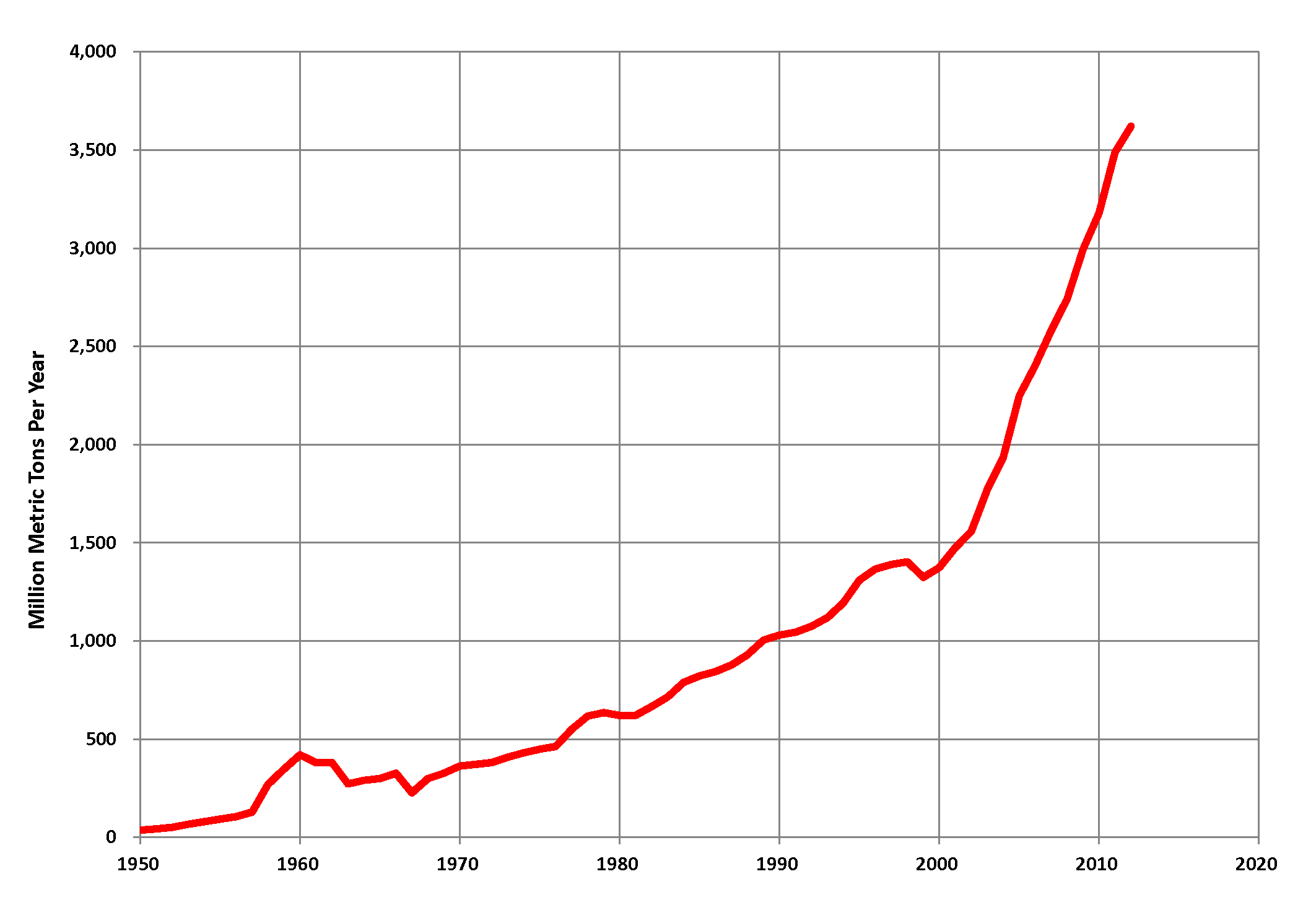
“Coal Production in China: 1950-2012.” by Plazak, 2014, compiled from USEIA and US Bureau of Mines and Minerals Yearbooks. Image: wikimedia commons.

Coal generates 30% of world electricity. Coal power is decreasing in the U.S., but in Asia, specifically China, it is the source of 36% of energy. China recently promised to end financing of new coal plants outside its borders, but concerns remain as domestic use continues. But a new Chinese solar project in Anhui, built on a former collapsed and flooded coal mine, developed by China Energy Conservation and Environmental Protection Group (CECEP) and the French floating solar expert Ciel & Terre may be a sign of hope. Regional plans for sustainable energy infrastructure for Europe, Middle East, and North Africa include an array of renewable energy options.

“Sketch of possible infrastructure for sustainable supply of power for Europe, Middle East, and North Africa EU-MENA)” by Trans-Mediterranean Renewable Energy Cooperation. Image: wikimedia.

COP26 Glasgow net zero emissions pledges predict fossil fuel use to peak in 2025, CO2 emissions fall 40% by 2050 – but even that will drive temperature rise to 2.1 Centigrade. Coal is the largest source of energy-related CO2 emissions (He, et al., 2020). If pledges are kept, 13 million new workers will be employed in clean energy by 2030, and double that by 2050 (IEA 2021). Coal is not the only fossil fuel driving climate change: oil is even greater. Of world energy sources, coal is 27%, natural gas is 24%, and oil is 33%. But coal is a focus because it is especially polluting, leading to environmental and health dangers. Renewable energy is increasing, costs of solar, wind, and storage are decreasing. Eight European Union countries (Denmark, Finland, France, Ireland Italy, Netherlands, Spain, Portugal) declared phase-out of coal by 2030.

“Electricity for All: TVA” sign displayed at Franklin D. Roosevelt Presidential Library and Museum, Hyde Park, NY, USA. Photo by Billy Hathorn. Image: wikimedia.

In an earlier energy transition, the Tennessee Valley Authority (TVA) offered job training as well as worker housing communities. A new town, Norris, became a showroom for household uses of hydroelectricity from refrigerators to toasters.  More recently, the German Coal Commission (GCC) introduced a task force on job transition along with coal plant closures. Retraining coal miners, and workers along the entire supply chain, will accelerate and strengthen environmental justice and energy transition. How can the world move towards sustainable electricity for all?

Buckley, Cara. “Coming Soon to This Coal County: Solar, in a Big Way.” 2 January 2022. New York Times.

He, Gang, et al., “Enabling a Rapid and Just Transition away from Coal in China.” 21 August 2020. One Earth, Volume 3, Issue 2, pages 187-194. https://www.sciencedirect.com/science/article/pii/S2590332220303560 and https://doi.org/10.1016/j.oneear.2020.07.012

International Energy Agency (IEA). “Coal.” https://www.iea.org/fuels-and-technologies/coal

Kenning, Tom. “World’s largest floating solar plant connected in China.” 20 March 2019. PV Tech https://www.pv-tech.org/worlds-largest-floating-solar-plant-connected-in-china

Lohan, Tara. “Reclaiming Abandoned Mines: Turning Coal Country’s Toxic Legacy into Assets.” 29 March 2021. The Revelator. https://therevelator.org/abandoned-mines-legislation/

Lynn, Loretta. “Coal Miner’s Daughter.” https://www.youtube.com/watch?v=f9eHp7JJgq8

Eller, Ronald D. Uneven Ground: Appalachia Since 1945. University Press of Kentucky, 2008 and also 2013. ISBN: 9780813142463

Office of Surface Mining Reclamation and Enforcement, U.S. Department of the Interior. “Surface Mining Control and Reclamation Act” (SMCRA). P.L. 95-87, Enacted 3 August, 1977. https://www.osmre.gov/lrg.shtm

Building the World Blog by Kathleen Lusk Brooke and Zoe G. Quinn is licensed under a Creative Commons Attribution-NonCommercial-NoDerivs 3.0 Un

SPACE: Journey to the beginning of the universe

James Webb Space Telescope. Image: Nasa.gov.

NASA launched the James Webb Space Telescope has successfully unfolded its gimbaled antenna assembly with the data dish that will beam back information about the earliest stars in the universe. Webb will take 29 days to reach the Lagrange Point 2 (L2) that is 1 million miles (1.6 kilometers) from the launch base on Earth. The Webb telescope, costing $10 billion, is considered the successor to Hubble. The upgrade is significant: Hubble could pick up only visible and ultraviolet light. James Webb Space Telescope (JWST) uses infrared detectors and spectroscopes.

An image from Hubble. James Webb is expected to offer even better views. Image: NASA.gov.

Developed by NASA, with contributions by European Space Agency and Canadian Space Agency, with manufacturers Northrop Grumman, and Ball Aerospace who built the primary mirror, the new telescope is named after James E. Webb, NASA administrator from 1961-1968 who played a pivotal role in the Apollo lunar program, directing advances to serve education and science. It is interesting to note that Webb was not a scientist, but an attorney and business leader who had served in the public and private sectors. Webb almost turned down the job, but President John F. Kennedy convinced him that he had the right skills for a broad program with significant missions. You can listen to the audio of President John F. Kennedy and James Webb as they discuss human spaceflight: here.

James Webb Space Telescope is on its way. Illustration by Kevin Gill. Creative Commons license CC by SA 2.0. Image: wikimedia.

The James Webb Space Telescope is expected to open a new era in space and science. What would you like to discover about the beginning of the universe? To track the Webb as it travels towards its goal, click here.

NASA. James Webb Space Telescope. Goddard Space Flight Center. https://jwst.nasa.gov/

NASA. James Webb Space Telescope is fully deployed. UPDATE: https://twitter.com/hashtag/NASAWebb?src=hashtag_click

Pultarova, Tereza. “James Webb Space Telescope: The scientific mysteries no other observatory could unravel.’ 24 December 2021. Space.com.

Building the World Blog by Kathleen Lusk Brooke and Zoe G. Quinn is licensed under a Creative Commons Attribution-NonCommercial-NoDerivs 3.0 Un

WATER: Jason and the Return of the Argonauts

“Argo Temperature/Salinity Float Network” by Dmcdevit, 2007 for Global Warming Art. License GNU Free 1.2. Image: wikimedia.

Recent tornadoes, storms, floods caused loss of life and damage of property. While warmer temperatures are known to fuel and intensify tornadoes, scientists are uncertain if tornadoes that swept across four U.S. states were caused by climate change. What is certain is unseen, but even more troubling. Antarctic currents are changing. The above NASA illustration shows the movement of ocean currents including the Antarctic Circumpolar Current:  at 1,200 miles (1,931 kilometers) wide and two miles (3 kilometers) deep, it is the globe’s largest current. Its motion draws the deepest water from the Atlantic, Indian, and Pacific oceans to swirl it to the surface. In the process, the water exchanges heat and carbon dioxide with the atmosphere. It’s called an upwelling.

“Upwelling” in an animation by NOAA. Image: public domain, wikimedia.

With a warming world, upwelling may release more carbon dioxide that had formerly been sequestered in the blue deep of the oceans. Oceans have sequestered 25% of carbon dioxide and 90% of excess heat from burning fossil fuels. What if that were to change? Moreover, the warming upwelling waters that travel through and beneath Antarctic are melting ice shelves like those near the Thwaites glacier. If those ice sheets melt into the ocean, sea rise could advance by as much as 12 feet (3.66 meters). Ice sheets act as a blockade, protecting glaciers: if that blockade breaks, glaciers will also melt more quickly and release even more water to rising seas. (Fountain and White, 2021) Watch a video about the Thwaites glacier here.

“Thwaits Glacier.” NASA, 2014. Public domain, wikimedia.

What can be done? Gathering more data is a first step. Robotic autonomous floats called ‘Argo Floats‘ are a small army of 3900 presently bobbing in the world’s oceans, sending back data. When below water for their ten-day shift, Argo Floats gather data; when they pop up to the surface, they transmit. The National Oceanic and Atmospheric Administration (NOAA)  and the Global Ocean Monitoring and Observing (GOMO) program is named after the mythical Jason and the Argonauts who sailed to find the Golden Fleece.

“Scenes from the Story of the Argonauts” by Biagio d’Antonio, circa 1472-1516. From the Metropolitan Museum of Art, donated to wikimedia for public domain open access use.

Jason and the Argonauts may be one of the oldest myths of a hero’s quest. The present initiative references not only the ancient Greek myth, but also the ocean mission. The title also indicates its complementary relationship with the Jason satellite altimeters that study the situation from above. The instruments called ‘Argo Floats:’ the measurements of sea surface height are termed ‘Jason measurements’ that report temperature and salinity. (Brown 2019). In 2020, Antarctica observed a 200-year anniversary. Polar regions are among the most important places for climate change, due to a process termed polar amplification. The Antarctic Treaty, signed in 1959, offers some protections, but the ban on mining of Antarctic minerals expires in 2048. If or when the Antarctic Treaty is revised, what provisions should be upheld, changed, or added?

Argo Program. NOAA. https://globalocean,noaa.gov/Research/Argo-Program

Brown, Fiona “What we learnt from spending winter under the Antarctic sea ice.” 15 May 2019. CSIROscope. https://blog.csiro.au/

Fountain, Henry and Jeremy White. “Rising from the Antarctic, a Climate Alarm.” 14 December 2021. New York Times. https://www.nytimes.com/interactive/2021/12/13/climate/antartic-climate-change.html?referringSource=articleShare

Institute for Marine and Antarctic Studies (IMAS). “Geoengineering The Southern Ocean? A Transdisciplinary Assessment.” University of Tasmania, Australia. https://www.imas.utas.edu.au/home/home-features/arc-laureate-fellowship-geoengineering-the-southern-ocean-a-transdisciplinary-assessment

Jason satellite program mission. NOAA. https://sealevel.jpl.nasa.gov/missions/jason-1/summary

Ramirez, Rachel. “Scientists warn a critical ice shelf in Antarctica could shatter within five years.” 14 December 2021. CNN. https://www.cnn.com/2021/12/14/world/antarctic-thwaites-glacier-climate-warming/index.html

Silvano, Alesandro et al., “Seasonability of warm water intrusions onto the continental shelf near the Totten Glacier.” 3 May 2019. Journal of Geophysical Research: Oceans/Volume 124, issue 6, pages 4272-4289. https://doi.org/10.1029/2018JC014634 and https://agupubs.onlinelibrary.wiley.com/doi/full/10.1029/2018JC014634

Building the World Blog by Kathleen Lusk Brooke and Zoe G. Quinn is licensed under a Creative Commons Attribution-NonCommercial-NoDerivs 3.0 Un


TRANSPORT: Sugar High

“United Boeing 767-300ER taking off from London Healthrow” by photographer and aerospace engineer Adrian Pingstone, 2007. Public Domain wikimedia commons.

Air transport, first achieved in December 1903, reached an important milestone in December  2021. United Airlines flew a commercial jet with a full complement of guest passengers entirely on renewable, non-fossil, fuel derived from sugar and corn. The flight Chicago ORD to Washington DCA flight carried 100 passengers using 100% sustainable fuel (SAF). The achievement followed United’s 2019 Flight for the Planet demonstrating biofuel blend energy, zero cabin waste, and carbon offsetting. The 2021 United success also announced new partners in the Eco-Skies-Alliance, and a pledge to purchase non-petroleum feedstocks to deliver the same performance of petroleum-based jet fuel but with a much smaller environmental effect.

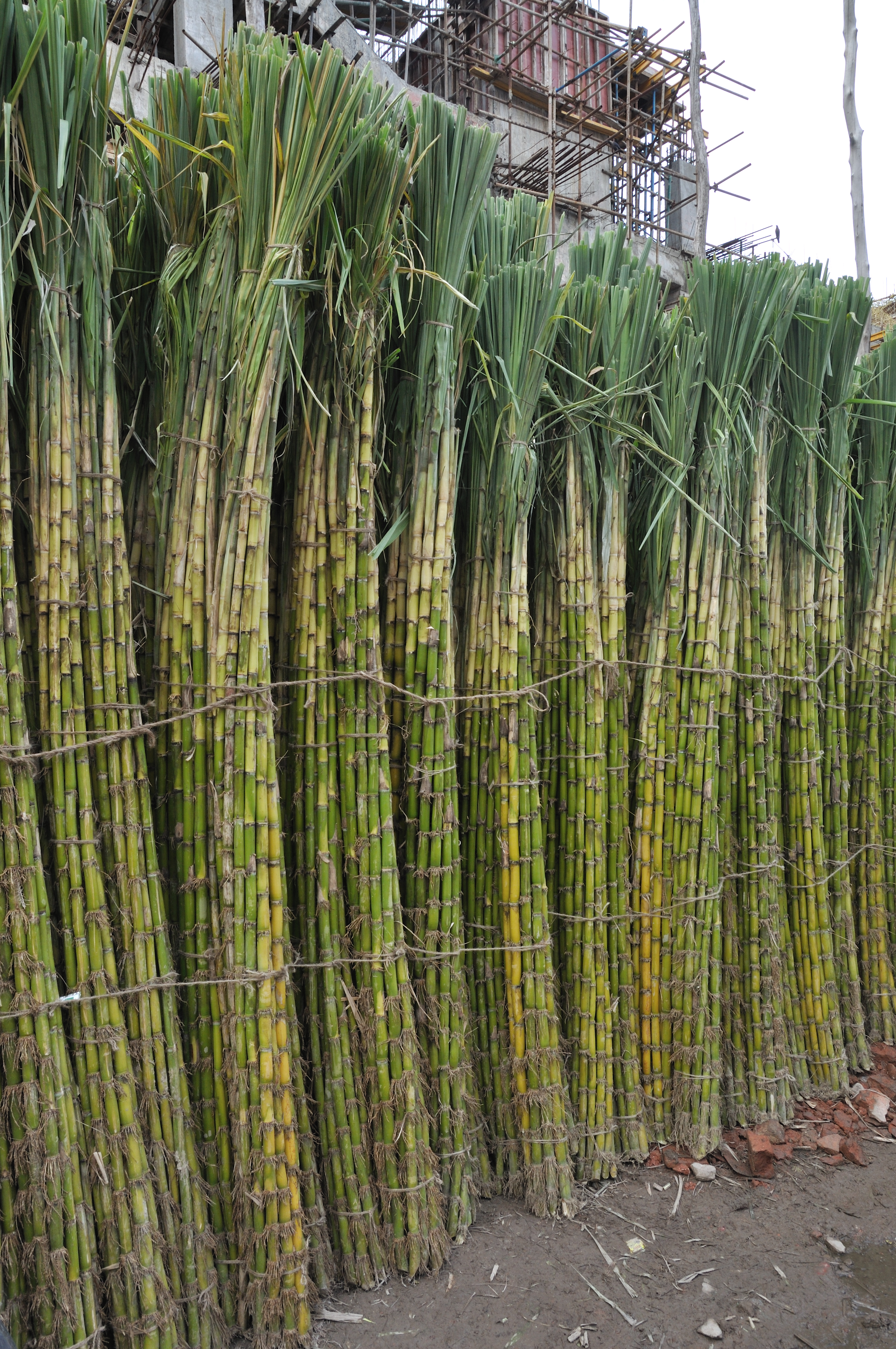
“Sugarcane” by photographer Biswarup Ganguly, 2010. GNU Free/CC3.0 wikimedia.

Sugarcane ethanol is produced by fermenting sugarcane juice and molasses. Brazil and the USA are among the world areas engaged in biofuel production from sugar and corn, with scientific innovations on fermentative processes. There are concerns about land use for biofuel, and deforestation, but SAF remains an important element in new energy options. Brazil is a leader in sugar-based fuel, while U.S. expertise is mainly in corn. (Kang and Lee 2015). The U.S. biofuel industry has created 68,000 jobs, produced 17 billion gallons of sustainable fuel, and saved 544 million metric tons of Co2 from entering the atmosphere. (Minos 2021)

“Refueling a plane in Athens.” by photographer Jebulon. Wikimedia CC1.0 Public Domain.

While biofuels are arguably not as clean and green as electric or solar flight (achieved by small commuter planes such as eGenius), sustainable fuel is a practical step because it works with existing flight infrastructure like aircraft engines, refueling equipment, maintenance, and airport design.”SAF can be 100% compatible with our current aviation fleet and infrastructure,” observed Dave Kettner of Virent, among the partners who flew on the historic occasion, joined by World Energy biofuel producer and distributor, Boeing, CFM International, and U.S. Department of Energy’s Bioenergy Technologies Office. Electric vehicles may be the answer for automobiles, buses, and trucks: the U.S. Federal Highway System and other major roads of the world will be rebuilt with charging stations and lanes for autonomous vehicles. The Canadian Pacific Railway or Japan’s Shinkansen can be adapted for maglev, electric, or hyperloop trains. But maritime shipping and aviation are not as easily converted from fossil fuels. Air transport has just taken an important step toward a more sustainable future.

Kang, Aram and Taek Sooon Lee. “Converting sugars to biofuels: ethanol and beyond.” 27 October 2015. Bioengineering. doi: 10.3390/bioengineering2040184.

Lewandowski, Jan. “Building the Evidence on Corn Ethanol’s Greenhouse Gas Profile.” 29 July 2021. U.S. Department of Agriculture. https://www.usda.gov/media/blog/2019/04/02/building-evidence-corn-ethanols-greenhouse-gas-profile

McCue, Dan “United Airlines makes history flying the most eco-friendly commercial flight of its kind.” 11 June 2019. Renewable Energy Magazine. https://www.renewableenergymagazine.com/biofuels/united-airlines-makes-history-flying-the-most-20190611

Minos, Scott. “United Airlines first passenger flight using 100% sustainable aviation fuel is officially off the ground!” 1 December 2021. U.S. Department of Energy. https://www.energy.gov/energysaver/articles/united-airlines-first-passenger-flight-using-100-sustainable-aviation-fuel

Smithsonian National Air and Space Museum. “Inventing a flying machine.” https://airandspace.si.edu/exhibitions/wright-brothers-online/fly/1903/

United Airlines. “United to become first in aviation history to fly aircraft full of passengers using 100$ sustainable fuel.” 1 December 2021. United Airlines News Release. https://www.prnewswire.com/news-releases/united-to-become-first-in-aviation-history-to-fly-aircraft-full-of-passengers-using-100-sustainable-fuel-301435009.html

World Energy. https://www.worldenergy.net

Building the World Blog by Kathleen Lusk Brooke and Zoe G. Quinn is licensed under a Creative Commons Attribution-NonCommercial-NoDerivs 3.0 Un

THANKS Giving: Global traditions of gratitude

The Statue of Liberty was a gift from France to the United States. Photograph by Derek Jensen (Tysto) 2004. Generously donated to public domain by the photographer. Image: wikimedia commons.

Giving thanks can take many forms including exchanges to strengthen friendships between nations. American presidents sit at the Resolute Desk, given by Britain to the United States in 1880 as a gesture of thanks for rescuing the HMS Resolute from an Arctic ice-jam, repairing and returning the vessel to the United Kingdom. Six years later, in 1886, France gifted the United States with the Statue of Liberty as an icon of freedom and democracy, and to honor Abraham Lincoln. The famous sculpture proposed by Éduard de Laboulaye (French political philosopher, abolitionist, and expert on the US Constitution) was commissioned to Frédéric-Auguste Bartholdi with interior designed by Gustave Eiffel, of the Paris Tower fame.

Norway has given a tree to Trafalgar Square, London, annually since 1947, in thanks for the end of World War II. Photo by Anneke-B, “Trafalgar Square Tree,” 2008, the year the tradition switched to halogen bulbs for energy conservation and sustainability. Wikimedia CC2.0, with thanks to photographer Anneke-B.

World War II’s dangers formed alliances later celebrated by partners in thanks for solidarity, including annual gifts of  20,000 tulips bulbs from the Netherlands to Canada for sheltering Princess Juliana during the war, and Norway’s yearly gift of a holiday tree to grace Trafalgar Square in London in commemoration of World War II’s alliances, cooperation, resolution, and peace.

Most festivals of harvest and thanks feature traditional cuisine. Here is a vegetarian feast from Seoul, Korea. “Korea-Seoul-Insadong-Sanchon” by Julie Facine. Creative Commons license CC by SA 2.0, wikimedia. Included with thanks to photographer Julie Facine.

As Americans observe Thanksgiving, it’s a time to recognize traditions of gratitude around the world. Countries celebrating a holiday of thanks include: Barbados (Crop Over Festival), Brazil (Dia de Ação de Graças), Canada (Thanksgiving), China (Chung Ch’iu), Germany (Erntedankfest), Ghana (Homowo Festival), Grenada (Thanksgiving), Israel (Sukkot), Japan (Kinro Kansha no Hi), Liberia (Thanksgiving), Malaysia (Ka’amatan), Netherlands (Thanksgiving), Norfolk Island (Harvest Home Festival), South Korea (Chuseok), and Vietnam (Têt-Trung-Thu). Many world festivals of thanks honor the harvest, the family, and the power of alliance and cooperation.

Received at the White House on 23 November 1880, the Resolute Desk (seen here with John F. Kennedy, President, and son, John) is a Partners’ Desk. Photo by Stanley Tretick, October 1963. Public Domain image. Wikimedia.

Today, we observe an anniversary with a message. The Resolute Desk, that began this discussion, arrived at the White House on 23 November 1880. When the gift was opened, it was discovered to be a partners’ desk: crafted for two people, facing each other, to work together. The design is believed to promote cooperation. Should be there be an international holiday of thanks to honor cooperation and peace?

Deron, Bernadette. “This is how 15 other countries around the world celebrate thanksgiving.” 7 November 2021. All That’s Interesting.com. https://allthatsinteresting.com/thanksgiving-in-other-countries

“Gifts Given Between Countries.” Accessed 22 November 2021. https://visual.ly/community/Infographics/travel/gifts-given-between-countries-weird-and-wonderful

Building the World Blog by Kathleen Lusk Brooke and Zoe G. Quinn is licensed under a Creative Commons Attribution-NonCommercial-NoDerivs 3.0 Un

SPACE: Debris

“Space Debris” Image: NASA Debris-GEO1280, 2005. Image: public domain. wikimedia and nasa.gov

Space just got more crowded, and dangerous. When Russia shot at one of its older, Soviet-era, satellites (Kosmos-1408 had been orbiting Earth since 1982)  to test a space weapon, the hit on the target blasted over 1,500 shards of debris into space. While other nations quickly condemned the test, China, India, and the US have also tested antisatellite missiles: the practice is so established that it has its own acronym: ASAT.

“Animation of GPS satellite’s orbit from 15 May 2013 to 6 September 2018” by Phoenix7777, 2018. Based on data of NASA and JPL. Image: wikimedia commons. Included here with appreciation to Phoenix7777.

Why is space debris a problem? At 17,500 miles per hour, even a paint chip becomes a lethal weapon. There are more than 100 million pieces of space junk bigger than one millimeter, with 27,000 larger than a softball (NASA 2021) and therefore more dangerous. There is no current method for vacuuming up space junk: some developing innovations include giant nets to capture shards as demonstrated by the RemoveDEBRIS or shoving devices that could push the pieces high enough into the distant atmosphere where they could safely disintegrate.

If space debris hit the cupola of the International Space Station, there could be great danger. In 2021, ISS astronauts were commanded to take cover during the ASAT test. Photograph by Scott Kelly, astronaut, 4 June 2015. Image courtesy of NASA, included with appreciation to Scott Kelly.

When KOSMOS-1408 disintegrated into flying debris, International Space Station astronauts received warnings to duck and cover. No harm occurred – this time. But collisions with space junk could destroy satellites, space stations, and space vehicles: crashes between orbiting debris chunks are also ominous possibilities that grow, as orbiting pieces increase, into probabilities. NASA and US Department of Defense’s Space Surveillance Network tracks 8,000 pieces most likely to cause problems.

“Dome of Hale Telescope at Palomar Observatory,” by Coneslayer 2007. Image: wikimedia.

Space satellites began with Sputnik, proliferated with COMSAT, and now number 3,372 as of January 2021, with 1,897 belonging to the US. Want to see some celestial traffic? In Massachusetts, visit the Gilliland Observatory at the Museum of Science. Harvard College Observatory, part of the Harvard-Smithsonian Center for Astrophysics, offers options. University of Massachusetts Lowell hosts viewing from the Schueller Astronomical Observatory. Or, visit one of the 25 best observatories in the US for an out-of-this-world vacation.

Grush, Loren. “Satellite uses giant net to practice capturing space junk.” 19 September 2018. The Verge. https://www.theverge.com/2018/9/19/17878218/space-junk-remove-debris-net-harpoon-collisions

Harvard-Smithsonian Center for Astrophysics. https://www.cfa.harvard.edu/

Heilweil, Rebecca. “The space debris problem is getting dangerous.” 16 November 2021. Recode. Vox.com. https://www.vox.com/recode/2021/11/16/22785425/international-space-station-russia-missile-test-debris

NASA. “Space Debris and Human Spacecraft.” 26 May 2021. https://www.nasa.gov/mission_pages/station/news/orbital_debris.html

RemoveDEBRIS. University of Surrey, UK. https://www.surrey.ac.uk/surrey-space-centre/missions/removedebris

SpaceX. “Starlink Satellite Launch.” VIDEO https://youtu.be/5h2t9Oyg2o0

University of Massachusetts Lowell. Schueller Astronomical Observatory. https://www.uml.edu/research/observatory/

Building the World Blog by Kathleen Lusk Brooke and Zoe G. Quinn is licensed under a Creative Commons Attribution-NonCommercial-NoDerivs 3.0 Un

TRANSPORT: Rebuilding Back Better

“Leonard P. Zakim Bunker Hill Memorial Bridge” by Eric Vance, United States Environmental Protection Agency (EPA), 2011. Image: Public Domain, Wikimedia.

Transportation infrastructure is one of the paths to a better future. From electric vehicle charging stations, to bridge repair or replacement, American roads will soon experience the biggest rebuilding project since the US Federal Highway System of 1956. Here’s a summary of what to expect over the next five years (Lobosco and Luhby, 2021):

Roads – $110 billion for road repair and upgrades. It is estimated that 173, 000 miles of US roads are in bad condition;

Trains -$66 billion for passenger and freight trail, modernizing the Northeast corridor, and upgrading intercity rail to high-speed capability, with additional funds of $12 billion;

Broadband – $65 billion to improve reach and signal strength of Internet;

Bridges – $40 billion to repair or replace the 45,000 bridges in poor shape;

Public Transit – $39 billion to modernize and upgrade subways and buses;

Airports – $25 billion to repair aging airports and upgrade to low-carbon tech;

Marine Ports – $17 billion for improving marine ports, a major part of the supply chain;

Safety – $11 billion for better protection for cyclists and pedestrians;

Buses and Ferries – $7.5 billion for zero or low-emission ferries and school bus transport;

Electric Vehicles – $7.5 billion for a national network of electric charging stations;

Communities – $1 billion to reconnect neighborhoods divided by highways. This was one of the goals of the Central Artery Project in Boston.

In addition to the transport upgrades, the American Infrastructure Bill will begin rebuilding the electric grid ($65 billion) and correct water infrastructure problems from Flint to Benton Harbor and beyond, replacing lead service lines and old pipes. Finally, uncapped gas wells and abandoned mines will be remedied with a $21 billion fund. The Infrastructure Investment and Jobs Act (HR 3684) passed on 6 November 2021, as nations gather in Glasgow to address response to climate change at COP26. It is now time to rebuild the world.

Lobosco, Katie and Tami Luhby. “Here’s what’s in the bipartisan infrastructure bill.” 5 November 2021. CNN.com. https://www.cnn.com/2021/07/28/politics/infrastructure-bill-explained/index.html

United States Congress. “H.R. 3684: Infrastructure Investment and Jobs Act.” https://www.govtrack.us/congress/bills/117/hr3684/text

Building the World Blog by Kathleen Lusk Brooke and Zoe G. Quinn is licensed under a Creative Commons Attribution-NonCommercial-NoDerivs 3.0 Un


ENERGY: Ending and Reversing Deforestation

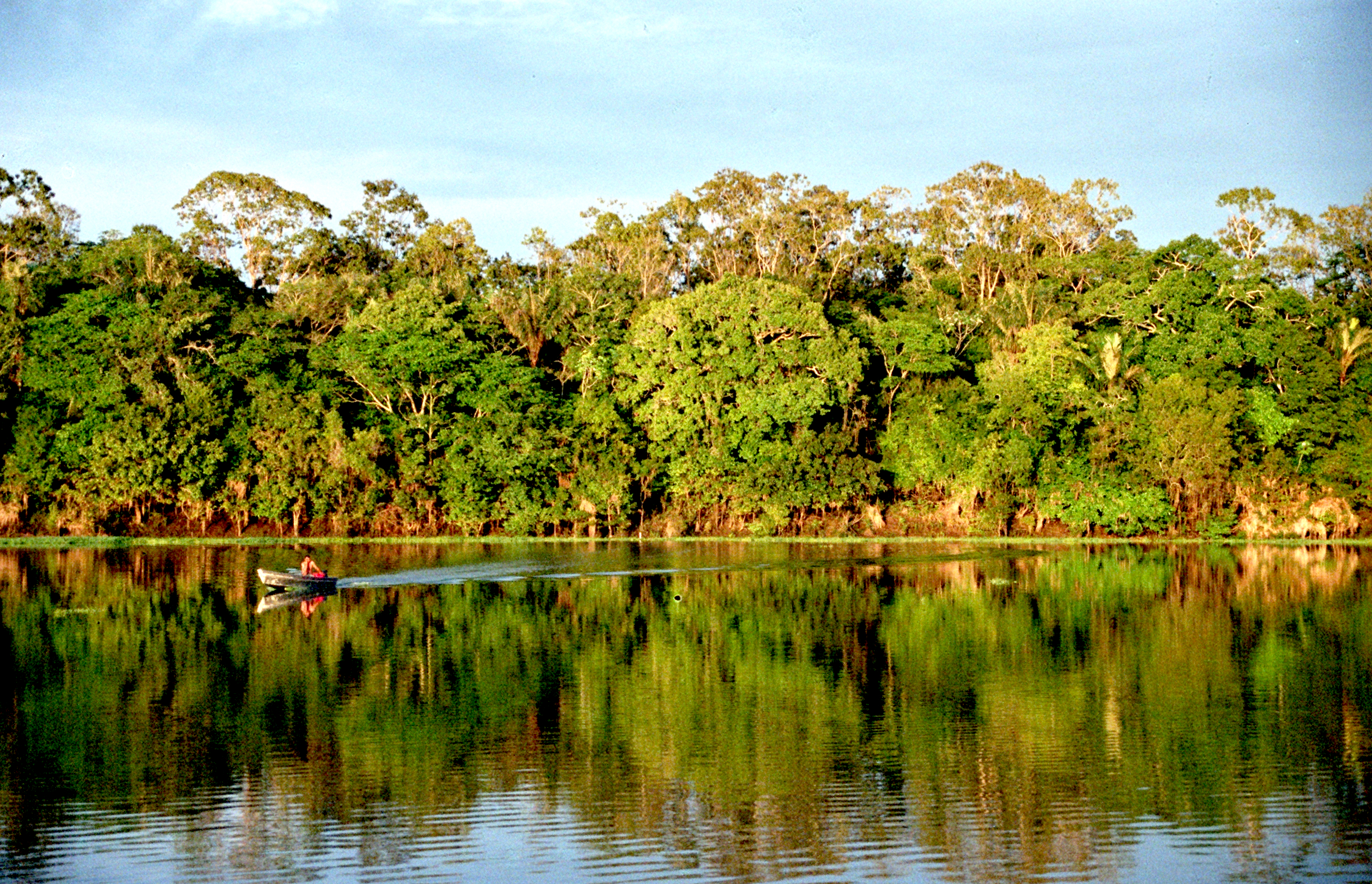
“Amazon rainforest in the Urubu River, near Silves, Amazonas State, Brazil” by Andre Deak, 2008. Image: wikimedia

Trees help combat climate warming, absorbing emissions of carbon dioxide. In many areas of the world, deforestation – cutting and clearing trees to use land for other purposes – depletes forests that absorb the warming gas. This week, world leaders meeting in Glasgow for COP26 pledged $19 billion to end and reverse deforestation by 2030. Among the signatories was notably Brazil, where Itaipú supplies hydroelectric energy but also stresses forest land. Brazil’s Amazon forest has suffered significant deforestation in the recent decades. Canada, China, Russia, nations of the EU, the UK, and the US also signed the declaration, with over 85% of world forests represented.

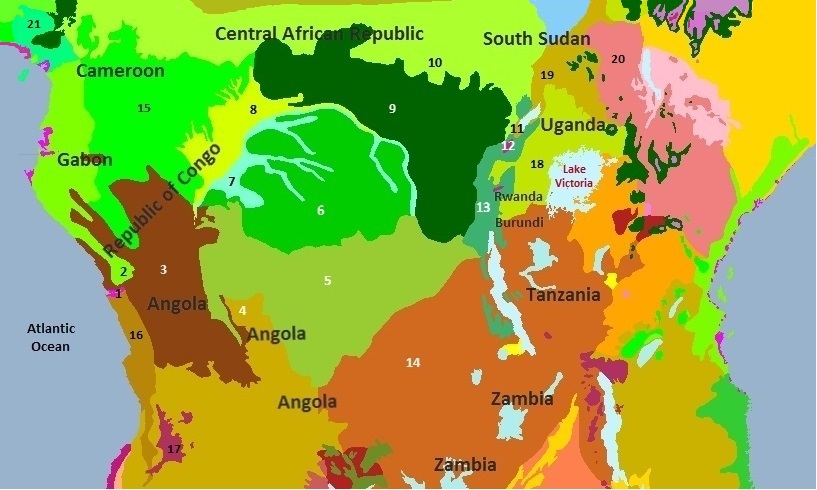
“Map of ecoregions of Central Africa.” Encyclopedia of Earth, 2016. Image: wikimedia commons.

Importantly, 30 global financial organizations also agreed to end investment in activities tied to cutting forests. Companies including multinational insurance giants Aviva and Axa signed on. A fund to protect the world’s second largest rainforest, in the Congo Basin, completed the pact.

Stopping and reversing deforestation may be one of the great successes of COP26. Image: COP26 Logo, United Nations. Wikimedia

Some observers noted that a similar pledge, the “New York Declaration on Forests” of 2014, promised hope but ended in disappointment. Some key countries like Brazil, China, and Russia were not signatories of that earlier pact. Brazil holds the planet’s biggest rainforest, and Russia has more than 20% of the world’s trees. Optimists noted that the difference between 2014’s declaration and 2021’s “Global Forest Financing Pledge: Financing the protection, restoration, and sustainable management of forests” is indicated in the title: the key commitment of financing a better future.

Aviva. www.aviva.com

Axa. https://www.axa.com

Rannard, Georgina and Francesca Gillett. “COP26: World leaders promise to end deforestation by 2030.” 2 November 2021. BBC.com. https://www.bbc.com/news/science-environment-59088498

United Nations. UN Climate Change Conference UK 2021 in partnership with Italy. “The Global Forest Finance Pledge.” 2 November 2021. https://ukcop26.org/the-global-forest-finance-pledge/

Building the World Blog by Kathleen Lusk Brooke and Zoe G. Quinn is licensed under a Creative Commons Attribution-NonCommercial-NoDerivs 3.0 Un

WATER, ENERGY, CITIES: Earthshot Prize

One of the winners of the inaugural Earthshot Prize, The Bahamas, for a program of coral reef restoration. “Coral Reef” by Photographer Jerry Reid, U.S. Fish and Wildlife Service, 2013. Public Domain. Wikimedia.

October is a time of prizes. Earlier this month, Nobel Prize winners received momentous telephone calls. Now, inaugural winners of the Earthshot Prize received recognition for innovative solutions to the world’s climate crisis. Named after the “Moonshot” launched by President John F. Kennedy to land people on the moon within a decade, the Earthshot campaign will run from 2021 to 2030. Initiated by Prince William, Sir David Attenborough, and The Royal Foundation, the timeframe was described by Prince William as “A decade doesn’t seem long, but humankind has an outstanding record of being able to solve the unsolvable. Many of the answers are already out there,  but we need everyone – from all parts of society – to raise their ambition and unite in repairing our planet.” ((Ryan and Foster 2021)

Image: Earthshot Prize.org

Bahamas: Growing coral on land and then replant in damaged coral reefs;

Costa Rica: Paying residents to protect and restore rainforests, reversing deforestation;

“Costa Rica forest,” by Nakashi, 2007. Wikimedia.

India: Takachar attaches to tractors, reducing emissions by 98%, turning waste into new products. The enterprise started at MIT and creates biochar and other products.

Italy: city of Milan as a food hub to share restaurant and supermarket food with the needy;

Milan, Italy won as a Food Hub City. “Galleria Vittorio Emanuele II, Milan,” 2017 by C. Messier. Image: wikimedia commons.

Thailand/Italy/Germany: AEM Electrolyser turns water into carbon-free hydrogen.

Earthshot’s five goals for 2030. “Greetings from the Year 2030” by Riesenspatz. Public Domain, wikimedia.

Earthshot’s five goals by 2030: Protect and Restore Nature, Clean our Air, Revive our Oceans, Build a Waste-Free World, and Fix our Climate. In honor of the Earthshot Prize, Buckingham Palace turned green. The Earthshot prize announcement precedes another event designed to bring green to the UK, and the world. COP26 will soon convene in Glasgow, Scotland to decide the future of climate, energy, and Earth.

AEM Electrolyser. https://www.enapter.com/

Attenborough, Sir David and Prince William of Cambridge, “Announcing the Earthshot Prize.” VIDEO. https://www.youtube.com/watch?v=mFbwTRMwBAc

Brooke, Kathleen Lusk and Zoë Quinn. “ENERGY: The Physics of Climate Change.” Building the World Blog, University of Massachusetts Boston. https://blogs.umb.edu/buildingtheworld/2021/10/05/energy-physics-of-climate-change/

Earthshot Prize. https://earthshotprize.org/

Ryan, Hannah and Max Foster, “Winners of Prince Williams Earthshot environmental prize announced.” 18 October 2021. https://www.cnn.com/2021/10/16/uk/prince-william-earthshot-prize-intl-gbr/index.html

Takachar. https://www.takachar.com/

Building the World Blog by Kathleen Lusk Brooke and Zoe G. Quinn is licensed under a Creative Commons Attribution-NonCommercial-NoDerivs 3.0 Un
TRANSPORT: supply chain reaction

The Silk Road was an early transport and supply chain network. Image: “Seidenstrasse GMT” 2005 by Captain Blood, GNU free license, wikimedia commons.

From the Silk Road to the Suez Canal, transporting goods has shaped civilization, stimulated cultural exchange, and truly united the world. Presently, the global supply chain is in the news. Cargo tankers are stalled in ports, dock unloading is stalled by COVID restrictions, trucks are waiting for drivers, warehouses are stuffed with unshipped goods, local stores are limiting purchases and warning shoppers to buy early. All this costs both time and money: McKinsey reports shipping costs are six times higher than in 2019. (Hall 2021)

“Where is shipping heading?” Photo: Fleet 5. by U.S> Navy/PH3 Alta I. Cutler. ID: 020418-N-1587 C-030. Source: United States Navy. Image: wikimedia commons.

While government has stepped in, opening certain ports 24/7; and private enterprise has stepped up, chartering their own ships and diverting them to less congested ports; what will happen after the holiday buying season? Some say it is an opportunity for autonomous transport. Maritime shipping is exploring options. Experiments on inland waterways by the Collaborative Autonomous Shipping Experiment (CASE) in cooperation with Belgium, China, Italy, and the Netherlands, noted that control algorithms should be coordinated. Vessels are usually owned and operated by different parties, and use proprietary systems for control and navigation. Results produced simulation models that may help develop shared systems.

“Will autonomous trucks change the supply chain reaction?” Photo by epsos.de, https://www.flickr.com/photos/36495803@NO5/5591761716. Image: wikimedia commons. CC2.0

When ships are unloaded, trains and trucks take over: autonomous trucking is advancing rapidly. Embark Trucks, and Locomation, join TuSimple, Plus, and Aurora in the race for innovation and investment in autonomous trucking. Advances in trucking will change the supply chain: 68% of all freight comes to you on a truck.

“Supply Chain Network” graphic by David Pogrebeshsky, 2015. Image: wikimedia commons cc4.0

Analysts predict the supply chain will recover by 2022, but will it ever be the same? We hear a lot about self-driving cars, but there is also significant innovation in shipping and trucking. Autonomous transport may cause a supply chain reaction.

Aurora. https://aurora.tech

Efrati, Amir. “Two More Self-Driving-Truck Developers Consider Public Offerings.” 9 June 2021. The Information. https://www.theinformation.com/articles/two-more-self-driving-truck-developers-consider-public-offerings

Embark Trucks. https://embarktrucks.com

Farooque, Faizan. “4 Self-Driving Truck Stocks You Need to Keep an Eye on.”  9 September 2021. NASDAQ.com. https://investorplacecom/2021/09/4-self-driving-truck-stocks-you-need-to-keep-an-eye-on/

Hall, Claire. “Supply Chain Disruptions Create Shortages of Goods Just in Time for the Holidays.” University of Connecticut interview with Professor Tao Lu, Operations and Information Management Systems. 12 October 2021. https://today.uconn.edu/2021/10/supply-chain-disruptions-create-shortages-of-goods-just-in-tme-for-the-holidays/

Haseltalab, Ali, et al., “The Collaborative Autonomous Shipping Experiment (CASE): Motivations, Theory, Infrastructure, and Experimental Challenges. International Ship Control Systems Symposium (ISCSS) 2020, Delft, The Netherlands. For Project: Navigation and Path Planning of Marine Vehicles. DOI:10.24868/issn.2631-8741.2020.014

Inland Waterways International. https://inlandwaterwaysinternational.org

Locomation. https://locomation.ai

Metzger, Joe, Executive Vice President, Supply Chain Operations, Walmart US, “How Walmart is Navigating the Supply Chain to Deliver this Holiday Season.” 8 October 2021. https://corporate.walmart.com/newsroom/2021/10/08/how-walmart-is-navigating-the-supply-chain-to-deliver-this-holiday-season

Plus. https://www.plus.ai

TuSimple. https://www.tusimple.com

Building the World Blog by Kathleen Lusk Brooke and Zoe G. Quinn is licensed under a Creative Commons Attribution-NonCommercial-NoDerivs 3.0 Unp