Syukuro Manabe, Klaus Hasselmann, and Giorgio Parisi “demonstrate that our knowledge about the climate rests on a solid scientific foundation,” stated the Nobel Prize Committee, when awarding the Nobel Prize for Physics 2021. Half of the prize went to Parisi for discovery of the “interplay of disorder and fluctuations in physical systems from atoms to planetary scales,” while Manabe and Hasselmann split the other half. Manabe created one of the first climate models that revealed how carbon emissions warmed the planet, while Hasselmann showed that Manabe’s computer simulations could accurately predict the trends of climate change, even while weekly weather fluctuations were still variable. Parisi won for studies of the results produced when metals like iron or copper are mixed, revealing patterns. Parisi commented, when winning the Nobel Prize, that perhaps the Nobel Committee wanted to send the world a message about climate change: “I think it’s urgent. It’s clear that for the future generations we have to act now in a very fast way.” (Brumfiel 2021). Stefan Rahmstorg, climate modeler, stated “Physics-based climate models made it possible to predict the amount and pace of global warming, including some of the consequences like rising seas, increased extreme rainfall events and stronger hurricanes, decades before they could be observed.” (Keyton and Borenstein, 2021)
“Global warming” NASA 2016. Image: public domain, nasa.gov.
Recent weather proves the scientists right: in 2021, 36% of Americans, and many more worldwide, suffered severe effects of climate change through drought and fires, storms and floods. In a few weeks, the world will convene in Glasgow, Scotland for COP26, sequel to the Paris Agreement (COP21). Now it is time for action. What do you think are the highest priorities for climate?
Manabe, Syukuro and Richard T. Wetherald. “On the Distribution of Climate Change Resulting from an Increase in CO2 Content of the Atmosphere.” January 1980, Journal of the Atmospheric Sciences, Volume 37, pages 99 – 118.
Manabe, Syukuro. “Why this is happening” Interview upon receiving Nobel Prize in Physics 2021.” AUDIO. Telephone call interview with Manabe explaining the work. https://youtu.be/yt246IKVhr4
Parisi, Giorgio. “Statement on receiving Nobel Prize.” 5 October 2021. AUDIO interview. https://youtu.be/GE-qX8mwvuA
Building the World Blog by Kathleen Lusk Brooke and Zoe G. Quinn is licensed under a Creative Commons Attribution-NonCommercial-NoDerivs 3.0 Unp
“Every night, the largest biological migration takes place.” Image animation: “Diel Vertical Migration” by NASA, 2018. Public Domain.
Did you know the largest biological migration on Earth takes place – every night? It is called Diel Vertical Migration (DVM). This week, as the United Nations 76th General Assembly convened, leaders of over 100 nations attended in person. Speakers included presidents and policy-makers who addressed 12 commitments. But this year, there was additional representation: Nature. The message is one of growing awareness of the Rights of Nature. From the 1962 General Assembly Resolution 1803 (XVII) on “Permanent Sovereignty over Natural Resources” and the 1982 “World Charter for Nature” to the recognition of personhood rights of the Whanganui River of New Zealand in 2017, the rights of nature will grow in importance during climate change.
“Components of the Biological Pump” by Ducklow, Hugh W. et al., 2015. Image: wikimedia commons.
DVM acts as a biological pump, renewing oceans and lakes, in ways essential to the marine environment. Organisms move up to the top at night, and return to the bottom by day. Crustaceans commute; so do trout. In the process, conversion of C02, and inorganic nutrients, transfer zones. This cleansing and renewing system is one of the treasures of the marine cycle. By bringing attention to vertical migration, the United Nations may set the stage for COP 26 in Glasgow, November 2021, where environmental issues will be decided. Displayed on the night-cloaked facade of the United Nations iconic building, the film “Vertical Migration” brought awareness to the largest migration our world knows, and the importance of marine life in a sustainable, balanced future.View “Vertical Migration.”
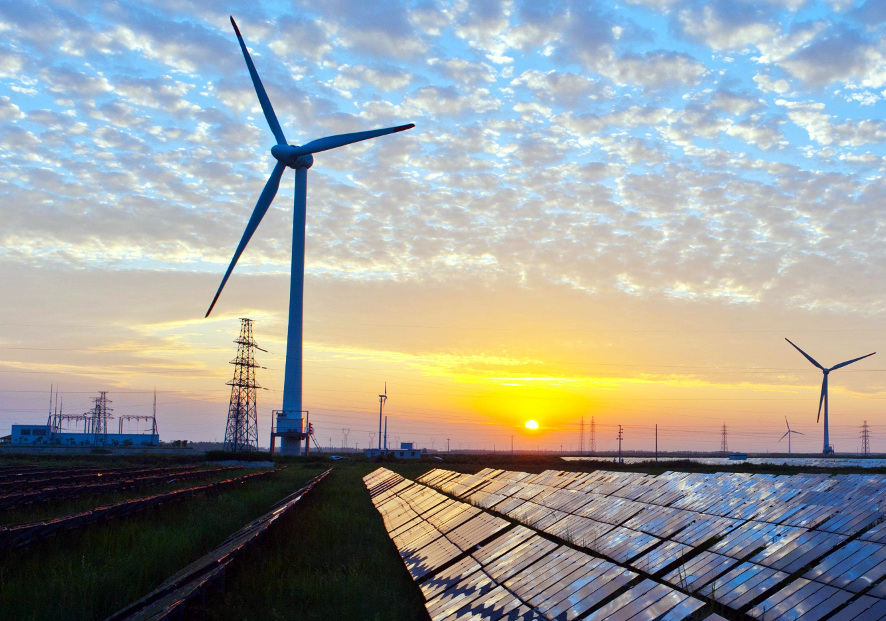
Jobs of the Future will focus on renewable energy. Image: “Energy on the Grid,” by photographer Kenueone, 2016. Public Domain CC0 1.0. Original image: https://pixabay.com/electricity-sun-wind-1330214.
Born after 1996? Or 1981? You are 70% more likely to rate climate change as the top priority for your future (Pew Research Center 2021). Universities are responding, integrating climate and environmental studies into the curriculum. University of Massachusetts Boston founded the School for the Environment, as well as the Sustainable Solutions Lab and Stone Living Lab. MIT’s Environmental Solutions Initiative (ESI) founded in 2014 involves design, engineering, humanities, policy, science, social science, and technology. Harvard’s Center for the Environment (HUCE) offers research, policy, science, climate leaders program, and special events like “Literature for a Changing Planet.” University of Southern California inaugurated “Sustainability Across the Curriculum” weaving the environment into majors of 20,000 undergraduates.
“Shift Change at Clinton Engineering Works, Oak Ridge, TN, August 1945,” by Ed Westcott, US Army photographer. Public Domain. Over 82,000 people were employed. Energy jobs will dominate the future.
Upon graduation, a new generation will find the jobs of the future. Throughout history, great undertakings, like the Manhattan Project, Snowy Mountains Hydroelectric, attracted those seeking careers in new energy. Now, a similar surge in energy employment means you can do well by doing good: average pay for climate scientists is $73,230; environmental lawyers earn median salary of $122,960. Not all jobs require traditional degrees: urban farmers earn $71,160. (US Bureau of Labor Statistics/Guardian 2021).
“New Crops: Chicago Urban Farm,” by Linda N. Creative Commons CC 2.0. Wikimedia.
According to the International Energy Agency (IEA), the transition to a global net zero energy system will see renewables like solar and wind power dominate, while bioenergy and carbon capture will develop innovative approaches. There are 400 milestones to guide development, with total annual energy investment of $5 trillion by 2030.
Education + Jobs = Health of the Planet. Graphic by Nevit Dilmen, 2011. Image: creative comons, public domain.
Climate change will cause an era of innovation more comprehensive than we have seen in the history of the world. Every field will be impacted; every field will see innovation. Rachel Larrivee, 23, Boston-based environmental consultant, says it well: “I’m in the first generation who knows the extent to which climate change poses an existential threat to life on Earth, and also the last generation who may be able to do anything about it.” (Lashbrook, 2021.)
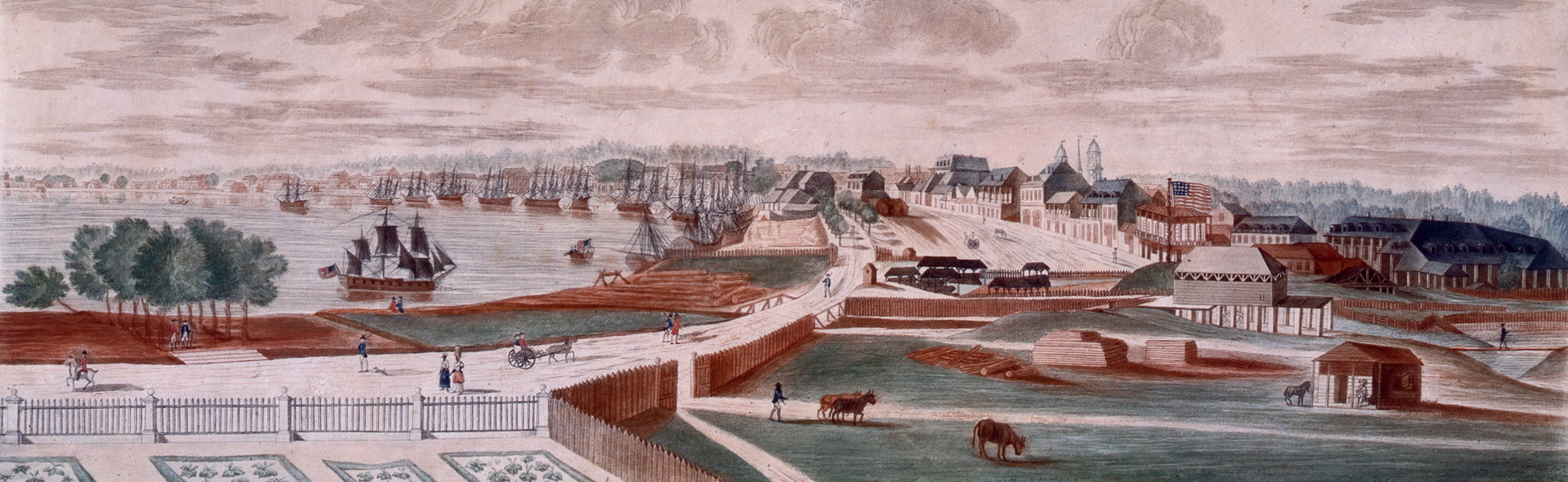
New Orleans in 1803. Image: “Under My Wings Everything Prospers” by J. L. Bouqueto de Woiseri. 1 January 1803. Public Domain. Image: wikimedia commons.
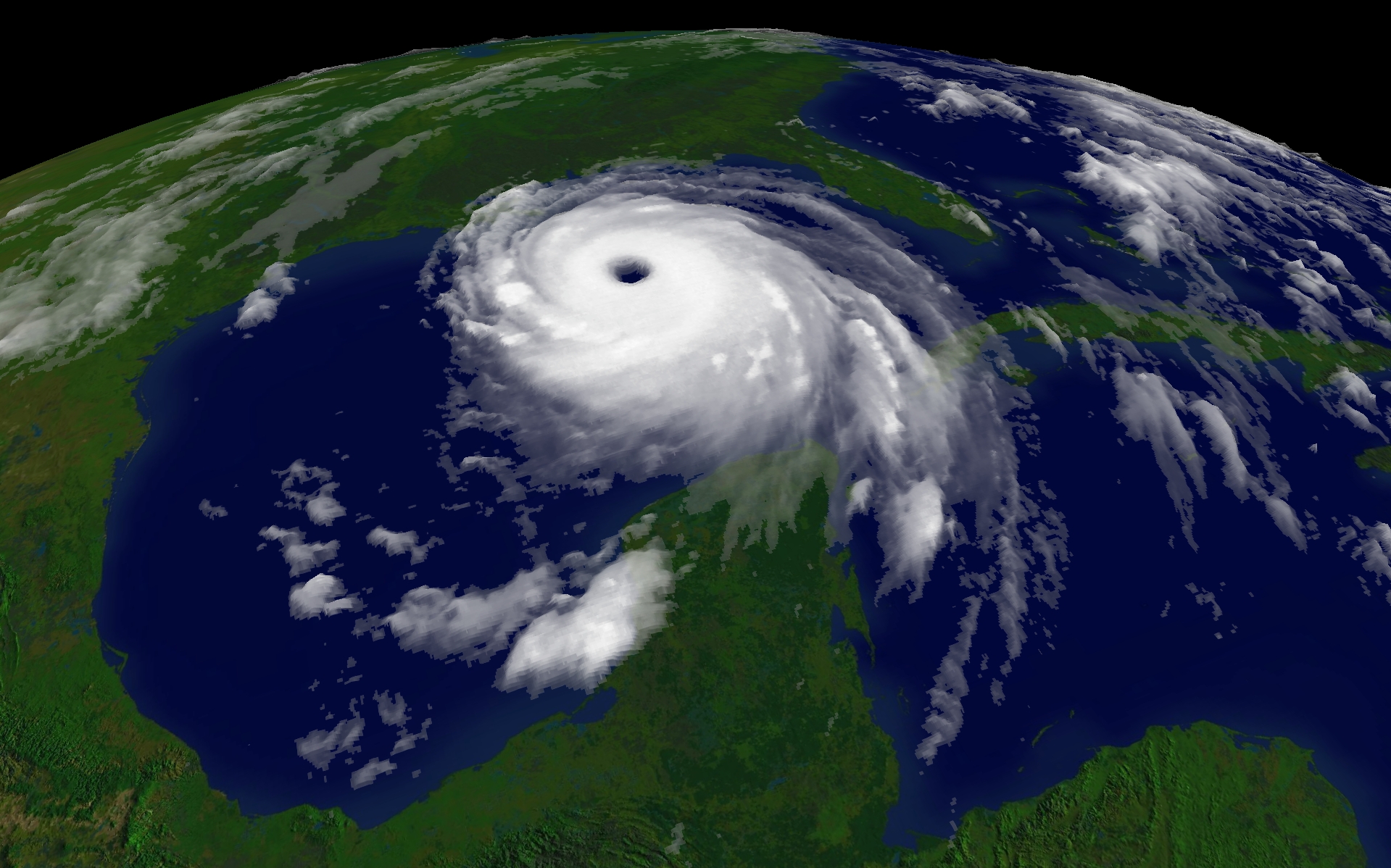
Hurricane Ida hit Louisiana, in August 2021, bringing severe wind and water. New Orleans was watching. After Hurricane Katrina, in 2005, the city built a flood-prevention system of gates, levees, pumps, and walls. Sixteen years later, almost to the day, Ida tested Katrina’s resilient infrastructure. The city emerged relatively unscathed( Hughes, 2021). But just 60 miles away, storm surge toppled the Lafourche Parish levee. Overwhelmed by floods, damaged sanitation and sewage systems threatened public health. The discrepancy between a prepared city and an unprotected town foretells the future of coastal communities in climate change.
Hurricane Katrina in 2005 caused damage that resulted in the building of a storm protection system, tested by Hurricane Ida in 2021. Image: “Hurricane Katrina, 28 August, 2005” from NOAA. Public Domain.
It’s not just flooding. Even though New Orleans avoided Katrina’s flooding in Ida, there were other dire effects. Like power outages. Hundreds of thousands of people remained without electricity a week after the storm. Refrigerators were off, so were air-conditioners: in the 90 degree (F) heat, the situation was dangerous. Those who could escaped to nearby places with electricity for an “evacuation vacation.” Many were not so fortunate.
“Hurricane Ida at Landfall in Port Fourchon, Louisiana, 29 August 2021. Image: weather.gov. Public Domain.
Coastal communities face an uncertain yet certain future. By 2040, providing storm-surge systems like sea walls for American cities with populations greater than 25,000 is estimated to cost $42 billion – that would include New Orleans. But what about Lafourche Parish? Protecting smaller communities and towns would raise the cost to $400 billion. (Flavelle 2021). Protecting against flooding is only part of the problem, however: wind damage to above-ground electrical poles, wires, and transformers is cause for alarm. During Hurricane Ida, 902,000 customers lost power when 22,000 power poles; 26,000 spans of wire, and 5,261 transformers were damaged or lost – more than Katrina, Zeta, and Delta combined (Hauck 2021).
“Map illustrating areas of the Netherlands below sea level.” By Jan Arkestejin. Pubic Domain Image: wikimedia.
Even with abundant funding, infrastructure takes time to build. Storms, however, will not stop. While rebuilding more resilient storm barrier and electrical systems, communities may look to the Protective Dikes and Land Reclamation practices of The Netherlands as a case example of immediate resilient response. The Dike Army (Dycken Waren), composed of residents responding together in times of need, was part of the system. As Louisiana, and other areas significantly damaged by Hurricane Ida, consider how to rebuild, it may be time to call to arms a new kind of Dike Army, perhaps a regional Civilian Climate Conservation Corps (4C), to serve and protect coastal communities and habitats: both terrestrial and marine. Disaster response would be in addition to the goals of the Civilian Climate Corps proposal of the US in January 2021. The 4C’s motto is up for a vote: some want “For Sea” and some like “Foresee.” What’s your vote?
“CCC” pillow from CCC museum in Michigan, USA. Image: public domain.
Flavelle, Christopher. “With More Storms and Rising Seas, Which U.S. Cities Should Be Saved First?” 19 June 2019. The New York Times.
Could cars be taught to care? “Ford Argo AI,” 2019. Photo by Tony Webster. Creative Commons, Wikimedia.
“Autonomous vehicles (AVs) are never drunk or tired or inattentive,” states Julian De Freitas, of the Harvard Business School and Ethical Intelligence Lab. Over 90% of traffic accidents and deaths (1.35 million fatalities globally) are due to driver error. Smarter vehicles could save lives to an extent equal to the discovery of vaccines and antibiotics, but will consumers trust these cars? Can vehicles evaluate, think, and drive with “common sense?” Ethical dilemmas such as whether an AV should save pedestrians or passengers is one of the pressing issues facing car manufacturers giving brains and hearts to their products. Will highway systems, like the Germany’s Bundesautobahn System of 13, 183 km (8. 192 mi), or US Federal Highway System, develop dedicated lanes for AVs? Insurance and legal concerns will set new regulations. Does technology carry the liability, or human operators? Many people feel they identify with their cars: will cars become more like people? Want to take a drive?
De Freitas, Julian, et al., edited by Susan T. Fiske. “From driverless dilemmas to more practical commonsense tests for automated vehicles.” 16 March 2021. Proceedings of the National Academy of Sciences (PNAS), 118 (11) e2010202118. https://doi.org/10.1073/pnas.2010202118.
Maurer, M. et al., editors. Autonomous Driving. Berlin: Springer, 2016.
Nader, R. Unsafe at Any Speed: The Designed-In Dangers of the American Automobile. New York: Grossman, 1965.
“Animation showing changes in Iris,” by Sagyxil, 6 February 2010. GNU open license. Image: wikimedia.
The Intergovernmental Panel on Climate Change (IPCC) confirmed our worst fears: the world may be losing the battle of climate. Some effects of global warming are permanent and irreversible, like sea-level rise. When the Greenland ice sheet melts, it will not refreeze. There are other effects that may ultimately reverse, but will take centuries to do so: oceanic acidification and deoxygenation, melting of permafrost, air pollution.
It’s not all totally bad news: there may still be a window. The question is how to use our limited remaining time most wisely? According to Peter Huybers, professor of earth and planetary sciences at Harvard: “There are notable opportunities to increase our rate of learning about the climate system by developing a constellation of satellites to monitor the flow of energy in and out of the Earth system. Another constellation of satellites could monitor greenhouse gas fluxes for purposes of better holding nations accountable for their emissions.” (Huybers and Mulcahy, 2021)
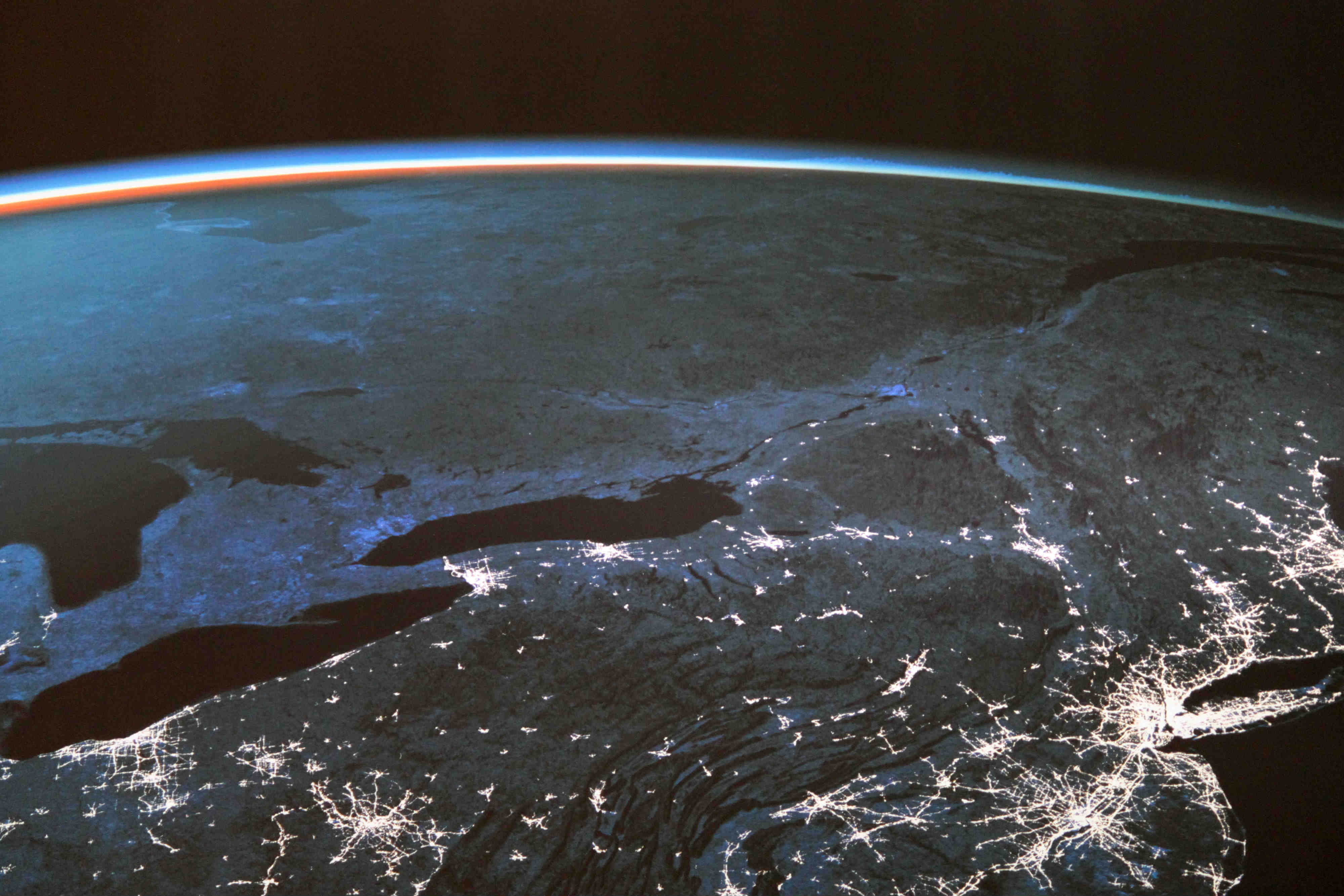
“Earth’s seasons, seen by satellite.” NASA.gov.
When Sputnik launched in 1957 and COMSAT followed in 1962 , we developed capability to see Earth as a whole, dynamic system. Science fiction always depicted space as a place to explore, maybe to inhabit, perhaps even an exit strategy from a failing Earth. But space may turn out to be the place from which T.S. Eliot’s words might come true in a new way:
“We shall not cease from exploration
And the end of all our exploring
Will be to arrive where we started
And know the place for the first time.”
T. S. Eliot
Eliot, T. S. “Little Gidding,” from Four Quartets. Originally published in 1943.
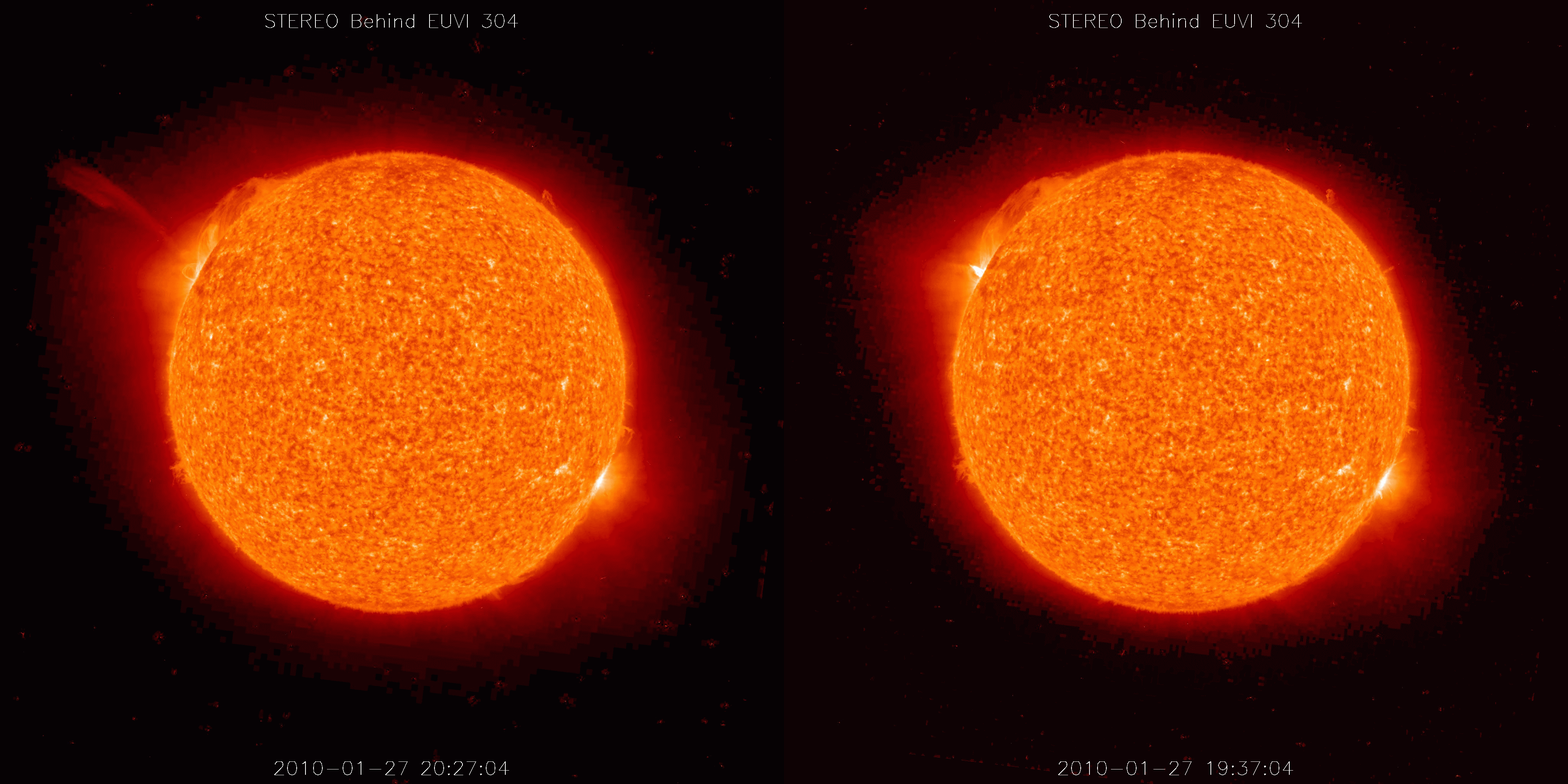
“SUN” by NASA, STEREO Science Center, 2010. Image: public domain.
The long, hot summer – but it’s not August, it’s not even 2021. It’s the whole 21st century. The International Panel on Climate Change (IPCC) released findings today. Here is a summary:
Climate change is widespread, rapid, and intensifying
Warming is speeding up
Every region of the world is facing climate change
Human influence is a major cause – and could be the cure (IPCC 9 August 2021)
Do we have the power to respond? Image: TVA Sign at Franklin D Roosevelt Presidential Library and Museum, Hyde Park, NY, USA. By Photographer Billy Hathorn, 2015. Image: CC0 1.0 Public Domain. Wikimedia.
It’s (almost) not too late. Can we meet the challenges? Some changes, like rising seas, may be permanent. Other results may last a century but could be eased or even reversed. There is still time to determine the future we choose (Figueres and Rivett-Carnac, 2020). Throughout history, people have responded to crisis with innovation. Energy transitions have been turning points in civilization: Tennessee Valley Authority hydroelectric power gave the world the first homes with refrigerators when the TVA opened the town of Norris. Danger led to the Manhattan Project and development of atomic energy. Geothermal, solar, wind, and wave power offer options in every region.
“Spinning Globe Map.” by Anonymous101, 2007. Image: public domain, wikimedia commons.
Regions all share climate change but conditions will vary. “For the first time, the Sixth Assessment Report provides a more detailed regional assessment of climate change, including a focus on useful information that can inform risk assessment, adaptation, and other decision-making, and a new framework that helps translate physical changes in the climate – heat, cold, rain, drought, snow, wind, coastal flooding and more – into what they mean for society and ecosystem.” (IPCC 2021) Regional information and options can be explored in detail in the newly developedInteractive Atlas here.
Microplastics in four rivers – Image. “Microplastics in freshwater ecosystems: what we know and what we need to know.” by Martin Wagner, et al., Environmental Sciences Europe. 26, 2014. doi: 10:1186/s12302-014-0012.7
Did you know that 35% of the plastic in our water is microfibers? Those microfibers come from our clothing, released into the water supply during laundering. Microfibers are too small (0.5mm) to be captured by traditional filters. Currently, 2/3rds of clothing contains some percentage of synthetic materials. A typical washload of polyester clothing may shed 9,000,000 microfibres with every wash. Now there is something we can do to stop this problem: attaching a filter to washing machines to catch the microfibers. While the origin of microfibers in clothing is the garment industry, a major source of plastic microfibers is the effluence of laundry water. PlanetCare is expanding their product to a larger version for commercial laundries.
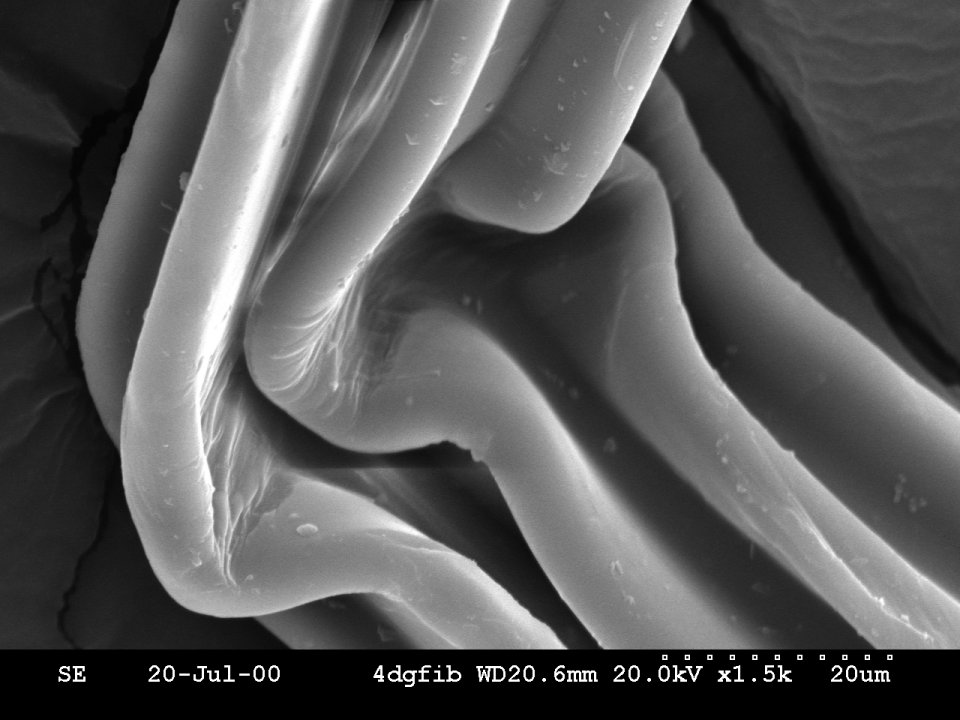
“SEM picture of a bend in a high-surface area polyester fiber with a seven-lobed cross section” by Pschemp, 2000. Image Wikimedia.
Other companies are developing microfiber filters for washing machines. Environmental Enhancements offers the Lint LUV-R. Xeros Technologies produces the XFiltra. Filtrol makes a similar product. Cora Ball and Guppyfriend use a different technology: devices that collect microfibers inside the washing machine during the laundry cycle. While attached filters catch more fibers (87%), these tend to be the longest ones; Cora Ball inserts and Guppyfriend washing bags capture 26%, mainly the smallest fibers. Using both approaches would increase success.
Ride with Bezos? Price still unknown – the only ticket was auctioned for $28 million: for a ten minute ride, Blue Origin’s meter runs fast as a rocket. Fly with Branson? Over 600 seats on Virgin Galactic are pre-sold, going for $200, 000 to $500, 000 for a hour’s excursion. Prefer a longer stay? A space vacay to the International Space Station by Elon Musk and SpaceX: $55 million. There are other costs – environmental.
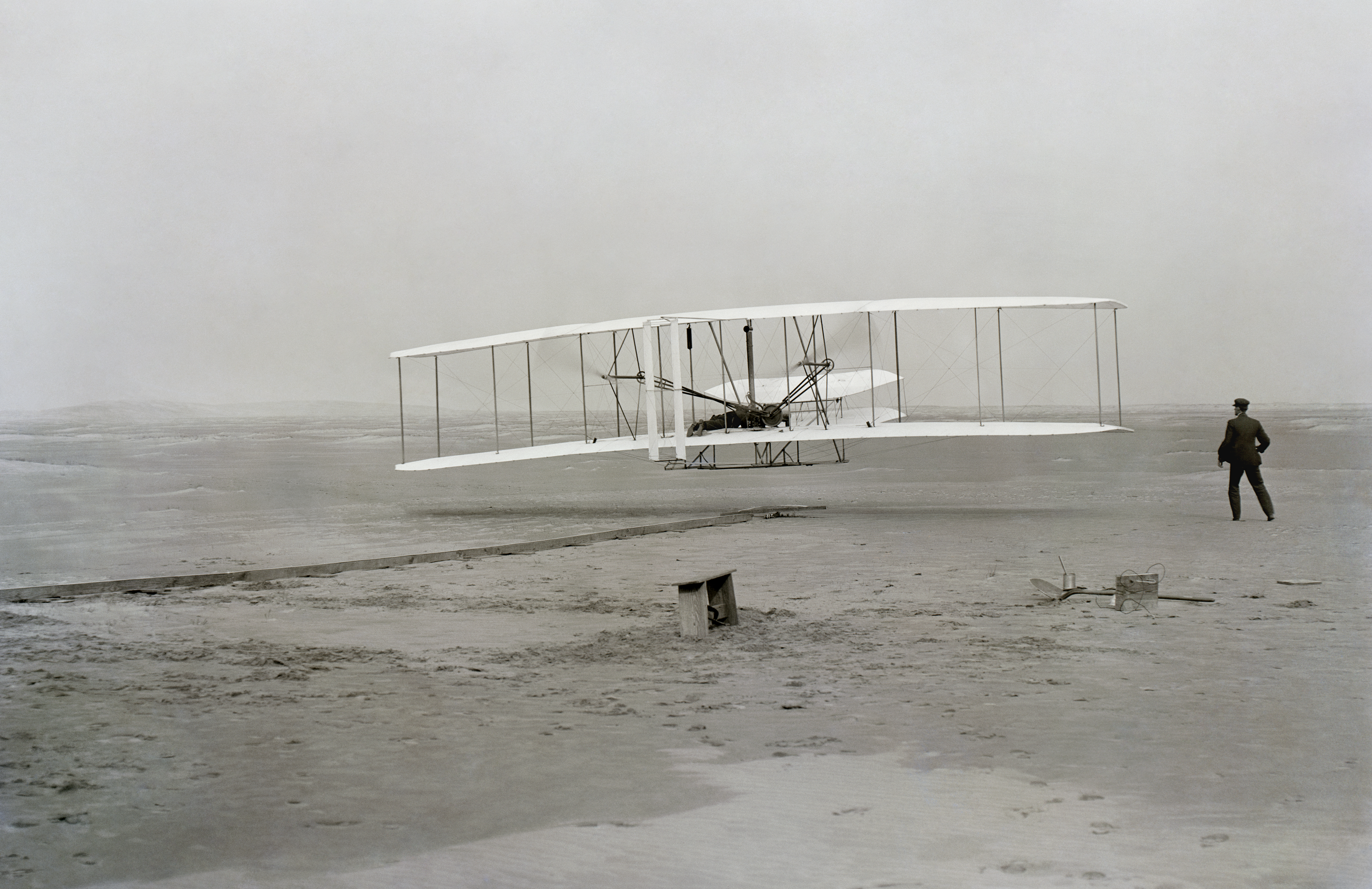
“First successful flight of the Wright Flyer: traveled 120 ft. (36.6m) in 12 seconds, on 17 December 1903. Image: Library of Congress, ppprs.00626
One way to evaluate financial, and environmental, costs of private space travel could be to look back to 17 December 1903 when the Wright Flyer took off from Kitty Hawk. In December 1944, the Convention on International Civil Aviation established rules for civil aviation: stated goals were safety and international cooperation. In 2004, the world had 900 airlines, tallying 22,000 aircraft serving 1,670 airports. (Spaceports, overseen by the Federal Aviation Administration, are now in high construction demand.) In 1960, civil aviation flew 100 million people; by 2017, 4 billion passengers. In 2019, revenues in the global aviation industry reached $838 billion. However, passenger air travel spikes the highest (and fastest) growth in individual emissions. Flight shaming (flygskam) is a resulting development. Branson and Bezos both drew criticism for spending funds on space tourism when there is a world in need below.
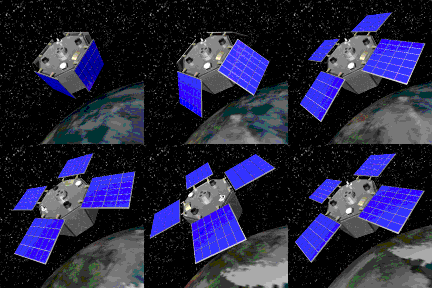
“A simulation of ACRIMSat (Active Cavity Radiometer Irradiance Monitor Satellite)” by NASA/JPL, 2006. Public domain.
Commercialization of space might also be examined through the development and expansion of satellites. COMSAT, the first commercial satellite operator, began with Intelsat and Inmarsat. When “Early Bird” launched in 1965, the Communications Satellite Act had just established a policy for a commercial communications satellite system open to many nations cooperatively. Comsat began with a $5 million line of credit. Sales by 1996 were $1 billion. Launching satellites produces carbon pollution, and also another kind of pollution: traffic. As of 1 August 2020, there were 2,787 satellites orbiting Earth – 1,364 of them communications satellites both government and commercial.
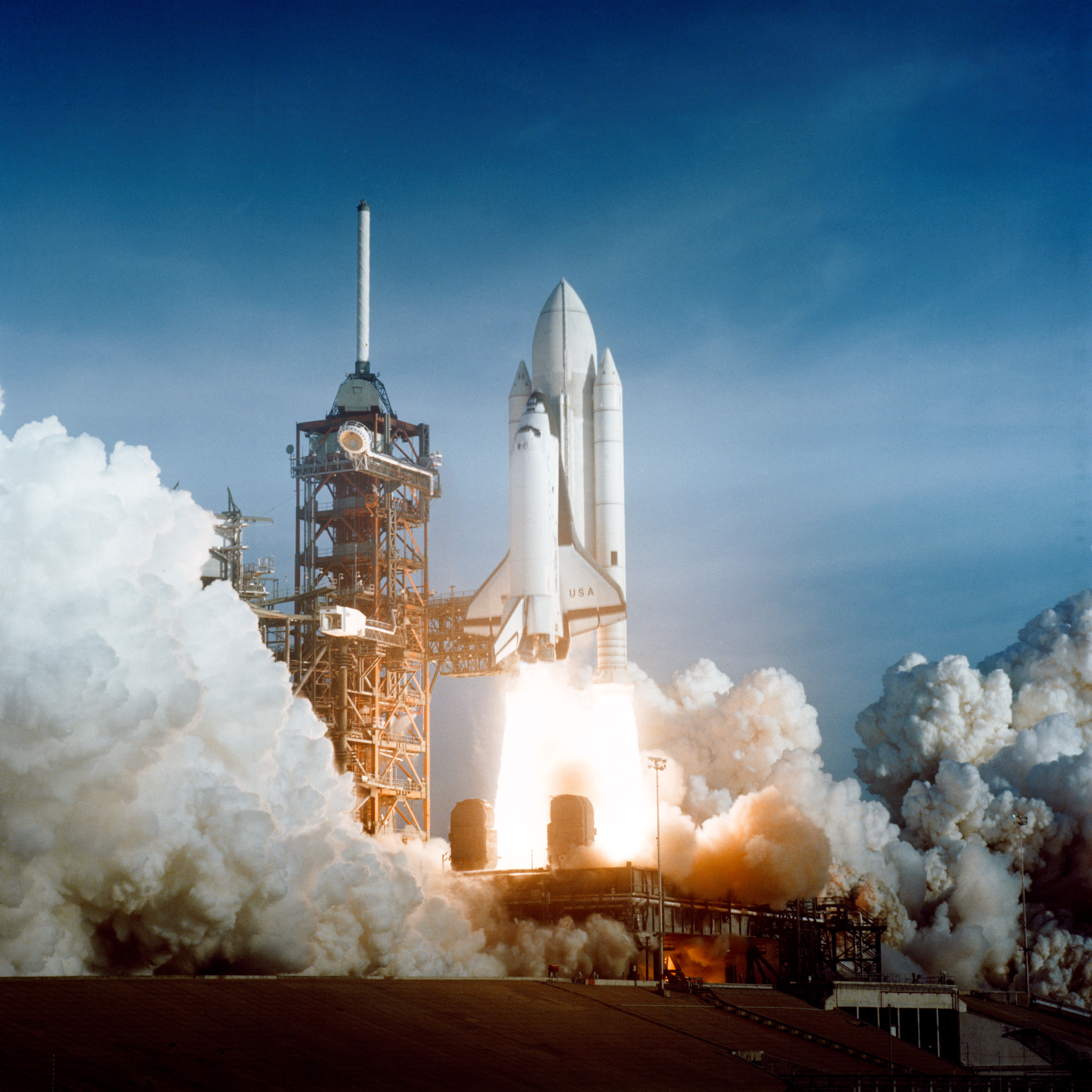
What can we do to reduce space emissions pollution? Image: “Space Shuttle launched with two solid-fuel boosters (SRB.” NASA, 1981, public domain.
Branson’s Virgin Atlantic, a commercial airline, ferries passengers worldwide, diluting the energy burden per seat. But Virgin Galactic carries just six, tallying a much higher per-person emissions cost; the one-hour flight is equivalent to driving a typical car around the Earth. One concern is the type of fuel used by Virgin Galactic: the system runs on a kind of synthetic fuel that burns with nitrous oxide, shooting black carbon into the stratosphere. Blue Origin uses liquid hydrogen and liquid oxygen, causing 750 times less climate-forcing magnitude than Virgin’s (Ahmed 2021). SpaceX will bring four passengers to space in September, causing the equivalent of 395 transatlantic flights worth of emissions.
“Image of depleted Ozone Layer at South Pole, Antarctica” by NASA, 2006. Image: public domain.
Space tourism projects market growth of 17% each year in the coming decade. Price-per-flight will be reduced, and innovations will increase. Just as SpaceX introduced reusable rockets, a game-changer for the space industry (landing 44 of 52 attempts), and Axiom is planning to launch its own commercial space station at the cost of $1.8 billion to NASA’s $150 billion for the International Space Station, privatization of space will streamline the industry. But because rockets emit 100 times more CO2 per passenger than flights (Marais 2021), and because rocket exhaust is released directly into the atmosphere from a higher point of entry, the ozone layer (earlier protected by the 1987 Montreal Protocol) may be again under threat.
Aviator Amelia Earhart and Purdue University President Edward C. Elliott, with Lockheed Electra, 1936. Image: public domain.
Some feel private space commercialization may be a misuse of resources more urgently needed on Earth; others predict important innovations will follow July 2021’s first commercial space tourism flights. Some of the most important developments must be in fuel options and emissions management. Will commercial space flight learn from civil aviation? Bezos’ Blue Origin space tourists brought little carry-on luggage, but two significant items hitched a ride: Amelia Earhart‘s goggles, and a piece of canvas from the Wright Flyer.
MacMartin, Douglas G. and Ben Kravitz. “Mission-driven research for stratospheric aerosol geoengineering.” 22 January 2019. Proceedings of the National Academy of Sciences of the United States of American (PNAS). https://www.pnas.org/content/116/4/1089
Ross, Martin N. and Dorin W. Toohey. 24 September 2019. “The Coming Surge of Rocket Emissions.” 24 September 2019. EOS, 100. https://doiorg/10.1029/2019EO133493
“Atmosphere Layers, showing the Kármán Line.” What’s for sale or rent? Image: based on the work of Theodore von Kármán, vectorized by NOAA and Mysid, 2014. Public domain: wikimedia commons.
When Apollo 11 placed the first people on the moon, on 20 July 1969, NASA might have known the price per person, but seats were not for sale, or rent.
On 20 July 2021, privatization of space demonstrated an aspect of commerce: market pricing, open bidding, for sale or rent. Jeff Bezos, founder of Amazon and Blue Origin, auctioned a seat on today’s ride. When the anonymous highest bidder ($28 million) backed out, citing other commitments, the place went to next-in-line Joes Daemen, CEO of Somerset Capital Partners. Daemen in turn bounced the ball to his son, Oliver Daemen, who will become the youngest person ever to go to space.
Space tourism is having a moment. On 11 July, Richard Branson flew aloft on Virgin Galactic for a view of Earth and a glimpse of space: also aboard were three Virgin staff and two crew pilots. On 20 July, Blue Origin’s New Shepard carried Jeff Bezos, brother Mark Bezos, and two other passengers: 82-year-old Mary Wallace “Wally” Funk and 18-year-old Oliver Daemen for 10 minutes of rocket tourism.
Flying to the Kármán Line (100 kilometers: 54 nautical miles/62 miles above Earth, the point considered to be the beginning of space) is not cheap, but prices vary. What’s the cost per passenger for space tourism? Yet unknown. Bezos is funding Blue Origin, founded in 2000, with share sales of Amazon stock, selling 1.85 billion worth of shares in May 2021. Bezos donated the $28 million auction proceeds to a charitable outreach: Club for the Future. Branson filed to sell $500 million in Virgin Galactic shares after the July flight, sparking a brief halt in the stock’s trading. Virgin Galactic currently has 600 reservations for space tourism flights: pricing ranges from $200,000 to $400,000, depending upon date of purchase. To date. Blue Origin has sold seats by auction: scheduled pricing is to follow. SpaceX, founded by Elon Murk, will also carry paying passengers: three people paid $55 million each for a 10-day tour to the International Space Station.
There are some who question the ethical and environmental costs of private space. Should billionaires like Bezos, Branson, and Musk spend their money flying to space or solving problems on Earth? What about the emissions of space vehicles carrying not scientific experiments but joy-riding millionaires?
Others point out that innovation often starts with entrepreneurial investment. Early in the 20th century, in 1903, the Wright brothers flew at Kitty Hawk. In 2003, air transport generated 13.5 million jobs and significant contributions to GDP around the world. What innovations might we see from space tourism in this century? How will Virgin Galactic, SpaceX, and Blue Origin influence development in space? Watch Blue Origin’s voyage here.
In the next post, we’ll take a closer look at the costs of private space: environmental and financial.
Klueger, Jeffrey. “Wally Funk Is Going to Space Aboard Jeff Bezos’s Rocket. Here’s Why That Matters: A flight 60 years in the making.” 18 July 2021. TIME magazine. https://time.com/6080695/wally-funk-space-bezos/