ENERGY: Cutting down on Flare ups

“North Dakota Flaring of Gas, Bakken Formation,” by Joshua Doubek, 2012. Creative Commons 3.0, wikimedia. Included with appreciation.

Shooting carbon dioxide into the atmosphere – as a matter of convenience? Drilling for oil releases gas, a side effect. In many drilling locations, gas is just burnt off to get rid of it quickly; this practice is so common that it is called “routine flaring.” In a few instances, gas build-up is sudden and severe, so it must be flared to avert explosion; this is called “safety flaring.”

Flaring is such a common practice that there are more than 10,000 gas flares active at any time. Flaring is harmful – in 2021, it sent 144 billion cubic meters into the atmosphere with a carbon dioxide input of 400 million tons – this is the same as 9 trillion miles of automobile rides.

Flaring causes emissions equivalent to 9 trillion miles of automobile rides. Image: “Driving cars n a traffic jam,” by epSOs.de, 2011. Creative commons 2.0, wikimedia. Included with appreciation.

Flaring sends more than carbon dioxide into the air; it also yields soot, or technically black carbon. According to the European Geoscience Union, 40% of the black carbon in the Arctic comes from gas flaring. Arctic ice cap melting increased because someone in a far-away oil field flared rather than saved gas. Flaring also sends other substances into the air: benzene – known to cause cancer; naphthalene, linked to eye and liver damage.

Who’s to blame? Algeria, Iran, Iraq, Nigeria, Russia, the USA, and Venezuela flared the most gas over the last decade, but now China, Libya, and Mexico have started flaring. Gas flared and lost in 2021 could have powered all of sub-Saharan Africa.
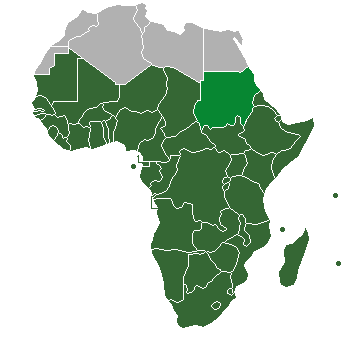
“Sub-Saharan Africa, as defined by United Nations.” Design by Jcherlet, 2010. Wikimedia. Included with appreciation.

Why not just stop flaring, as the World Bank’s Zero Routine Flaring Scheme (ZRF) proposes? The Scheme, introduced in 2015, now has 54 energy companies, and 32 national governments as supporters. There has been some progress. Norway taxes gas flaring; as a result, it has the lowest flaring rate. Kazakhstan introduced incentives in the local gas market that encouraged drillers to capture and sell gas, reducing flaring in the process.

Cost remains a factor: stopping routine flaring would cost an aggregate $100 billion. Why not just capture it and reuse it, or sell it? There are processing costs to remove some chemicals before the gas can be used. But the gas would be suitable for powering drilling sites, or perhaps useful for mobile electricity generation in the field. In the field, unwanted gas could be returned to the land rather than flared into the air. In fact, injecting the gas into the ground would raise pressure and in turn allow better flow of oil. Finally, gas might be treated to deliver to energy pipelines.

Pipelines circle the Earth: could gas, not flared but collected and treated, join the flow? Image: “West Coast Pipeline,” by DarrenBaker, 2005. Creative Commons, wikimedia. Included with appreciation.

Pipelines, like the Alaska Pipeline or West Coast Energy Pipeline, are ubiquitous: in December 2020, there were 2,381 oil and gas pipelines in 162 countries – the combined pipelines’ total length is enough to circle the globe 30 times. On drilling sites where gas is now flared, could ancillary supply lines conveying gas collected and treated, instead of flared, join that circle?

BBC, Science & Environment. “Gas flaring: What is it and why is it a problem?” 29 September 2022. https://www.bbc.co.uk/news/science-environment-63051458

Hussein, Mohammed. “Mapping the World’s Oil and Gas Pipelines.” 15 December 2021. Aljazeera. https://www.aljazeera.com/news/2021/12/16/mapping-world-oil-gas-pipelines-interactive

Puliti, Riccardo. “Boost energy security and cut methane emissions by reducing gas flaring and venting.” 6 October 2022. World Bank Blog. https://blogs.worldbank.org/voices/boost-energy-security-and-cut-methane-emissions-reducing-gas-flaring-and-venting

World Bank. “Zero Routine Flaring by 2030 (ZRF)” https://www.worldbank.org/en/programs/zero-routine-flaring-by-2030

Building the World Blog by Kathleen Lusk Brooke and Zoe G. Quinn is licensed under a Creative Commons Attribution-NonCommercial-NoDerivs 3.0 Un

SPACE: Hit and a Miss

“DART’s Trajectory” animation based on NASA’s HORIZONS System by Phoenix7777. CC4.0. Included with appreciation.

Because there was a hit, there will be a miss, In baseball, that’s bad: in asteroid defense, that’s good. In a historic success, NASA, sent the Double Asteroid Redirection Test (DART) to asteroid Dimorphos. It’s a small target: the relatively tiny asteroid is just 530 feet (180 meters) in diameter. And it’s a distance achievement: Dimorphos is 7 million miles (11 million kilometers) away. And it’s a fast shot: DART crashed into the asteroid at 14,000 miles (22,530 kilometers) per hour.

“Asteroid Dimorphos seconds before DART impact.” by Doug Ellison and NASA, 26 September 2022. Public Domain. Included with appreciation to Doug Ellison and NASA.

An asteroid that might someday impact the Earth could destroy life on our shared planet, as it did with dinosaurs 66 million years ago. The impact of a six-mile-wide asteroid, called Chicxulub by today’s scientists, hit just off Mexico and killed 75% of Earth’s species.

“Depiction of Spinosaurus” from exhibit at Visvesvaraya Industrial & Technological Museum, Bangalore, India, by VITM 2018. CC 4.0. Included with appreciation.

While a similar disaster is not imminent, preparation is. In an illustration of cooperation in our orbital commons, NASA worked in partnership with Johns Hopkins Applied Physics Laboratory (APL) and Italian Space Agency’s LICIACube. In four years, the European Space Agency (ESA) Hera mission will conduct surveys of Dimorphos to examine the crater left by DART’s direct hit. Both are part of the Asteroid Impact and Deflection Assessment (AIDA) collaboration.

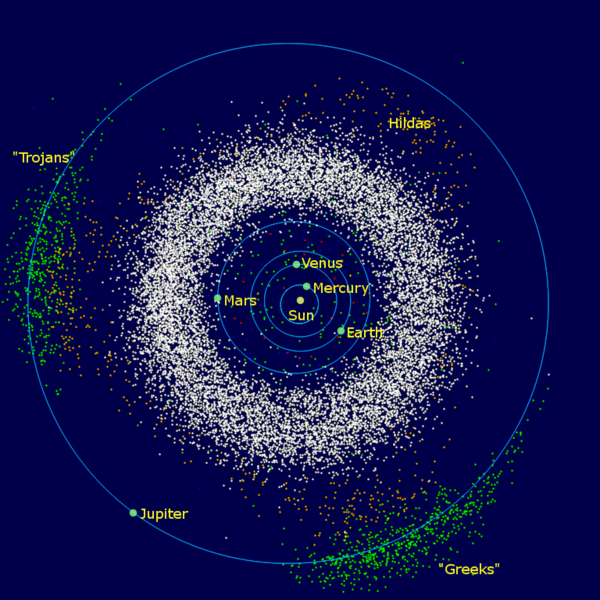
There are between 1.1 to 1.9 million asteroids within the asteroid belt, pictured here as the white “donut” ring. Illustration by Mdf, Wikimedia/creative commons, public domain donation. Included with appreciation.

Meanwhile, the hit was deemed a success, knocking Dimorphos into a different orbit. The test proves we have capability to deflect an oncoming asteroid or comet, such as that depicted in the recent film “Don’t Look Up.” Want to see a video of the final moments before DART crashed into Dimorphos? Click here.

If our civilization is able to cooperate, and succeed, in something so distant, is there hope for similar cooperation and success a bit closer to home?

Can space cooperation bring the dawn of peace? “Pink Sky Peace,” by Pink Sherbet Photography, Creative Commons 2.0. Included with appreciation, and hope.

Greshko, Michael. “Dinosaur-killing asteroid most likely struck in spring.” 22 February 2022. National Geographic. https://www.nationalgeographic.com/science/article/dinosaur-killing-asteroid-most-likely-struck-in-spring

McKay, Adam, director, producer, writer. With Leonardo DeCaprio, Jennifer Lawrence, Rob Morgan, and Meryl Streep. “Don’t Look Up.” 2021. Hyperobject Industries. Trailer video: https://www.youtube.com/watch?v=SL9aJcqrtnw

NASA. “NASA’S DART Mission Hits Asteroid in First-Ever Planetary Defense Test.” 26 September 2022. https://www.nasa.gov/press-release/nasa-s-dart-mission-hits-asteroid-in-first-ever-planetary-defense-test

Strickland, Ashley. “The DART mission successfully changed the motion of an asteroid.” 11 October 2022. CNN. with Video. https://www.cnn.com/2022/10/11/world/nasa-dart-success-update-scn/index.html

Building the World Blog by Kathleen Lusk Brooke and Zoe G. Quinn is licensed under a Creative Commons Attribution-NonCommercial-NoDerivs 3.0 Un

CITIES AND LAND: Rights of those who were here first

“Indigenous Peoples Day,” image courtesy of National Indian Council on Aging – NICOA.org. Included with honor and appreciation.

Indigenous Peoples’ Day, recognized in 2021 by U.S. President Biden, and honored as a holiday this weekend in the United States, reminds us that new worlds are not discovered, just met. Leif Erikson associated by some with Greenland, is thought to have sailed off course en route to that location, instead reaching what he called Vinland and what we now call North America. Erickson spent the winter, and in spring returned to Greenland. This was four hundred years before Columbus. But even before Columbus, and before Erikson, the first humans arrived 26,000 years ago, before the Last Glacial Maximum in the Pleistocene epoch. From those earliest humans are descended those whom we call our original people, those who were here first. One group is the Cherokee Nation.

“Trail of Tears” by Ocmulgee National Mounds Park, nps.gov, by photographer TradingCardsNPS, 2012. Creative Commons 2.0, wikimedia. Included with honor and appreciation.

By 1830, the Cherokee Nation had established significant land in what became known as Georgia (state established in 1788): until the Treaty of New Echota. On 29 December 1835, 500 representatives of the Cherokee Nation, at that time numbering 16,000, met with representatives of the United States government at New Echota, Georgia, to accept terms of $5 million and land in Oklahoma in exchange for their 7 million acres of homeland. Sadly, the forced move 1,200 miles west proved so tragic as to give name to the Trail of Tears. But the Treaty remains unfulfilled: Article 7 of the Treaty of New Echota states: “Cherokee Nation shall be entitled to a delegate in the House of Representatives of the United States whenever Congress shall make provision for the same.”

“Map of George showing Cherokee Nation, 1830.” Original by Anthony Finley Co. of Philadelphia, 1830. Creative Commons Public Domain. Included with honor and appreciation.

Two centuries later, it is time to fulfill the treaty, make that provision, and recognize rights of those who were here first. Cherokee Nation’s Principal Chief Chuck Hoskin, Jr. has nominated Kimberly Teehee to serve as inaugural Cherokee Delegate to Congress. If you support this nomination, Indigenous Peoples’ Day is a good time to take action here.

Brooke, K. Lusk. “Indigenous Peoples’ Day.” 11 October 2015. Building the World Blog. https://blogs.umb.edu/buildingtheworld/2015/10/12/indigenous-peoples-day/

Cherokee Nation. https://www.cherokee.org/about-the-nation/citizen-action/

Cherokee Nation and United States. “Treaty of New Echota.” text.https://dlg.usg.edu/record/dlg_zlna_tcc221?canvas=0&x=1133&y=1870&w=18337

Davidson, Frank P. and K. Lusk Brooke, “The National Trails System.” Building the World. Volume Two, pages 641-668. Greenwood: 2006. ISBN: 9780313333743.

Kaur, Harmeet. “The Cherokee Nation is again calling on Congress to deliver on a 200-year-old-promise.” 27 September 2022. CNN. https://www.cnn.com/2022/09/27/us/cherokee-nation-push-for-congress-delegate-cec/index.html

Smithsonian. “Cherokee and Other Original American Music.” https://music.si.edu/feature/american-indian-music

Zimmerman, Kim Ann, and Patrick Pester. “Pleistocene epoch, The last ice age.” 28 February 2022. Live Science. https://www.livescience.com/40311-pleistocene-epoch.html

Building the World Blog by Kathleen Lusk Brooke and Zoe G. Quinn is licensed under a Creative Commons Attribution-NonCommercial-NoDerivs 3.0 Un

WATER: Floods and Helping Hands

“Helping hands, working together.” by AlphaZeta, 2014. Donated to the public domain by the designer. Creative Commons 1.0, wikimedia. Included with appreciation.

Recent floods in Florida in the United States, and in the Sindh province of Pakistan, caused loss of life, property, and long-term displacement. Because we are the water planet, climate change will first be felt through water. This is true of the past summer’s droughts, reductions in the Colorado River and Lake Mead, heatwaves, and wildfires; now it is true of autumnal seasonal storms intensified by melting glaciers in Pakistan and warming oceans near Florida. If you are reading this post, it is because you are fortunate to have power and electricity. Many do not. If you would like to extend a helping hand, here are some suggestions:

“Sindh Province Divisions, Pakistan” by Nomi887, 2022. Creative commons, wikimedia. Included with appreciation.

Pakistan  – flood relief and rebuilding efforts may be helped by outreach, including sources like the Edhi Foundation, headquartered in Karachi, that provides emergency assistance across Pakistan and internationally. Edhi Foundation’s Flood Relief Campaign may be reached via: https://edhi.org. Another option is Islamic Relief USA: https://irusa.org.

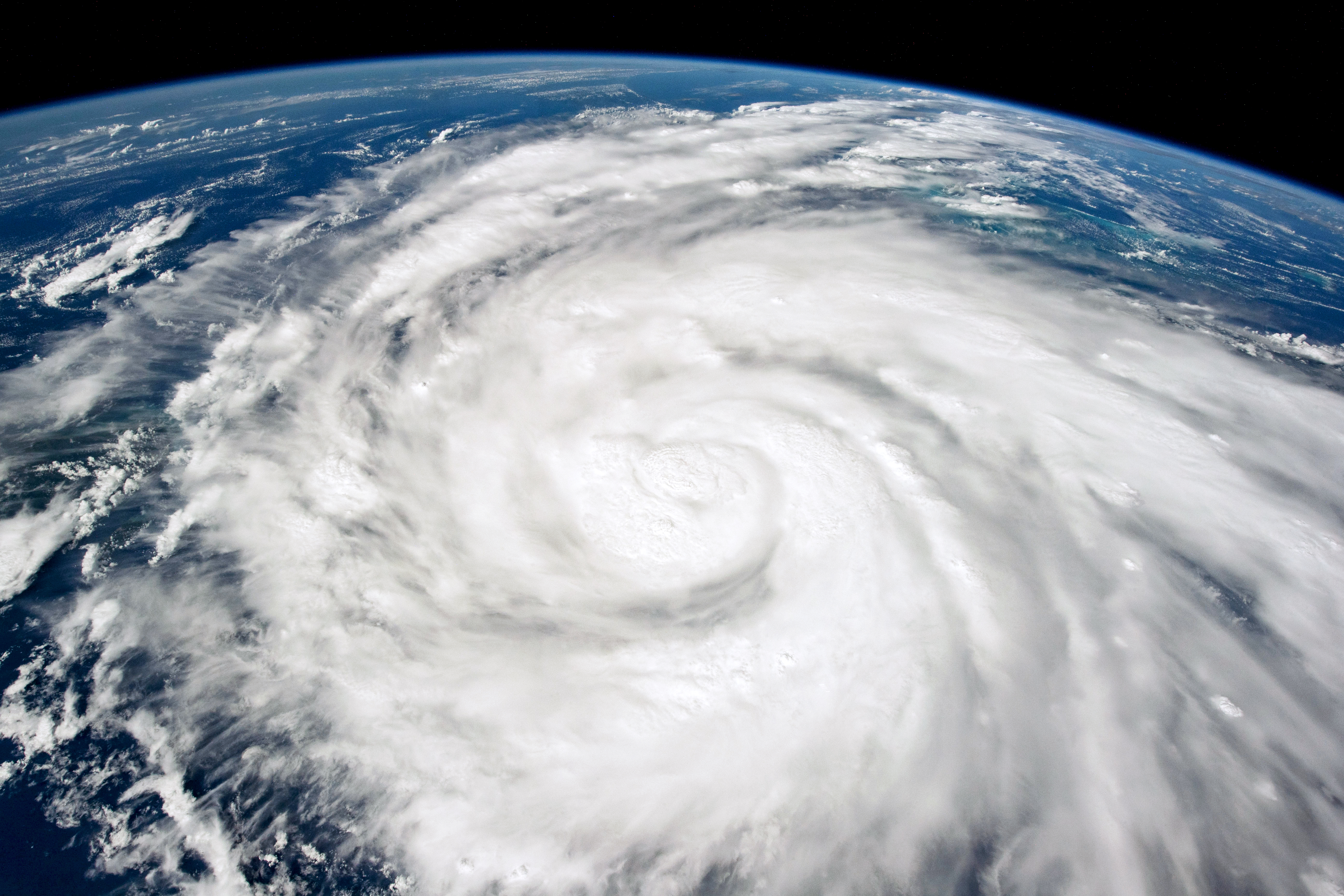
“Hurricane Ian reaches Florida, USA” NASA, Earth Observatory, 2022. Image in the public domain, included with appreciation.

USA – inundations from Hurricane Ian, a category 4 storm with winds of 150 mph, damaged areas of Florida including Captiva and Sanibel, Naples and Fort Meyers. Two million residents are without electricity and running water. The storm is now moving towards South Carolina, Georgia, and North Carolina.  You can volunteer or donate to the American Red Cross via https://www.redcross.org. Another option is Caring for Others at https://caring4others.org.

As climate change continues to cause damage, we may need to respond in two ways: disaster response and proactive renewal. Is it time to consider a Climate Conservation Corps, combining active service and education? Some have suggested an organizational name, and membership term, of CliMates. What do you think of this idea?

“Earth” by NASA, with graphic enhancement by Tdadamemd, 2016. Public Domain, wikimedia. Included with appreciation.

Building the World Blog by Kathleen Lusk Brooke and Zoe G. Quinn is licensed under a Creative Commons Attribution-NonCommercial-NoDerivs 3.0 Un
Thanks to those who kindly suggested organizations for helping those affected by recent floods.

TRANSPORT: Tunnels – Environmental Option

“Hamburg-Mitte-Elbe Tunnel” by Anita Janda, 2019. CC4.0 wikimedia. Included with appreciation.

Ten years to plan, nine years to build, seven billion to budget: the Fehmarnbelt Fixed Link Tunnel will offer an alternative to a 45-minute ferry between Germany’s Fehmarn island and Denmark’s Lolland isle. The new tunnel will clock travel time to ten minutes by car and seven minutes by train. Not just a faster trip between islands, Fehmarnbelt will reduce passage duration between Copenhagen and Hamburg.

Fehmarnbelt Fixed Link Tunnel will shorten the travel time between Copenhagen and Hamburg. Image: “Fehmarn bridge” by Bowzer. CC by SA 3.0, wikimedia. Included with appreciation.

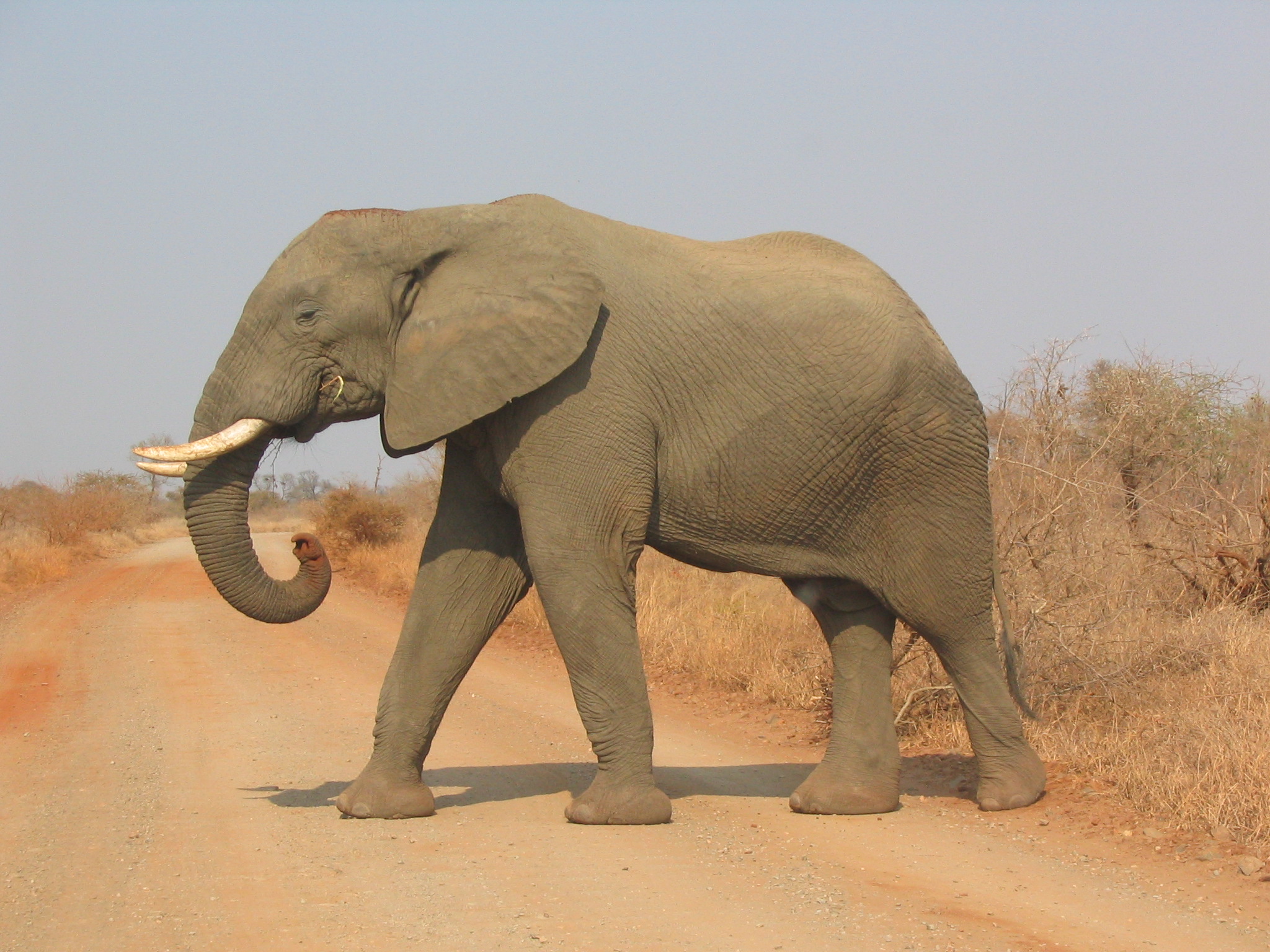
It will be the world’s longest immersed tunnel, although at 11.1 miles long (18 kilometers) shorter than the Channel Tunnel stretching 31 miles (50 kilometers). Other differences include construction methods. The Channel Tunnel was built using a traditional boring machine. Fehmarnbelt will be pre-fab: tunnel sections completed on land will be submerged and then connected. Each section is 711 feet long (217 meters) – about half the size of a large container ship. All that length is heavy – each section weighs as much as 13,000 elephants.

One section of the tunnel’s pre-fab building blocks weighs as much as 13 elephants. Image: “Elephant,” by Felix Andrew, 2005. Public domain gnu. Included with appreciation.

In a world where the environment is part of every decision, Fehmarnbelt Fixed Link will include newly established stone reefs on both Danish and German sides, similar in some ways to the natural paths fashioned along the New River of England. Tunnels offer other environmental advantages, bringing automobiles, trains, and trucks below the surface where emissions be captured, if the tunnels are so equipped.

SMART Tunnel in Kuala Lumpur, Malaysia, combines transport and flood control. Image: “SMART tunnel entrance,” by David Boey, 2018. Wikimedia CC4.0. Included with appreciation.

Another environmental advantage of tunnels is response to flash floods. The Stormwater Management and Road Tunnel (SMART) in Kuala Lumpur, Malaysia, is designed to divert rainwater into a lower section, allowing the upper section to remain open to vehicular traffic. Floodwater diversion, storage, and reuse options are certain to present problems (and opportunities) in our future: can tunnels be part of the solution?

Thanks to Cherie E. Potts for suggesting this post, and to Frank P. Davidson for proposing and achieving the success of the Channel Tunnel.

Fehmarnbelt Fixed Link. “Why we’re building the Fehmarnbelt fixed link.” Femern. https://femern.com

Prisco, Jacopo. “Denmark and Germany now building the world’s longest immersed tunnel.” September 2022, CNN.com. https://www.cnn.com/travel/article/fehmarnbelt-longest-immersed-tunnel-cmd/index.html

SMART. https://smarttunnel.com.my/smart/what-is-smart/

Building the World Blog by Kathleen Lusk Brooke and Zoe G. Quinn is licensed under a Creative Commons Attribution-NonCommercial-NoDerivs 3.0 Un

SPACE: Life on Mars?

Mars appears to have had significant volcanic and seismic activity. Magma rising during eruptions could have melted ice near the surface, providing conditions for microbial life. Image: “Mars Seismic Wave Simulation,” NASA. Public Domain. Included with appreciation.

Perseverance rover has collected some samples that may reveal if life on Mars is speculation, fantasy, or history. Jezero Crater once held a lake whose delta may have harbored lifeforms yet unknown to us. Jezero Crator is sizable: 28 miles (45 kilometers).

Jezero Crater seen from Perseverance. NASA.gov, public domain. Included with appreciation.

Recently, Perseverance explored a delta mount nicknamed “Wildcat Ridge” by NASA scientists. The rover found and scooped up high concentrations of organic matter. We know the organic nature of the rocks because samples are pre-scanned by a rover instrument called SHERLOC, or Scanning Habitable Environments with Raman & Luminescence for Organics & Chemicals.

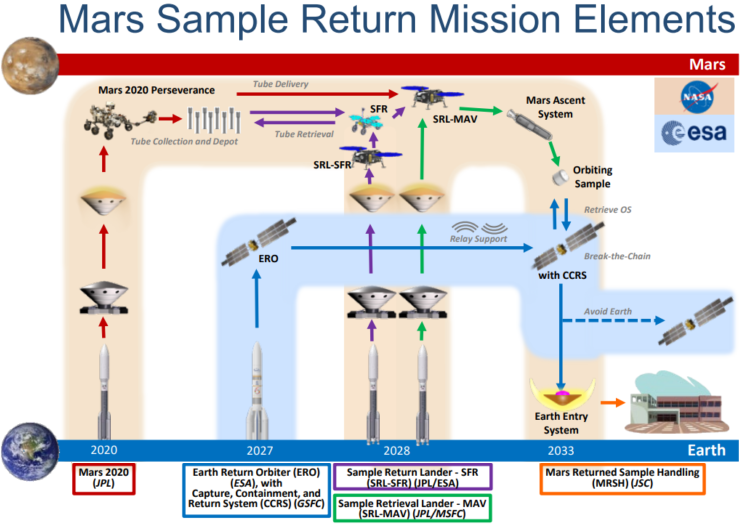
Mars Sample Return Mission. Illustration by NASA. Public domain. Included with appreciation.

The Mars Sample Return Mission will bring the ultimate rock collection back to Earth’s awaiting laboratories in the next decade. While life forms did not greet the rover, discovery of the their possible past may reveal not just history but organic components that may help to determine our future – there, and here.

NASA. “Mars Sample Return Mission.” https://mars.nasa.gov/msr/

NASA. “Spacecraft Instuments, SHERLOC.” https://mars.nasa.gov/mars2020/spacecraft/instruments/sherloc/

Building the World Blog by Kathleen Lusk Brooke and Zoe G. Quinn is licensed under a Creative Commons Attribution-NonCommercial-NoDerivs 3.0 Un

 

Queen Elizabeth II: Ave atque Vale

Queen Elizabeth II, 1959. Image: Library and Archives of Canada, e010975985. Included with appreciation and respect.

“Ave atque Vale,” meaning Hale and Farewell, are Latin words that poet Catullus wrote upon the death of his brother. The full phrase is “Atque in perpetuum, frater, ave atque vale.” This week, just two days after her final official act of appointing Liz Truss as the UK’s new prime minister, Queen Elizabeth passed into history. The first prime minister Queen Elizabeth worked with was Winston Churchill. Throughout 70 years of her reign, Queen Elizabeth was known to many as an icon of grace, strength, and stability.

Iconic monuments around the world honored Queen Elizabeth II, during the recent Platinum Jubilee and upon her passing – both in 2022. Image: “Platinum Jubilee Parliament Hall 2022,” by Peter Ormond. Wikimedia, dedicated to the public domain by the photographer. Included with appreciation

In her honor, icons around the world displayed visual tributes. The London Eye dimmed. The Eiffel Tower went dark.The Empire State Building in New York illuminated in royal purple and silver.  Blackpool Tower displayed red, white, and blue – colors of the UK flag – as did the Fountain of Cybele in Spain and the Brandenburg Gate in Germany. The Sydney Opera House in Australia featured an image of the queen.

“London Bridge Illuminated at Dusk.” by Peter Burgess, 2006. Creative Commons 2.0. Included with appreciation

The passing of a sovereign is often planned in advance to ensure a peaceful and orderly transition of power. There is always a code phrase. In the case of Queen Elizabeth II, the code phrase was: “London Bridge is Down.” London Bridge was the first large stone bridge in England, completed in 1209. Subject of art, legends, and even a traditional children’s song, London Bridge remains symbolic in many ways. Bridges extend across barriers, facilitating communication. Metaphorically, we also speak of bridges as spanning one era to the next, as in bridging history.

Building the World Blog by Kathleen Lusk Brooke and Zoe G. Quinn is licensed under a Creative Commons Attribution-NonCommercial-NoDerivs 3.0 Un

TRANSPORT: Origins of Labor Day

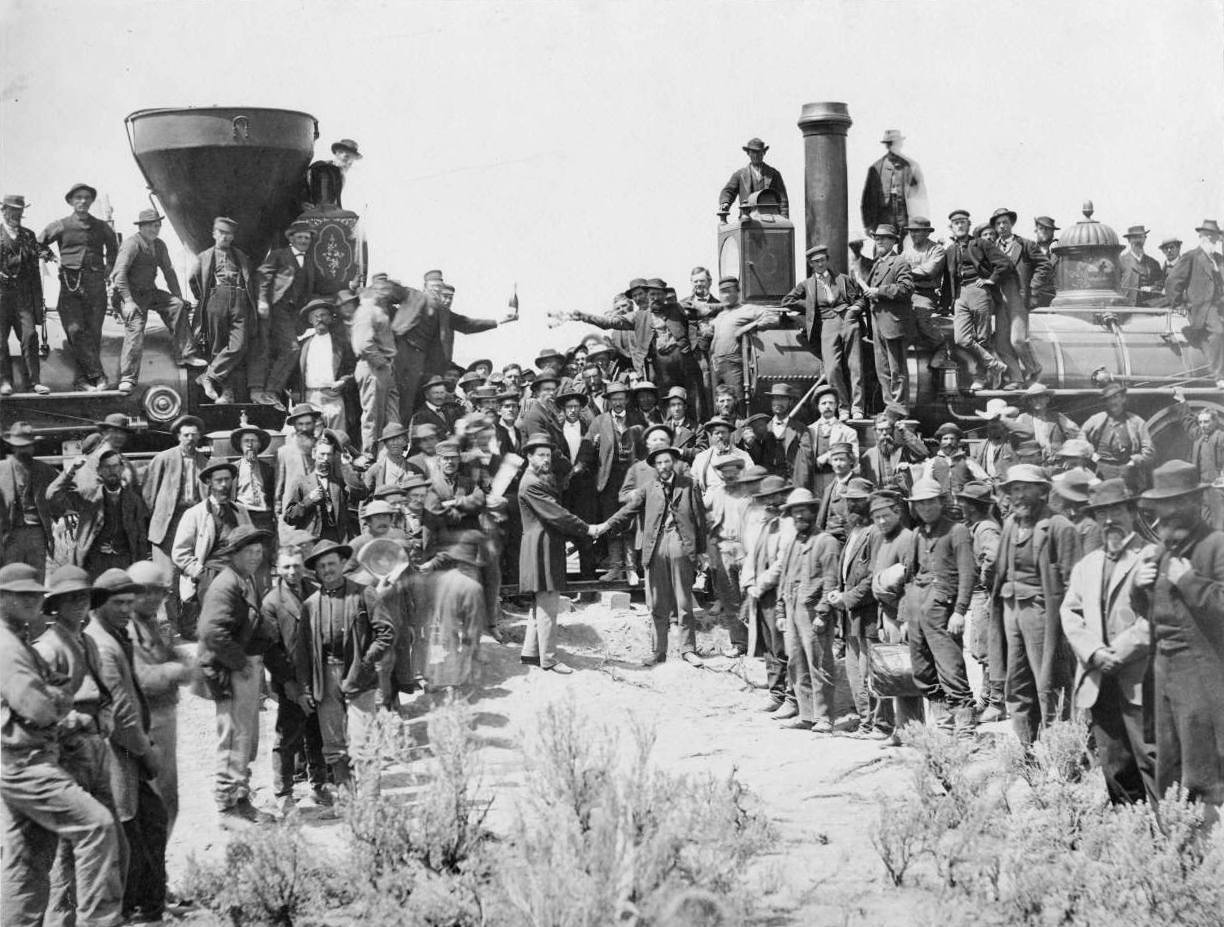
“Golden Spike Ceremony: Promontory Summit, Utah, 1869” marked the completion of the Transcontinental Railroad. Soon, the new railroad industry would be linked to Labor Day. Image: National Archives and Records Administration (NAI #594940. Public Domain. Included with appreciation.

When the Transcontinental Railroad, with more than 1,800 (2,900 kilometers) miles of track, opened in 1869 with the driving of the Golden Spike in Utah, thousands of workers had toiled to complete what had been the largest government project in history, to date. A cross-country trip that had previously taken months of overland perilous journey across deserts and mountains, or a sea-voyage around South America, was now possible. But working conditions were arduous and dangerous. Rail travel proved more comfortable: George M. Pullman began converting passenger cars into sleepers, employing “Pullman porters” to work aboard. Hiring practice discriminated racially, and enforced extremely long working hours – 400 per month.

“Pullman strikers and Illinois National Guard at Arcade Building,” 1894. Abraham Lincoln Historical Digitization Project. Image: wikimedia, public domain, Included with appreciation to all workers on Labor Day.

When Pullman laid off 30% of the workers in the recession of 1893, Pullman porters and employees walked out on strike. Train travel stalled in 27 states from Illinois, home to the Pullman company, and the West Coast. In the Chicago suburb of Blue Island, a crowd derailed a locomotive pulling a postal train, and the U. S. Attorney General enacted an injunction against the striking workers. President Grover Cleveland sent troops. Riots broke out, hundreds of rail cars were ravaged and burned by protestors; the National Guard fired into the mob, killing 30 people and wounding many others. This was in July 1894. Ironically, Cleveland had just signed, in June, a bill declaring a new holiday to honor workers and promote good conditions. The first Labor Day was celebrated on the first Monday in September of that year.

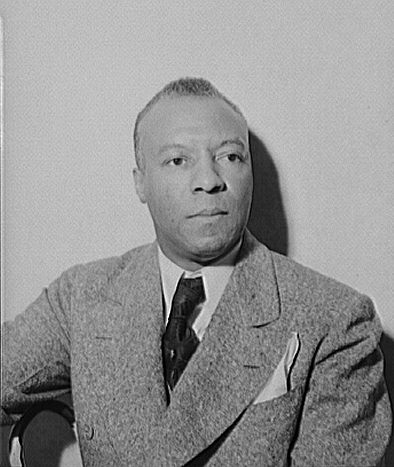
“A. Phillip Randolph – political and social leader.” Founder of the Brotherhood of Sleeping Car Porters. Image: wikimedia, public domain. Included with appreciation to A. Phillip Randolph and those in the BSCP union.

The Labor Day announcement raised national attention regarding Pullman workers. The Guard was recalled and the strike was over by August. While Labor Day began a new era of awareness of worker health and safety. Pullman porters now worked in better conditions: some earned more money, others advanced to management positions. But hours remained long. In 1925, Pullman porters, organized by A. Phillip Randolph, formed a union: Brotherhood of Sleeping Car Porters (BSCP). It took more than ten years to negotiate better working hours – 240 per month.

Transport has always initiated economic and social change. Ships, rails, wheels, and wings caused major shifts in commerce, communication, and culture. Labor Day honors all workers. Around the world, there are Labor day celebrations, some in May. But in the United States, the holiday is always observed in September, and we have transport to thank for its origin and celebration.

“Labor Day” by S.D. Ehrhart, 1909. Image: Library of Congress #2011647501. Public Domain. Included with great appreciation to all who labor.

Building the World Blog by Kathleen Lusk Brooke and Zoe G. Quinn is licensed under a Creative Commons Attribution-NonCommercial-NoDerivs 3.0 Un

Davidson, Frank P. and K. Lusk Brooke. “The Transcontinental Railroad,” Chapter 17, Building the World. Pages 205 – 238. Westport: Greenwood Press, 2006. ISBN: 0313333734.

Loomis, Erik, A History of America in Ten Strikes. The New Press,  2018. ISBN-10: 1620971615.

United States Department of Labor. “History of Labor Day.” https://www.dol.gov/general/laborday/history

Whitney, Asa. A Project for a Railroad to the Pacific. New York: George Ward, 1849. Text available in Building the World, pages 215-227.

TRANSPORT: Tunnel Visionaries

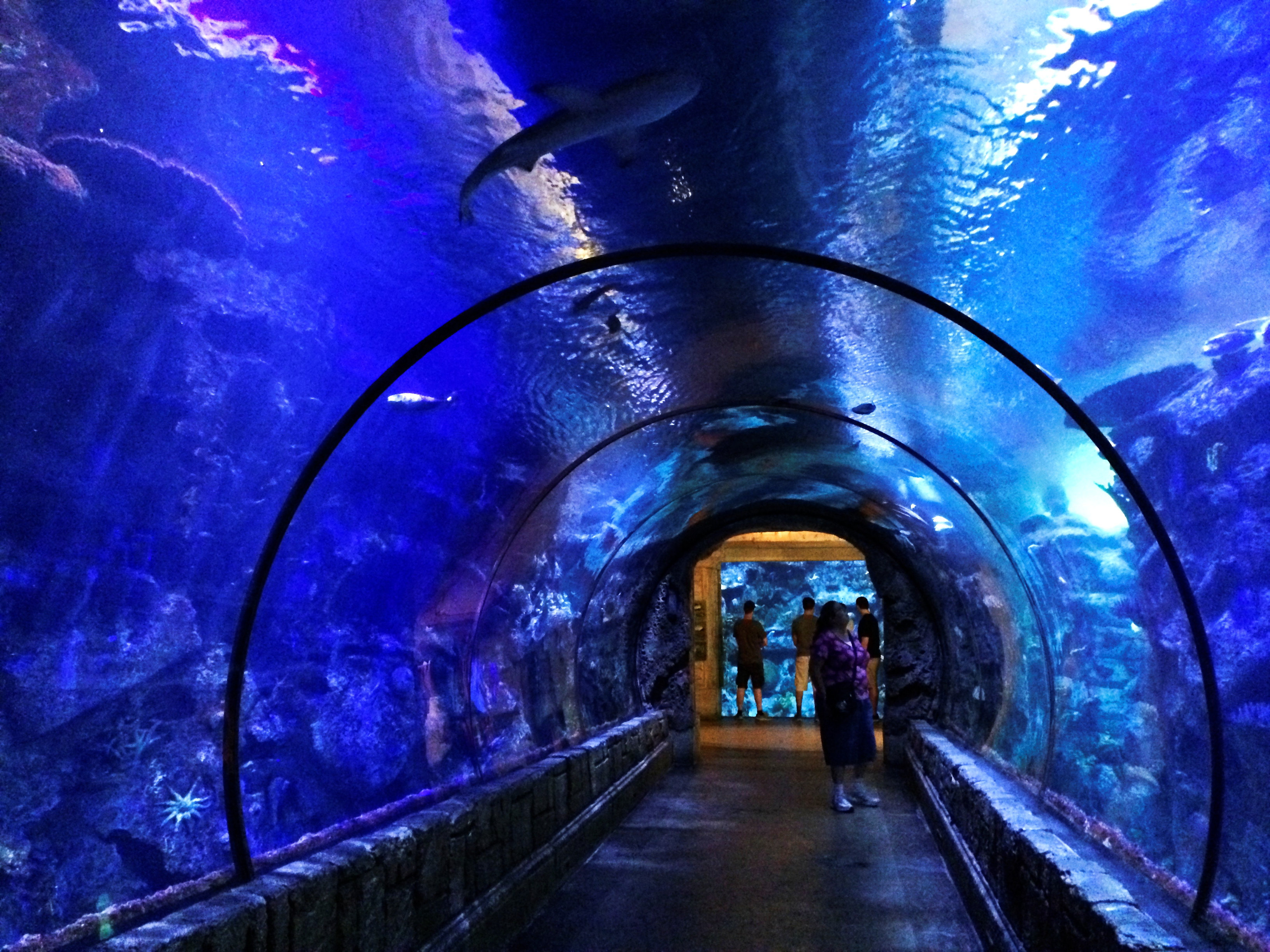
Underwater tunnels like the Channel Tunnel, and Japan’s new tunnel under the Tsugaru Strait, are engineering feats. Here, “Underwater tunnel in Mandalay Bay Aquarium” photo by Daniel Ramirez, 2014. Creative Commons 2.0. Included with appreciation.

Walking on water takes a miracle, but walking through water requires excellent planning. When the Channel Tunnel was first designed, over a luncheon meeting in New York City hosted by Frank P. Davidson, Thomas Lamont, and representatives of Bechtel, Brown & Root, and Morrison Knudsen Company, a 1959 decision saved lives in 2022. The group engaged Charles Dunn of International Engineering Company of San Francisco, CA, to design the project. Dunn added a service tunnel. It was not mandatory, but it proved prescient.

Channel Tunnel has three tunnels – two rail lines and a service tunnel between. The design by Charles Dunn has saved lives. Image: “Cross section with service tunnel in between two rail lines,’ by Commander Keane and Arz. Wikimedia commons. Public domain. Included with appreciation.

The three tunnels under the Channel (in French, “La Manche”) are a north-running tunnel, a south-running tunnel, and – between them – a service tunnel. During an August 2022 incident, a train experienced an alarm warning, stopped, and held for assessment. Passengers walked for 15 minutes from the rail shuttle to a freight train that conveyed them through and out of the service tunnel. That freight train did not have the usual accommodation for passengers: no elegant meal service, not even seats. But with Dunn’s design, the service tunnel, and its freight train did provide safety. When passengers arrived in Folkestone, terminal restaurants welcomed them with free food and beverages.

Strait of Dover between England and France. Image: NASA, 2000. Public Domain. Included with appreciation.

The service tunnel in the Channel Tunnel has proven its worth before. In 1996, a fire broke out in the Channel Tunnel when a train carrying heavy goods vehicles (there are passenger trains as well as freight trains carrying trucks) sparked a fire. The train was brought to a controlled stop adjacent to an entrance to the service tunnel. While there were no reported fatalities, some people suffered from smoke inhalation. The fire was fought by English and French teams who extinguished the flames after considerable effort. Tunnel repair was carried out by Freyssinet, a French engineering firm. Bi-national Channel Tunnel Safety Authority (CTSA) chaired one of three inquiries: the result was regular bi-national team practice exercises and shared operational procedures. In 2008, a fire in the Chunnel, started by a truck that spread to other vehicles, caused damage but no fatalities or serious injuries. It is worth noting that when the Channel Tunnel project began, the service tunnel was the first built.

“Tsugaru Srait” by Kyoyaku, adapted by Bourrichon, 2019. Creative Commons 4.0. Included with appreciation.

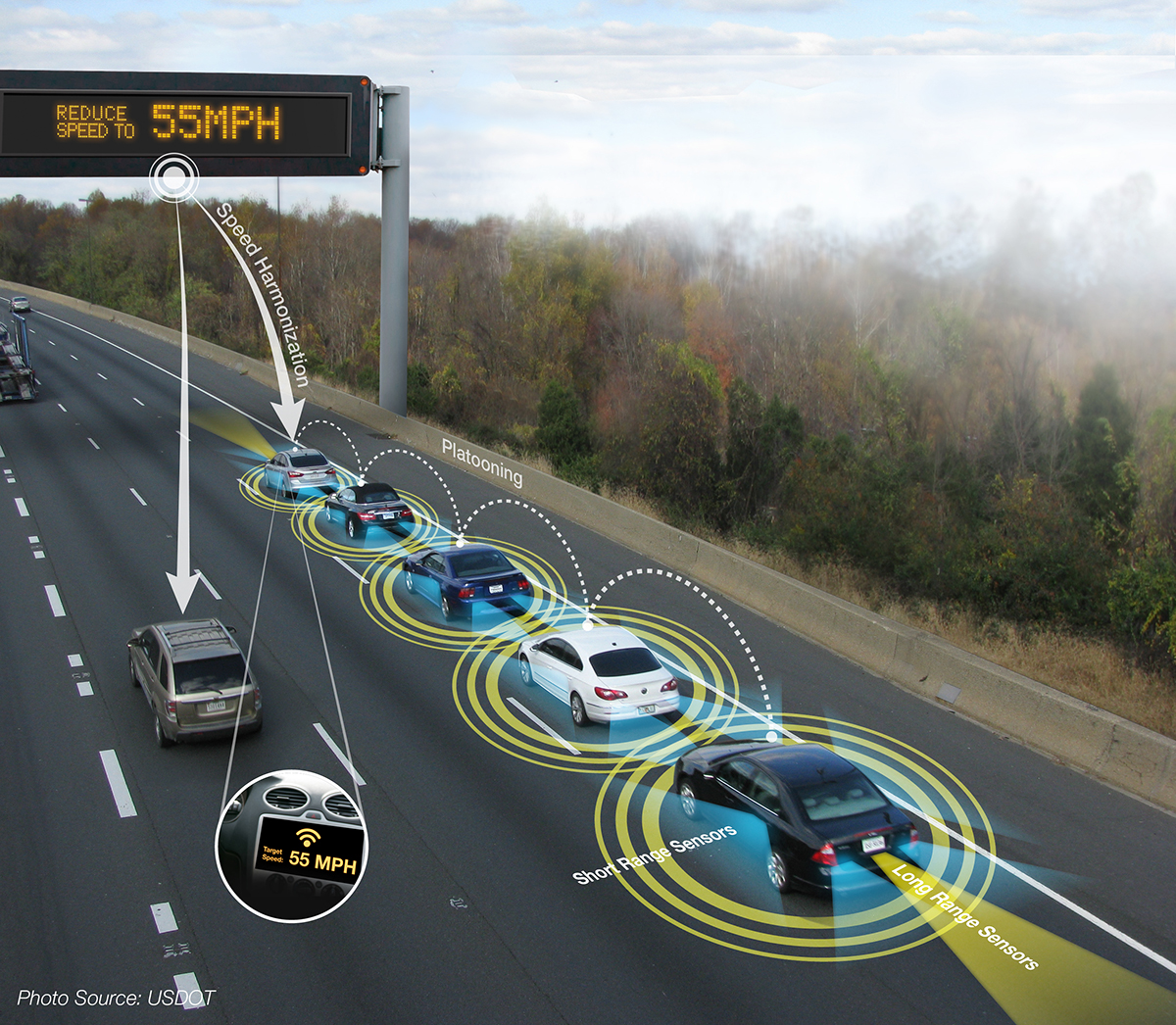
How can the Channel Tunnel’s design inspire the future? Japan, home to many tunnels that connect the nation composed of four main islands – Hokkaido, Honshu, Kyushu, and Shikoku – is currently planning a new tunnel across the Tsugaru Strait for automobile traffic between Honshu and Hokkaido. The tunnel would span 31 kilometers (19. 26 miles) and cost about $7 billion (720 billion yen). In the new Tsugaru Strait tunnel, there will be two decks: the top for autonomous vehicles like self-driving cars; the lower for freight trains. Economic benefits include increased ability to transport agricultural produce from Hokkaido, estimated at 34 billion yen ($249 million).  The project will take 15 years to build; construction costs would be recouped in 32 years. Tolls are estimated to be 9,000 yen for cars ($65).

“Platooning” is a method for linking controls of lines and groups of autonomous vehicles. Could this be used in the new Tsugaru Strait Tunnel? Image: “Platooning Back” by U.S. Department of Transportation, 2019. Public Domain. Included with appreciation.

Tsugaru Strait is also the location of Japan’s Seikan Tunnel, serving only trains; it was not built with a separate escape or service tunnel, but with two emergency escape points in the system, Tappi-Kaitei station and Toshioka-Kaitei station. Shinkansen trains in Japan’s high speed rail network use the Seikan system. Fifty trains traverse the Seikan Tunnel every day, and night trains offer sleeping accommodation. Seikan suffered inundation accidents during construction but no fatalities.

“Cross-Harbour Tunnel Bridge Fire,” in Hong Kong, 2019. Photograph by Studio Incendo. Wikimedia. Included with appreciation.

Other tunnels around the world have experienced accidents, fires, and floods. In Hong Kong, the Cross-Harbour Tunnel was the first built there for underwater transit; in 2019, protestors set fire to tollbooths, causing the tunnel to close but avoiding any fatalities. In 1991, two trains collided in the Severn Tunnel joining England and Wales; 185 passengers were injured but none fatally. In 1999, a fire in the Mont Blanc Tunnel joining France, Italy, and Switzerland, caused 39 deaths and 14 non-fatal injuries. These examples point out the wisdom of Dunn’s design of an extra service tunnel for the Channel Tunnel.

“Shadertoy Tunnel Example,” by Inigo Quilez, 2016. Creative Commons, wikimedia. Included with appreciation.

In a time of budget cuts, along with an increased focus on transportation infrastructure, this week’s Channel Tunnel problem and its successful rescue solution may serve to underscore the importance of safety, and its support by budget and planning. In a new era when safety measures for autonomous vehicles and driverless cars are forefront, Japan’s new tunnel may set an important example for tunnel transport infrastructure for autonomous vehicles. What safety measures should be included?

Bove, Tristan. “Passengers forced to walk through ‘terrifying’ emergency tunnel under the sea after France-England train breaks down.” 24 August 2022. Fortune. https://fortune.com/2022/08/24/eurotunnl-evacuation-passengers-walk-terrifying-service-tunnel-between-france-england/

Davidson, Frank P. and K. Lusk Brooke. “The Channel Tunnel,” pages 761-804, Building the World (2006) ISBN: 0313333742.

Failure Knowledge Database. “Train Fie in Hokuriku Tunnel.” http://www.shippai.org/fkd/en/cfen/CA1000605.html

Rosenberg, Jennifer. “How the Channel Tunnel Was Built and Designed.” 12 August 2019. ThoughtCo. https://www.thoughtco.com/the-channel-tunnel-1779429

Takahashi, Toru. “$7bn plan for new Japan undersea tunnel warms up after years on ice: Project would allow auto traffic between Honshu and Hokkaido.” 3 January 2021. Nikkei Asia. https://asia.nikkei.com/Business/Engineering-Construction/7bn-plan-for-new-Japan-undersea-tunnel-warms-up-after-years-on-ice

Building the World Blog by Kathleen Lusk Brooke and Zoe G. Quinn is licensed under a Creative Commons Attribution-NonCommercial-NoDerivs 3.0 Un

 

WATER/ENERGY: Hydroelectricity – What is the Future?

Lake Mead is shrinking through prolonged drought. That will affect hydroelectricity generated by the Hoover Dam. Image: “A Comparison of Lake Mead 2000 and 2015,” by Joshua Stevens, NASA Earth Observatory, using Landsat data from U.S. Geological Survey. Image from the Public Domain: wikimedia and nasa.gov. Included with appreciation.
Drought affecting the Colorado River, and resultant depletion of reservoirs Lake Mead and Lake Powell, may soon bring about Tier 2 shortage conditions. When Lake Mead’s water level falls below 1,050 feet above sea level, the new normal will reduce water allotments for Arizona, Nevada, and Mexico. Arizona will face a 21% reduction. Lake Mead’s drought is so big that is it now visible from space. Water for drinking, agricultural irrigation, and industry will be affected.

Will water continue to course through the Hoover Dam’s jet-flow gates? “View of Hoover Dam with jet-flow gates open,” by U.S. Bureau of Reclamation, 1998. Public Domain image. Creative Commons, wikimedia. Included with appreciation.

But there may be more consequences. The Colorado River, down 40% from 2021, flows through the Hoover Dam, generating electricity. If Lake Mead’s water recedes below 1,000 feet (just 50 feet above Tier 2 danger level), “dead pool” will happen, meaning water cannot flow downstream to power the dam. The Hoover Dam supplies electricity to Arizona, California, and Nevada. Western parts of the United States have suffered a prolonged drought; hydropower has dropped to 14% below its 10-year average.

Hydroelectric power is also threatened in other locations around the world. Italy recently suffered electricity reductions due to drought on the Po River. India and Pakistan share water usage, including hydroelectric access, under the terms of the Indus Waters Treaty; eight new hydropower plants have just been approved.

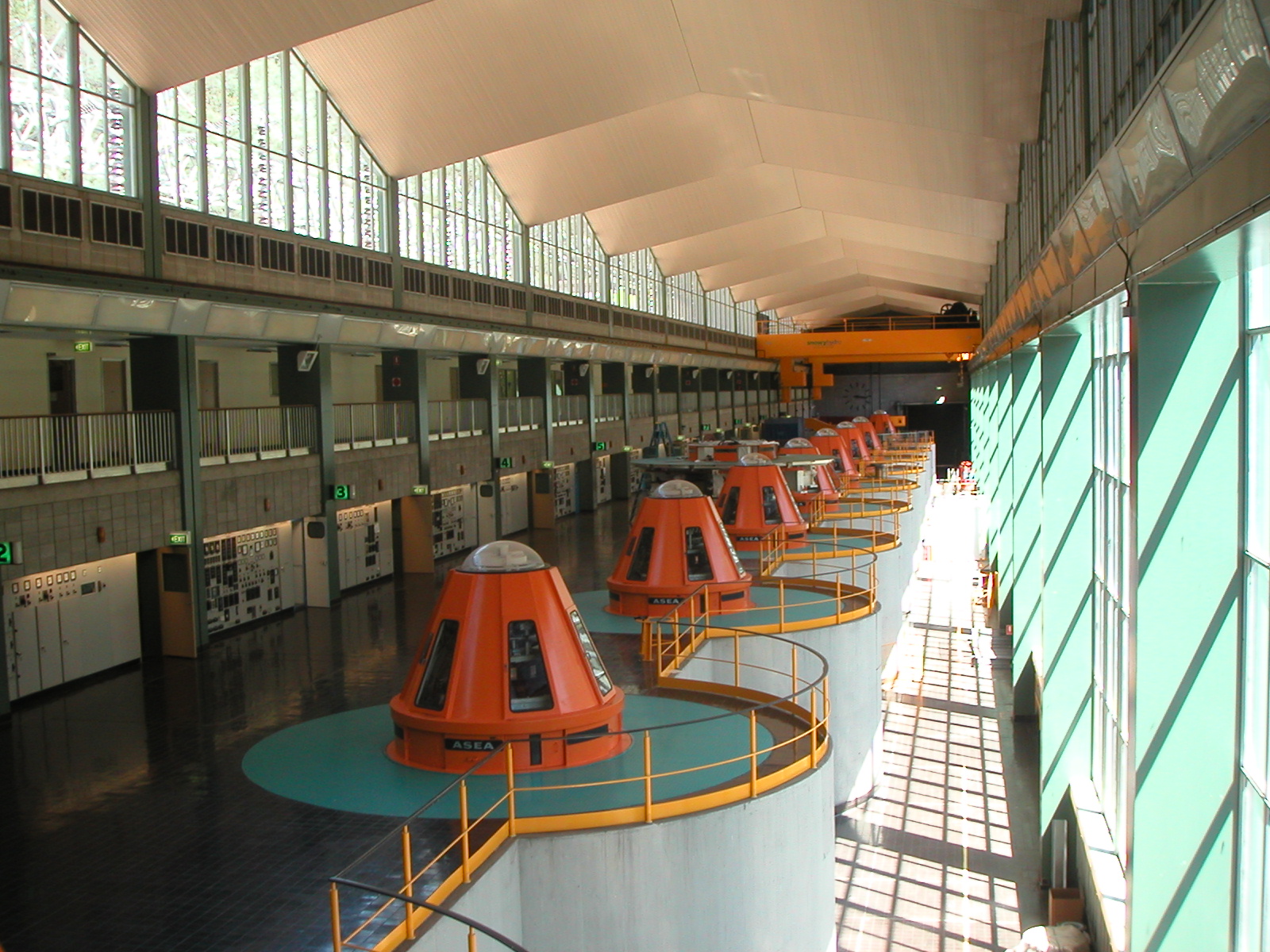
“Murray-1 Hydroelectric Power Station, Snowy Mountains,” by photographer Ear1grey, Dr. Rich Boakes. CC3.0, wikimedia, included with appreciation.

The Murray River of Australia, key to Snowy Mountains Hydroelectric, is now seriously affected by drought; water for drinking, agriculture, and electricity may be threatened. Brazil’s water flows into hydro dams reached a 90 year low, affecting facilities including Itaipú. The alternatives, when hydro fails to produce, may include greater reliance on fossil fuels. Many are concerned about that direction.

The Indus River may add eight new hydropower plants. Image: “Indus River near Skardu, Pakistan,” by Kogo, 2004. GFDL Public Domain, wikimedia. Included with appreciation.

In a world of climate change, increasing droughts may lead to a rethinking of hydroelectric power which, in 2020, generated 1/6th of the world’s electricity. Hydroelectric facilities can be found in 150 countries, with China the largest producer. Global investment in hydroelectricity is significant, and growing; will it be a wise investment?

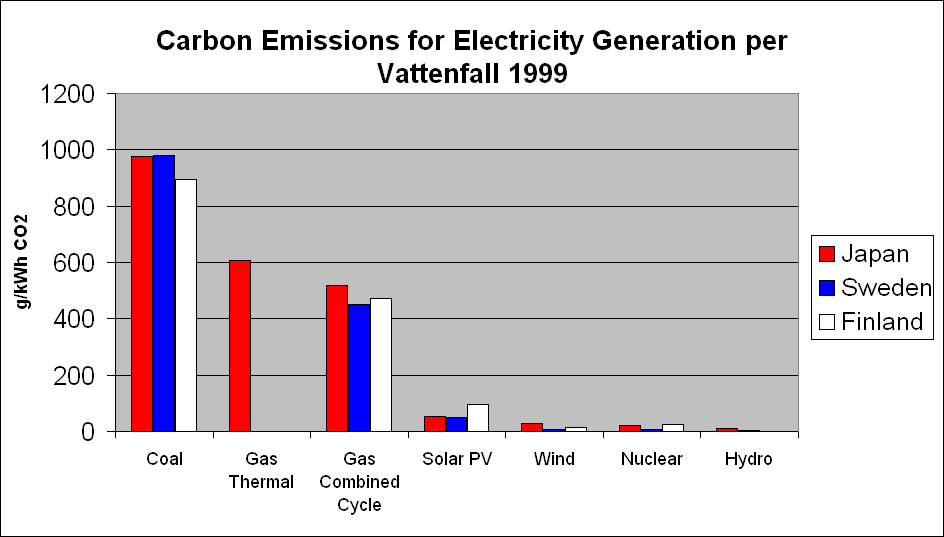
Hydroelectric Power has a low carbon footprint, and is valuable in a time of climate change. Illustration: “Carbon Emissions by Electricity Source,” by Vattenfall and Japan’s Central Research Institution for the Electric Power Industry, 1999. Image in the public domain, wikimedia. Included with appreciation.

Hydropower is low-carbon electricity, a property valuable in a world trying to limit carbon emissions. Hydropower is also continuous, an important factor to balance intermittency of renewables like solar or wind. The future of hydroelectric power is linked to the future of water. How will recent funding of climate preservation and protection support water sustainability? Will water innovations help harness the power of water to power the future?

Brooke, K. Lusk. “Colorado River.” Renewing the World: WATER. pages 86-95.  Cambridge: 2022. ISBN: 9798985035919.

CNN. “New water cuts coming for Southwest as Colorado River falls into Tier 2 shortage.” 16 August 2022. https://www.cnn.com/2022/08/16/us/colorado-river-water-cuts-lake-mead-negotiations-climate/index.html

Energy Information Administration. “Drought effects on hydroelectricity generation.” 30 March 2022. https://www.eia.gov/today/inenergy/detail.php?id=51839

“Hydro Electric Projects in Indus Basin.” http://indiawris.gov.in/wiki/doku.php?id=hydro_electric_projects_in_indus_basin

Itaipú Binacional. “ITAIPÚ will host global Water and Energy Conference.” 24 January 2022. https://www.itaipu.gov.br/en/press-office/news/itaipu-will-host-global-water-and-energy-conference

National Integrated Drought Information System (NIDIS) and American Planning Association. “Falling Dominoes: A Planner’s Guide to Drought and Cascading Impacts.” 31 October 2019. https://www.drought.gov.

Robbins, Jill. “Dry Rivers Threaten Production of Clean Energy.” 23 August 2021. Voice of America: Science & Technology.

United Nations/India and Pakistan. “Indus Waters Treaty.” 1960. https://treaties.un.org/doc/Publication/UNTs/Volume%20419/volume-419-I-6032-English.pdf

Building the World Blog by Kathleen Lusk Brooke and Zoe G. Quinn is licensed under a Creative Commons Attribution-NonCommercial-NoDerivs 3.0 Un