WATER: Glitter Litter – Getting Better

Holidays invite sequins and sparkle. Image by Irson Kudikove, 2010. Public domain wikimedia. Included with appreciation.

Holidays like New Year’s Eve invite festive attire, often sparkling from head to toe. The origin of sequins reaches back to ancient gold coins, worn by the wealthy for special occasions. In fact, the word “sequin” comes from the Italian “zecchino” referring to the gold coins minted in Venice, and before than from the Arabic “sikka” meaning a minted coin. One may still see some coin-bedecked costumes in certain forms of dance. No wonder sequins are now associated with lavish occasions.
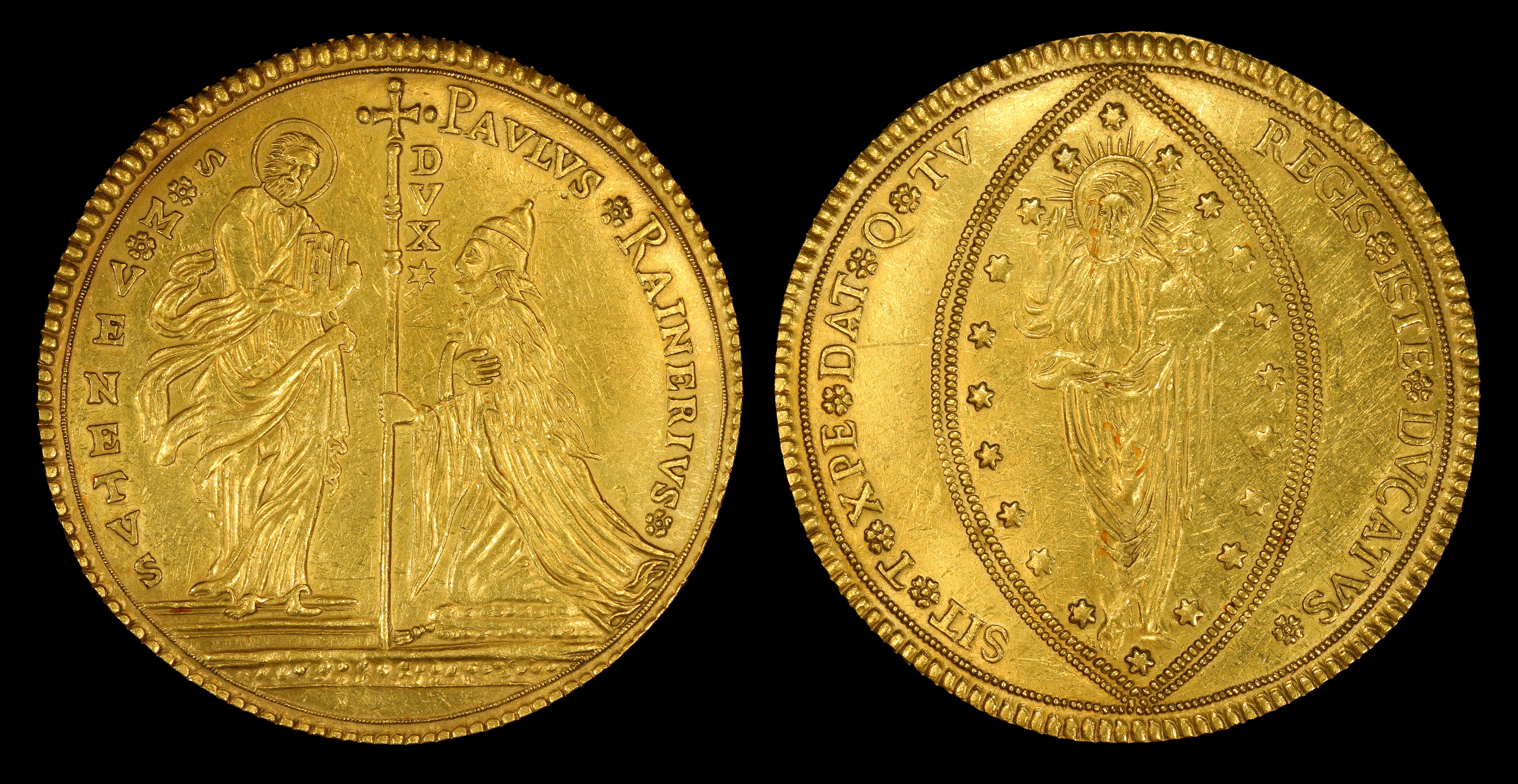
“50 Zecchini coins from the reign of Paulo Renier, Doge of Venice, circa 1779.” Wikimedia, public domain. Included with appreciation to numismatic collection, national museum.

But now we manufacture a very different kind of sequin for dress-up attire. Did you know that most sequins and glitter are themselves dressed? They are coated with reflective plastic that produces the desired shine. Such glitter quickly turns to litter. On the dance floor, tiny sequins shake loose. In dramatic hair styling, glitter sprinkles the comb and later washes into the shower – and the water supply. Unlike some plastics that are carefully monitored for dangerous chemicals and strictly regulated for recyclability, fashion sequins and glitter are not subject to such rules: in fact, most contain toxins.

Steppin’ Out in Style? Try algae. Image: “Sequined Shoe” by sunshinecity. Wikimedia. Included with appreciation.

So, is there a sustainable way to sparkle? Yes!

First responsibility is with designers and garment manufacturers:

Elissa Brunato introduced an innovation: Bio Iridescent Sequins made of biodegradable cellulose. Working with RISE Research Institute of Sweden’s material scientists Hjalmar Granberg and Tiffany Abitbol, Brunato found a tree-based cellulose that contains a natural polymer structure reflecting light. The production process involves pouring natural liquid cellulose into a mold to which colors can be added. From the city of London Bridge, designers like Brunato, and Stella McCartney, are among those building a different kind of bridge – through the Future Materials Bank.

Phillip Lim and Charlotte McCurdy produce marine micro algae to form a natural sequin. Introducing a petroleum-free sequin dress made with bio-plastic sequins formed from algae, Lim and McCurdy work with One X One by Slow Factory to create carbon-neutral materials for fashion. Circular fashion is a term often heard: here, algae form the material that later return to the earth, biodegrading to nourish the planet. Lim found inspiration in pearls and crystals, sparkles and shines of nature, and now finds nature the source of fashionable sparkle.

Anuje Farhung, founder of the fashion brand House of Farhung, offers couture in Pakistan and globally with luxury, formal, and bridal fashions. Farhung studied at Savannah College of Art and Design in Georgia, USA, and worked with fashion house Oscar De La Renta before founding her label offering sustainable sparkle. When Anuje collaborated, in 2020, with Sarah Khan from the National Centre of Excellent in Geology at the University of Peshawar, they selected red algae for their source of luminous fashion.

Second responsibility is with the consumer. While 40% of shoppers surveyed by Oxfam said they’d purchase glittering clothing for the holidays, most confessed they would wear it only a few times. As many as 1.7 million items of sparkling clothing end up in landfills each year. Once in the landfill, sequins and glitter tend to dissolve into a toxic ooze called “landfill leachate.”

Avoid landfill leachate – glitter responsibly. Image: “Glitter Slime” by Slime 123 Globex” by Barbara Rayman, 2017. CC4.0 Wikimedia. Included with appreciation.

As you plan for New Year celebrations, or perhaps a coming party, prom, wedding, or special occasion, if garment manufacturers offered sequins and sparkle at a price slightly higher but much more sustainable, would you purchase glitter that doesn’t litter?

Brunato, Elissa. elissabrunato.com

Farhung, Anuje. “Fulbright Women Podcasts: Anuje Farhung.” https://youtu.be/BSupOoKhxZ8

Irfan, Anmol. “Iridescent algae: eco-friendly sequins in Pakistan.” Courier. 23 March 2022. https://mailchimp.com/courier/article/eco-sequins-pakistan-anuje-farhung/

Lim, Phillip. https://www.31philliplim.com

McCurdy, Charlotte. https://www.charlottemccurdy.com

One X One. https://onexone.earth

Pinjing He, Fan Lü. “Municipal solid waste (MSW) landfill: A source of microplastics? – Evidence of microplastics in landfill leachate.” Water Research. Volume 159, 1 August 2019, pages 38-45. https://www.sciencedirect.com/science/article/abs/pii/S004313541930377X

Singh Khadka, Navin. “Five ways sequins add to plastic pollution.” BBC 26 December 2022. https://www.bbc.co.uk/news/science-environment-64056052

Springwise. “Sustainalbe Sequins Made From Cellulose.” 25 September 2019. Springwise.com. https://www.springwise.com/sustainability-innovation/fashion/plastic-free-biodegradable-sequins/

Building the World Blog by Kathleen Lusk Brooke and Zoe G. Quinn is licensed under a Creative Commons Attribution-NonCommercial-NoDerivs 3.0 Un

ENERGY: Here Comes the SUN

Aten, sun religious symbol established by Egyptian Pharaoh Akhenaten. Image: “Aten” by AtonX, 2008. CC 2.5. Included with appreciation.

Every culture has myths about the sun: appreciating its life-giving warmth, marveling at its regularity turning night to day, recognizing – and sometimes fearing – its power.  In every tradition, the sun is seen as a force above humankind, even a deity. Composer Philip Glass wrote the opera “Akhnaten” in three acts centered on three visionaries: Akhenaten, Einstein, and Gandhi. But this month, humans reached an achievement that may require a new myth. Scientists at Lawrence Livermore National Laboratory generated the sun’s energy  –  on Earth.

“Nuclear Fusion” by Haasrm, 2011. Creative Commons 3.0. Included with appreciation.

Nuclear fusion is the process of combining, or fusing, two atoms to generate the level of power of the sun. When 192 lasers fired at a cylinder the size of a jelly bean containing a grain of hydrogen (the same gas that powers the sun), the temperature of the hydrogen rose to exceed the heat of the sun, melting the nuclei of the hydrogen to fuse. Scientists have been trying to do this for decades, but now, for the first time in history, the process worked. More energy was generated than used to produce the effect. The future just got brighter.

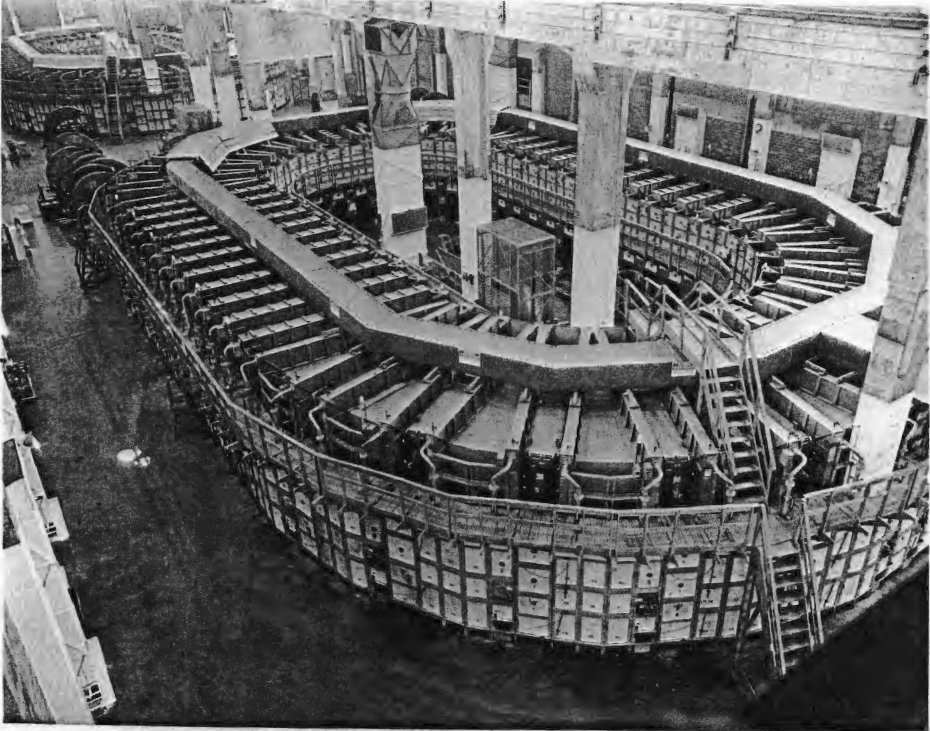
The Manhattan Project: nuclear fission. Image: “Alpha 1 Racetrack for Uranium – at Oak Ridge” photographed by Leslie Grove. Public Domain. Included with appreciation.

Nuclear energy got off to an ominous start. The Manhattan Project split the atom to produce atomic energy, in the form of a deadly bomb, during World War II. Later, the Atomic Energy Act changed the purpose from war to peaceful and beneficial use for this new form of energy.  Nuclear medicine has saved lives; nuclear power plants (while suffering some accidents) generated energy that has helped many economies supplement and then phase out fossil fuels. Nuclear energy, from fission, has some problems, however: it is weaponable, and it produces toxic radioactive waste that is very difficult to store. Nuclear plants, be they fission or fusion, will always involve some danger, as targets in war or accidents in peace. But smaller is better, and fusion is cleaner. Science knew that nuclear fission could, theoretically, be replaced by nuclear fusion. Projects like ITER in France and JET in the UK have advanced the science, but it was at Livermore that the vision was proven and achieved. Nuclear fusion promises energy with infinite power, zero carbon emissions, and very little waste. But not soon.

Physicist Albert Einstein explained how nuclear energy is released in the now-famous equation: E=mc2.  Portrait by Orren Jack Turner, 1947. Library of Congress: cph.3b46036. Public Domain. Included with appreciation.

We need to reduce carbon emissions quickly to limit global warming and arrest climate change. Stopping the use of fossil fuels will be the problem. Harnessing renewable energy from wind, wave, geothermal, and the sun via solar energy will still be the solutions. But now, we can look to something more. Nuclear fusion is in our future. Here comes the sun.

“Sun Switchbacks” observed by Parker Solar Probe, 2021, NASA. Image by Adriana Manrique Gutierrez. Public Domain. Included with appreciation.

Atomic Energy Act of 1954. https://www.govinfo.gov/content/pkg/COMPS-1630/pdf/COMPS-1630.pdf

Bobin, Jean-Louis. Controlled Thermonuclear Fusion. World Scientific Publishing Company Illustrated edition, 2014. ISBN-10: 9814590681

Coy, Peter. “What Comes After a World’s First in Fusion Research.” 14 December 2022. The New York Times. https://www.nytimes.com/2022/12/14/opinion/nuclear-fusion-research-html?smid=nytcore-ios-share&referringSource=articleShare

Glass, Philip. “Akhnaten” https://philipglass.bandcamp.com/album/philip-glass-akhnaten-live-from-the-met

ITER. https://www.iter.org/

JET. https://ccfe.ukaea.uk/

Lawrence Livermore National Laboratory FUSION IGNITION. https://www.llnl.gov/news/national-ignition-facility-achieves-fusion-ignition

Simon, Clea. “Why nuclear fusion is so exciting.” 13 December 2022. Harvard Gazette. https://news.harvard.edu/gazette/story/2022/12/why-nuclear-fusion-is-so-exciting/

Stallard, Esme. “Nuclear fusion breakthrough – what is it and how does it work?” BBC. https://www.bbc.co.uk/news/science-environment-63957085

United States Department of Energy. “Fission and Fusion: What is the Difference?” includes VIDEO. https://www.energy.gov/ne/articles/fission-and-fusion-what-difference

Building the World Blog by Kathleen Lusk Brooke and Zoe G. Quinn is licensed under a Creative Commons Attribution-NonCommercial-NoDerivs 3.0 Un


SPACE: Golden anniversary, golden opportunity

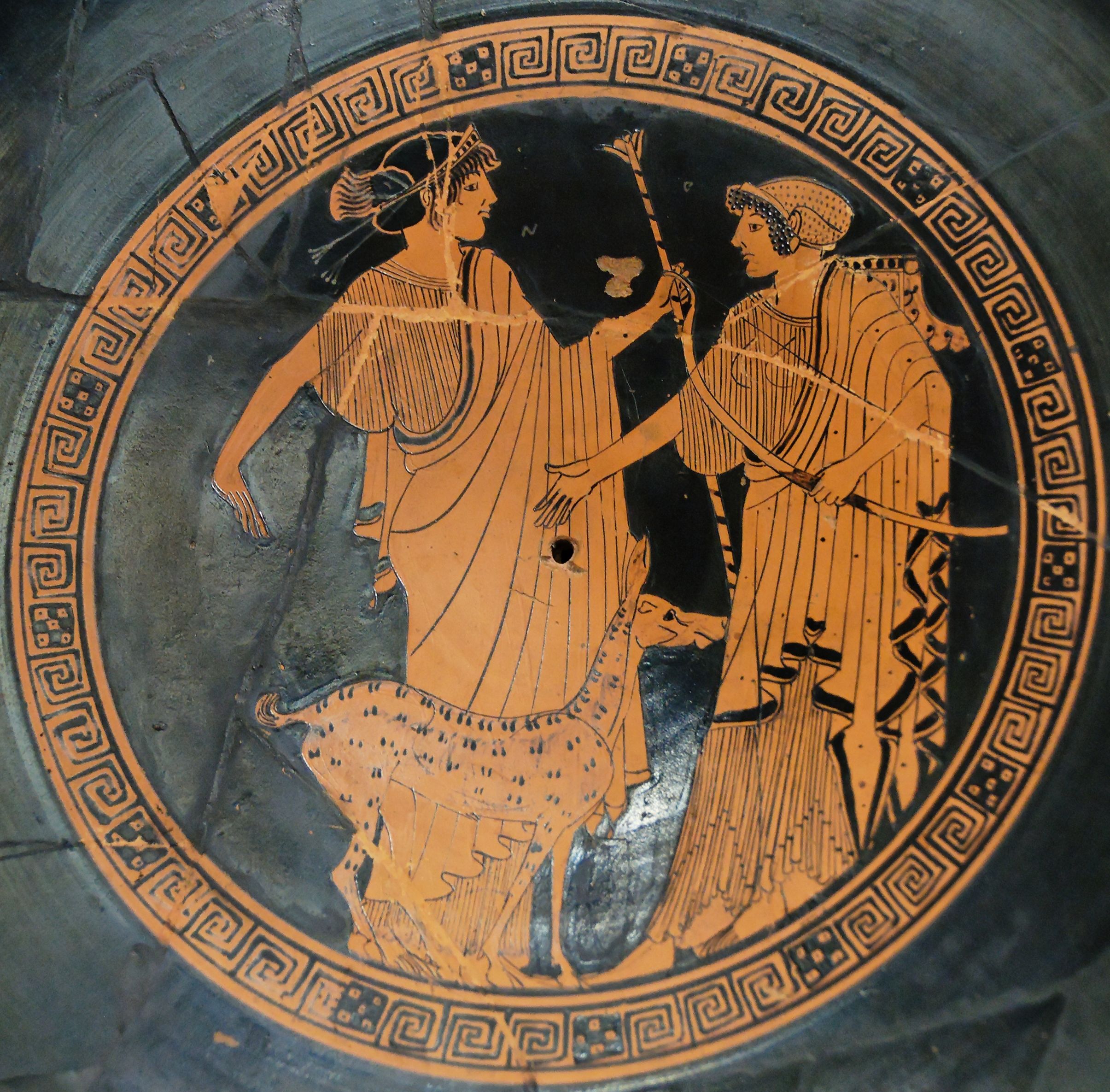
“Apollo and Artemis,” by Brygos. Courtesy of Louvre Museum.” Image: wikimedia, public domain. Included with appreciation.

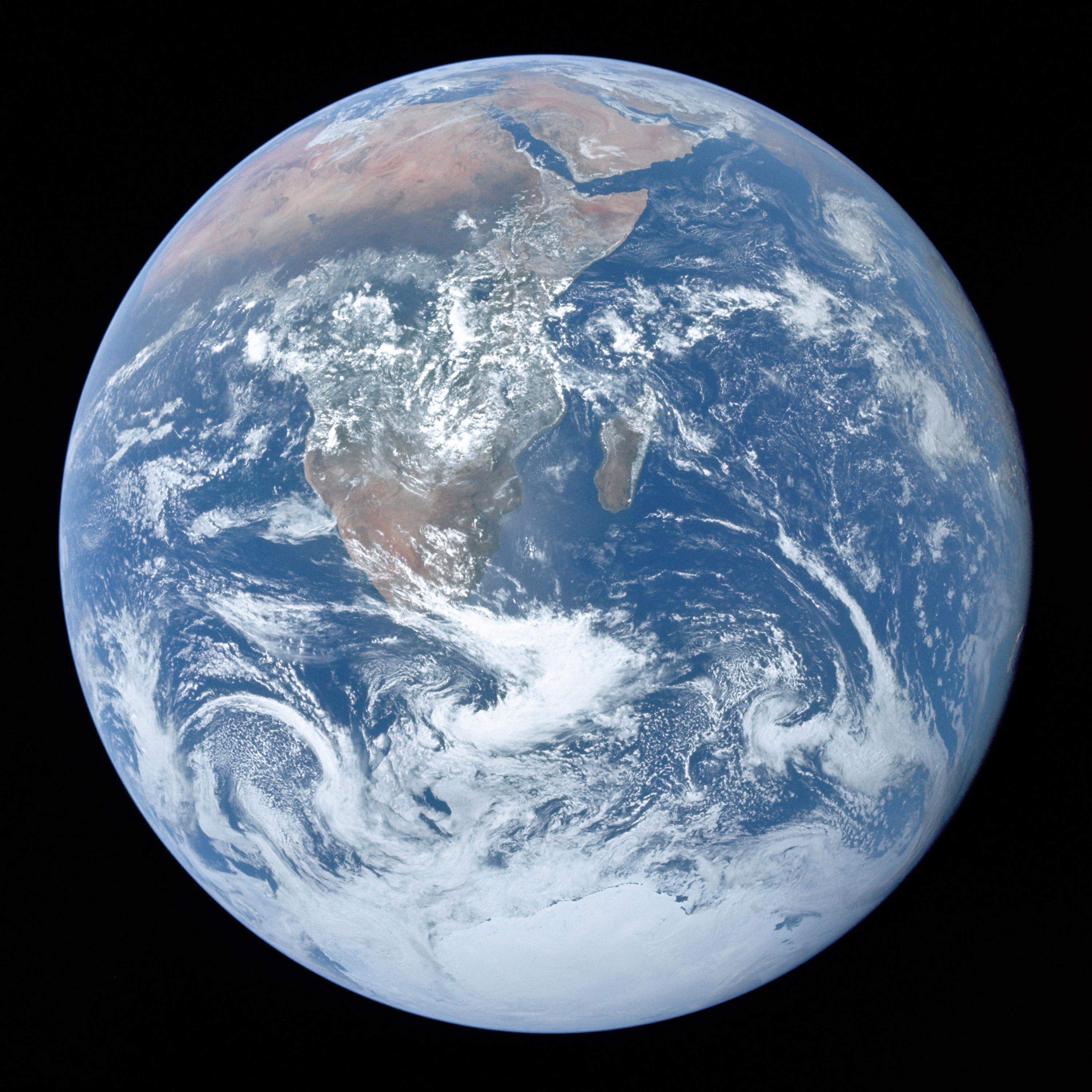
Apollo and Artemis are celebrating. It was 50 years ago that humanity last touched down upon the moon, in a series beginning with Nasa’s Apollo 11 in 1969 when Neil Armstrong took “One step for a human, one giant leap for humankind,” culminating when Apollo 17 in 1972 took the iconic “Blue Marble” photo.

“The Blue Marble” photo by Apollo 17 NASA crew, 1972. Image: wikimedia, public domain. Included with appreciation.

Celebrating the family golden anniversary, Artemis (Apollo’s sister, in Greek mythology) again circled the moon, preparing to land soon for a permanent home. Artemis mission partners Nasa and Esa plan to establish a base: “to live, to work, to invent, to create.” (Nasa: Nelson, 2022) A permanent lunar base may provide opportunity to support expeditions to Mars – and beyond.

“Mars” photo by ESA, 2008. Wikimedia commons 3.0. Included with appreciation.

December 11, 2o22 was a fly-by, orbiting and testing Orion equipment including a new heat-shield that proved successful as the space vehicle entered the atmosphere at 25,000 miles per hour (40,000 meters per hour) – speed as blistering as the heat of 5,432 Fahrenheit (3,000 Celsius). Next flight is planned for 2024-2025.

“Guadalupe Island” photo by crew of International Space Station, 2014. Public Domain, wikimedia. Included with appreciation.

Artemis and Apollo may now be celebrating in México: the mission capsule landed safely in the sea near Guadalupe Island, on the same weekend marking the 1531 sacred apparition and visitation of the patron saint of Mexico City- the feast of Guadalupe.

Amos, Jonathan. “Nasa’s Orion capsule makes safe return to Earth.” 11 December 2022. BBC. https://www.bbc.co.uk/news/science-environment-63937345

Nelson, Bill. NASA 11 December 2022. As quoted in Amos (see above).

Building the World Blog by Kathleen Lusk Brooke and Zoe G. Quinn is licensed under a Creative Commons Attribution-NonCommercial-NoDerivs 3.0 Un


SPACE: Earthshot – Urgent Optimism

“Earth” Image by NASA, 2020. Public Domain. Included with appreciaiton.

When President John F. Kennedy challenged humanity, in 1961, to send humans to the moon within a decade, we beat the deadline. On 20 July 1969, NASA astronaut Neil Armstrong spoke these words: “That’s one step for a man, one giant leap for mankind,” upon setting foot on the lunar surface. The achievement has come to be known as the “Moonshot.” The phrase indicates both a “longshot” and the power of human innovation to overcome odds to achieve what was formerly thought impossible.

Now, we have a new, and urgent, challenge: Earthshot. Launched in 2020 by The Royal Foundation, Prince William, and Sir David Attenborough, the Earthshot Prize recognizes the world’s best ideas to save the Earth from climate disaster. From 2020 to 2030, prizes will be awarded in five areas:


Image:  earthshotprize.org. Included with appreciation.

Protect and Restore Nature

Clean Our Air

Revive Our Oceans

Build a Waste-Free World

Fix Our Climate

This year’s awards were announced in partnership with the John F. Kennedy Foundation, paying homage to the challenge and achievement of the Moonshot, and giving this decade a new challenge, one powered by imagination, innovation, and urgent optimism. To see this year’s winners, and perhaps get ideas for your own Earthshot project, you can watch the awards ceremony here.

Earthshot Prize. https://earthshotprize.org

Building the World Blog by Kathleen Lusk Brooke and Zoe G. Quinn is licensed under a Creative Commons Attribution-NonCommercial-NoDerivs 3.0 Un


WATER: Loss, Damage, and Renewal at COP27

“COP 27” logo. United Nations. Fair Use public domain. wikimedia. Included with appreciation.

This month, COP27 agreed upon a goal that has been proposed and discussed for decades: loss and damage. Because we are the water planet, we will first experience climate change through water. Pakistan suffered floods causing death, destruction, evacuations resulting in loss and damage estimated at $30 billion – in 2022’s seasonal monsoon rains made more intense through climate change. Floods drenched one-third of the country, affecting 33 million people.  Bangladesh has suffered storms, higher than normal tides, intense rainfall, flooding, and coastal erosion. Micronesia has lost part of its landmass due to sea level rise. Vanuatu led the Alliance of Small Island States to propose loss and damage insurance as early as 1991. At COP 26 in Glasgow, nations began to address loss and damage through funding the Santiago Network on Loss and Damage (SNLD). When COP27 reached the agreement, there was sensitivity to phrasing: developed countries who cause most emissions did not want to state liability, and that term’s potential link to litigation.

Senator Sherry Rehman. Image: Atlantic Council, 2013. wikimedia. Included with appreciation.

Pakistan’s Federal Minister for Climate Change, Senator Sherry Rehman represented G-77 (plus China) at November’s COP27 in Sharm El-Sheikh, Egypt, leading the establishment of a Loss and Damage Fund. The fund will support technical assistance to those needing to prepare for the effects of climate change; those most affected are often those who are the lowest emitters of carbon that is driving global climate.

“Codice di Hammurabi” by photographer Sailko, from Louvre Museum, Paris, France. Creative Commons 3.0. Included with appreciation.

Loss and Damage is one of the oldest forms of insurance and reparation. The Code of Hammurabi (circa 1792-1750 bce) presented Law 100 that required repayment of debt; Laws 101 and 102 addressed loss and damage during shipping of cargo. The United Nations’ use of the term “loss and damage” refers to climate-caused destruction that exceeds a community’s ability to adapt or protect itself. For the past thirty years, nations vulnerable to climate-change damage have sought financial and technological assistance. The UN Loss and Damage Fund will begin to support rebuilding, perhaps with a new view.

But we must do more than just rebuild. We must renew. We cannot merely replace businesses, homes, hospitals, and schools in areas continuously assaulted by floods and storms. With the UN’s Loss and Damage Fund, and its emphasis on technological assistance as well as repair and rebuilding, the world’s most vulnerable areas may now have a unique opportunity not just to rebuild but to renew the world through climate-protective innovation.

Associated Press of Pakistan. “Sherry Rehman hails COP-27 for setting up ‘loss and damange’ fund as a landmark achievement.” 20 November 2022. https://www.app.com.pk/national/sherry-rehman-hails-cop-27-for-setting-up-los-and-damage-fund-as-a-landmark-achievement/

Bhandari, Preety, et al., “What is ‘Loss and Damage’ from Climate Change? 6 Key Questions, Answered.” 3 November 2022. Word Resources Institute (WRI). https://www.wri.org/insights/loss-damage-climate-change

Gul, Ayaz. “Pakistan Flood Damages, Economic Losses Exceed $30 Billion.” 28 October 2022. VoA. https://www.voanews.com/a/study-pakistan-flood-damages-economic-losses-exceed-30-billion-/6810207.html

Lakhani, Nina. “‘We couldn’t fail them:’ how Pakistan’s floods spurred fight at Cop for loss and damage fund.” 20 November 2022. The Guardian. https://www.theguardian.com/environment/2022/nov/20/loss-and-damage-pakistan-flooding-climate-justice-cop27

United Nations. “Funding arrangements for responding to loss and damage associated with the adverse effects of climate change, including a focus on addressing loss and damage.” FCC/CP/2022/L.18-FCCC/PA/CMA/2022/L.20. 19 November 2022. https://unfccc.int/documents/624434

Zhong, Raymond. “In a First Study of Pakistan’s Floods, Scientists See Climate Change at Work.” 15 September 2022. The New York Times. https://www.nytimes.com/2022/09/15/climate/pakistan-floods-global-warming.html?smid=nytcore-ios-share&referringSource=articleShare

Building the World Blog by Kathleen Lusk Brooke and Zoe G. Quinn is licensed under a Creative Commons Attribution-NonCommercial-NoDerivs 3.0 Un


TRANSPORT: Day of Two Noons

18 November – Day of Two Noons.
Image: Anakin101. Donated to public domain, wikimedia. Included with appreciation

Transport has advanced civilization in many ways, but did you know that trains gave us standard time zones? When railroads began to connect the world, there were no established time zones. Each city had a town clock, sometimes a sun dial: when the device displayed “noon,” all the businesses and homes in that city would set their own clocks accordingly. As a result, noon was slightly different in Albany and in New York City: this was acceptable for cities but not for the trains that connected them. Accidents plagued the new mode of transport, and became a serious hazard with the building of the Transcontinental Railroad, approved in 1862 and completed in 1869.

“East and West Shaking Hands,” photograph of the completion of the Transcontinental Railroad by Andrew J. Russell, public domain. Included with appreciation.

It was railroad engineers who introduced the idea of standard time zones. In the United States, Charles F. Dowd proposed the concept in 1863, but it would be twenty years until a five-zone system designed by William F. Allen, editor of a railway guide, became law. On 18 November, 1883, at noon, every railroad clock was reset. Some towns and stations had already passed noon on their sundial, so November 18, in 1883, became known as the Day of Two Noons.

“TIme Zones (2012)” showing the zones in reference to the Prime Meridian or Greenwich Meridian. Image by NASA. Public domain. Included with appreciation.

International time zones soon followed. Sandford Fleming, surveyor on the Canadian Pacific Railway, proposed standardizing time zones across the world. In 1884, the International Prime Meridian Conference, meeting in Washington, DC and chaired by Count Lewenhaupt, Delegate for Sweden, adopted the system of AM and PM (Ante Meridiem and Post Meridiem) based on Greenwich Mean Time and coordinated globally, on 22 October 1884.

Today, 18 November, when your time-keeping device (be it digital, analogue, or solar – phone, clock, or sundial), take a minute to celebrate the Day of Two Noons.

Davidson, Frank P and K. Lusk Brooke,  “The Transcontinental Railroad,” pages 205 – 218; “The Canadian Pacific Railway,” pages 253-287. Building the World. Westport: Greenwood, 2006.

International Prime Meridian Conference. http://wwp.greenwichmeantime.com/info/conference-finalact.htm.

New York Times. “Turning Back the Hands: A Quiet Change to the Standard Time.” 18 November 1883. Digital reproduction of text: http://historymatters.gmu.edu/d/5748

Terrell, Ellen. “The Day of Two Noons.” January 2021. Library of Congress. https://guides.loc.gov/this-month-in-business-history/november/day-of-two-noons

Building the World Blog by Kathleen Lusk Brooke and Zoe G. Quinn is licensed under a Creative Commons Attribution-NonCommercial-NoDerivs 3.0 Un
WATER: Armies, Veterans, and Peace

Veterans Day, a Call to Peace. “Veterans Day Poster, 1987.” Wikimedia. Included with appreciation.

Today is Veterans Day, observed in the United States on November 11 since 1919, and founded to commemorate the 11th hour of the 11th day of the 11th month (in 1918) when an Armistice ended World War I. Soon thereafter, the Paris Peace Conference resulted in the Treaty of Versailles. In 1954, Armistice Day was renamed Veterans Day. While today honors those who serve in readiness for war, the origin of the holiday is peace.

Peacetime Roman Army built roads and aqueducts. Image: “Praetorian Guard, circa 50 CE.” Louvre, France. Photograph by Jérémy-Günther-Heinz Jähnick. Gnu license, wikimedia. Included with appreciation.

What is the role of armies in peace? During times of peace, the Roman Army built roads that connected Italy and beyond, and deployed military squadrons to explore and then build the Roman Aqueducts to bring fresh water to the central city. The Netherlands instituted Dike Armies in 1319 to respond to water emergencies.

“Colorado River, Horseshoe Bend,” by photographer Paul Hermans, 2012. CC3.0, wikimedia. Included with appreciation.

Water emergencies are still with us today, perhaps more than ever. The Colorado River, bringing water and electricity to 1 in 10 Americans, as well as agriculture and industry, is 19% smaller than in 2000; reservoirs Lake Mead and Lake Powell are severely depleted. Hydroelectricity, produced by Hoover Dam’s harnessing of the Colorado River, is threatened by drought. The Mississippi River suffers concerning depletion. The same is true for many rivers around the world.  Rights of Rivers deserve protection. Who will defend them?

“Hurricane Ian making landfall, 28 September 2022,” by National Hurricane Center, U.S. National Weather Service. Public Domain, wikimedia. Included with appreciation.

Water problems are causing drought and also inundation. Recent torrents from Hurricane Ian devastated Florida, caused loss of life and property damage totaling in the billions. Areas hit by increasingly powerful floods and storms need rebuilding. Who will do this? How can we best respond to climate damage, or build protection?

History offers an inspiration to uphold military expertise, service, and tradition. We might save our coasts by a modern day equivalent of the Dike Army. We can follow the productive example of the Roman army in sustaining the Colorado River and other threatened water sources.  Armies, and veterans, might serve in what William James called the “Moral Equivalent of War” – defending Nature and Peace.

“Pace” – Italian for Peace. Can we find inspiration in the Roman Army’s works of peace? Image: “Pace” by Fibonacci, CCC3.0. Wikimedia. Included with appreciation.

James, William. “The Moral Equivalent of War.” Lecture 11, pages  267-296, in Memories and Studies. NY: Longman Green and Company, 1911 and presented at Stanford University in 1910 followed by publication in McClure’s Magazine, pages 463-468, August 1910. LINK to text: http://www.public-library.uk/ebooks/65/5.pdf

Nilsen, Ella. “Feds begin ‘expedited’ process to help save drought-stricken Colorado River.” 28 October 2022. CNN. https://www.cnn.com/2022/10/28/us/colorado-river-lake-mead-powell-drought-plan-climate/index.html

Paris Peace Conference. https://www.diplomatie.gouv.fr/en/the-ministry-and-its-network/the-diplomatic-archives/documents-from-the-diplomatic-archives/article/diplomatic-archives-the-peace-conference-paris-18-01-1919

Rights of Rivers. “Universal Declaration of the Rights of Rivers.” www.RightsOfRivers.org

Rojas, Rick. “As Drought Drops Water Level in the Mississippi, Shipwrecks Surface and Worries Rise.” 3 November 2022. The New York Times. https://www.nytimes.com/2022/11/03/us/mississippi-river-drought.html?smid=nytcore-ios-share&referringSource=articleShare

Building the World Blog by Kathleen Lusk Brooke and Zoe G. Quinn is licensed under a Creative Commons Attribution-NonCommercial-NoDerivs 3.0 Un


ENERGY: the buzz on how bees generate electricity

The electrical charge from a bee’s flight can help identify a flower with ample pollen. Image: “Bee-Apis” by Maciej A. Czyzewski, CC 4.0. Included with appreciation.

In an era when we seek to electrify many aspects of modern life, some of the most ancient life forms may teach us a thing or two. Bees, and other aerial insects, create an electrical charge. When a bee flutters its wings, the movement generates a positive electrical charge; you might compare this to the spark that can be raised by rubbing your stockinged feet across a carpet or a balloon on your arm. For bees, that electrical charge stays on their body and helps to pull pollen from a visited flower. An “echo” of the electrical signal is left behind, so the next bee hovering nearby can sense whether the flower has been recently visited and savored, or may offer a fresh serving of pollen.

What is the electrical effect of a swarm? Image: “Optical illusion disc with birds, butterflies, and person jumping.” 1833. Library of Congress: 00651165. Public Domain. Included with appreciation.

If one bee or butterfly can generate electricity, what’s the effect of a swarm or a group migration? Scientists have discovered that Earth’s atmosphere holds several kinds of electrical charges; these energy fields influence things like aerosols and dust. Recent studies have confirmed that insect swarms contribute to atmospheric electricity; the more dense a swarm, the more electricity enters the atmosphere. There’s a measurement protocol ranging from picocoulombs to nanocoulombs (one coulomb equals the quantity of electrical charge that passes a point in an electric circuit in one second by a steady current of one ampere. The term is named after Charles Augustin de Coulomb (1736-1806), physicist credited with discoveries in electricity and magnetism).

“A plague of locusts.” by SCIRO, Science Image 2007. CC3.0. wikimedia. Included with appreciation.

Honeybees, butterflies, and locusts are among aerial insects that produce significant atmospheric electrical charges. If a swarm is large enough (think Biblical descriptions of plagues of locusts), the insects’ electrical charge can equal that from weather events like storms. In current climate models, and observations by weather satellites by NASA and ESA, insect swarms are rarely included when assessing atmospheric dust, or interaction of radiation and particulate matter. Should we count insect swarms along with thunderstorms?

“Lightening Storm” by Jan Bambach, 2015. Wikimedia 3.0. Included with appreciation.

‘Save the honey bee’ campaigns rightly champion preserving pollinators on the ground; now there is evidence of influence a bit higher up. It’s one more way we are realizing that Earth’s climate is an interconnected system.

Hunting, E.R. et al., “Observed electric charge of insect swarms and their contribution to atmospheric electricity.” 24 October 222. Cell. iScience. DOI: https://doi.org/10.1016/j.isci.2022.1052

Savitsky, Zack. “Swarming bees stir up their own electric fields: Insect swarms can generate more volts per meter than thunderstorms.” 25 October 2022. Science. https://www.science.org/content/article/swarming-bees-stir-their-own-electric-fields

Building the World Blog by Kathleen Lusk Brooke and Zoe G. Quinn is licensed under a Creative Commons Attribution-NonCommercial-NoDerivs 3.0 Un

TRANSPORT: If cars could fly

Flying cars have long been a dream: this one’s from 1947. But new models are coming to a sky near you, soon, Image: “Convair Model 118” from 1947. Wikimedia, public domain, Included with appreciation.

If the car changed history, even more so: the airplane. Now these common modes of transport must, themselves, change. Transport contributes 25% to CO2 emissions, from the burning of fossil fuels. We are seeing adoption of electric vehicles, encouraged by automobile manufacturers’ new vehicles and installation of charging networks. Air travel has not made the transition to zero-carbon as easily: aircraft are simply too heavy to run on batteries. But what if cars could fly? And do so on electricity?

“Back to the Future” starring Michael J. Fox featured a flying car. Image: wikimedia. Included with appreciation.

Alef, in California, has invented a flying car that drives on regular roads, and then transforms into a biplane. For the sum of $300,000 you can go “Back to the Future.” And, it’s electric. Pal-V, made in the Netherlands, will cost $599,000; or $399,000 for a sports edition: both models include training in the price. AirCar is a hybrid car/plane that runs on a BMW engine using gasoline: it can fly 600 miles once it morphs from car to aircraft.

“Cormorant” from Israel Defense Forces, built by Tactical Robotics LTD, Image by Timus Saban, 2016. Creative Commons 4.0. Included with appreciation.

What’s the market for flying cars? Morgan Stanley estimates it will be worth $1.5 trillion in 2040. Some Tesla investors have expressed support, and technologies like AirCar, Pal-V gyrocopter, and Alef might interest the military, like the above Cormorant flying vehicle used by the Israel Defense Forces, or NASA where vehicles roaming planets need to travel by land and by air. Since Daedalus, innovative humans have found inspiration from Nature where birds strut the ground, then fly through the sky. Will we soon join them?

“Seagull in flight,” by Mark Buckawiki, 2017. Wikimedia Creative Commons 1.0 Donated into the public domain by the author, and included with appreciation.

Kleinman, Zoe “Flying car completes test flight between airports.” 29 June 2021. BBC. https://www.bbc.co.uk/news/technology-57651843

Vallance, Chris. “The flying car that could turn into a biplane.” 21 October 2022. BBC. https://www.bbc.co.uk/news/technology-63325341

Building the World Blog by Kathleen Lusk Brooke and Zoe G. Quinn is licensed under a Creative Commons Attribution-NonCommercial-NoDerivs 3.0 Un

ENERGY: Cutting down on Flare ups

“North Dakota Flaring of Gas, Bakken Formation,” by Joshua Doubek, 2012. Creative Commons 3.0, wikimedia. Included with appreciation.

Shooting carbon dioxide into the atmosphere – as a matter of convenience? Drilling for oil releases gas, a side effect. In many drilling locations, gas is just burnt off to get rid of it quickly; this practice is so common that it is called “routine flaring.” In a few instances, gas build-up is sudden and severe, so it must be flared to avert explosion; this is called “safety flaring.”

Flaring is such a common practice that there are more than 10,000 gas flares active at any time. Flaring is harmful – in 2021, it sent 144 billion cubic meters into the atmosphere with a carbon dioxide input of 400 million tons – this is the same as 9 trillion miles of automobile rides.

Flaring causes emissions equivalent to 9 trillion miles of automobile rides. Image: “Driving cars n a traffic jam,” by epSOs.de, 2011. Creative commons 2.0, wikimedia. Included with appreciation.

Flaring sends more than carbon dioxide into the air; it also yields soot, or technically black carbon. According to the European Geoscience Union, 40% of the black carbon in the Arctic comes from gas flaring. Arctic ice cap melting increased because someone in a far-away oil field flared rather than saved gas. Flaring also sends other substances into the air: benzene – known to cause cancer; naphthalene, linked to eye and liver damage.

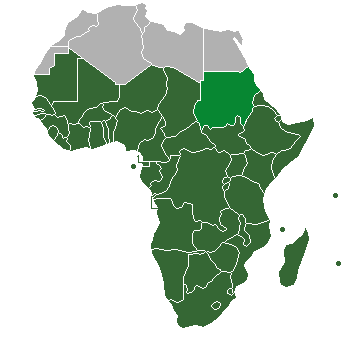
Who’s to blame? Algeria, Iran, Iraq, Nigeria, Russia, the USA, and Venezuela flared the most gas over the last decade, but now China, Libya, and Mexico have started flaring. Gas flared and lost in 2021 could have powered all of sub-Saharan Africa.

“Sub-Saharan Africa, as defined by United Nations.” Design by Jcherlet, 2010. Wikimedia. Included with appreciation.

Why not just stop flaring, as the World Bank’s Zero Routine Flaring Scheme (ZRF) proposes? The Scheme, introduced in 2015, now has 54 energy companies, and 32 national governments as supporters. There has been some progress. Norway taxes gas flaring; as a result, it has the lowest flaring rate. Kazakhstan introduced incentives in the local gas market that encouraged drillers to capture and sell gas, reducing flaring in the process.

Cost remains a factor: stopping routine flaring would cost an aggregate $100 billion. Why not just capture it and reuse it, or sell it? There are processing costs to remove some chemicals before the gas can be used. But the gas would be suitable for powering drilling sites, or perhaps useful for mobile electricity generation in the field. In the field, unwanted gas could be returned to the land rather than flared into the air. In fact, injecting the gas into the ground would raise pressure and in turn allow better flow of oil. Finally, gas might be treated to deliver to energy pipelines.

Pipelines circle the Earth: could gas, not flared but collected and treated, join the flow? Image: “West Coast Pipeline,” by DarrenBaker, 2005. Creative Commons, wikimedia. Included with appreciation.

Pipelines, like the Alaska Pipeline or West Coast Energy Pipeline, are ubiquitous: in December 2020, there were 2,381 oil and gas pipelines in 162 countries – the combined pipelines’ total length is enough to circle the globe 30 times. On drilling sites where gas is now flared, could ancillary supply lines conveying gas collected and treated, instead of flared, join that circle?

BBC, Science & Environment. “Gas flaring: What is it and why is it a problem?” 29 September 2022. https://www.bbc.co.uk/news/science-environment-63051458

Hussein, Mohammed. “Mapping the World’s Oil and Gas Pipelines.” 15 December 2021. Aljazeera. https://www.aljazeera.com/news/2021/12/16/mapping-world-oil-gas-pipelines-interactive

Puliti, Riccardo. “Boost energy security and cut methane emissions by reducing gas flaring and venting.” 6 October 2022. World Bank Blog. https://blogs.worldbank.org/voices/boost-energy-security-and-cut-methane-emissions-reducing-gas-flaring-and-venting

World Bank. “Zero Routine Flaring by 2030 (ZRF)” https://www.worldbank.org/en/programs/zero-routine-flaring-by-2030

Building the World Blog by Kathleen Lusk Brooke and Zoe G. Quinn is licensed under a Creative Commons Attribution-NonCommercial-NoDerivs 3.0 Un