CONGRATULATIONS and thanks for voicing your support for pausing deep seabed mining, might be the words of this ‘Dumbo’ Octopus, more formally known as Opisthoteuthis agassizzi. Image: “Dumbo Octopus” by NOAA, 2019. Creative Commons 2.0. Included with appreciation.
If you voted “yes” to pause decisions on deep seabed mining, your voice has been heard. The International Seabed Authority (ISA) agreed to extend discussions on guidelines for deep sea mining, and to develop clearer policy to protect the marine environment, until 2024, or maybe even 2025.
Logo of International Seabed Authority by Anna Elaise, ISA, 2009. Public Domain. Included with appreciation.
A proposal by Chile, Costa Rica, France, Palau, and Vanuatu, supported by other member States, overrode the “two-year rule” enacted by Nauru and The Metals Company to begin mining in the Clarion-Clipperton Zone (CCZ). The matter will advance to further discussion at the twenty-ninth session of the Assembly in 2024; some say debate could extend to 2025. There is time; you can become better informed and more involved.
Palau is one of the signatories of the measure to pause deep sea mining advancement until further discussion. Image: “Palau archipelago” by Lux Tonnerre, 2008. Creative Commons 2.0. Included with appreciation.
ISA revealed the decision in an August 2 report entitled “Just and Equitable Management of the Common Heritage of Humankind.” Part 04 of the report reveals the “Status of Contracts for Exploration in The Area.” These areas are the Clarion-Clipperton Zone (CCZ), the Indian Ocean, the Mid-Atlantic Ridge, and the Northwest Pacific Ocean. The areas are the focus for:
19 contracts for mining of polymetallic nodules (PMN)
7 contracts for mining polymetallic sulphides (PMS)
4 contracts for cobalt-rich ferromaganese crusts (CFC)
Source: International Seabed Authority (ISA) 2023
Deep sea bed mining may involve the Clarion-Clipperton Zone. Image: “Location of the Clarion-Clipperton Zone” by United States Geological Survey (USGS), 2008. Creative commons public domain. Included with appreciation.
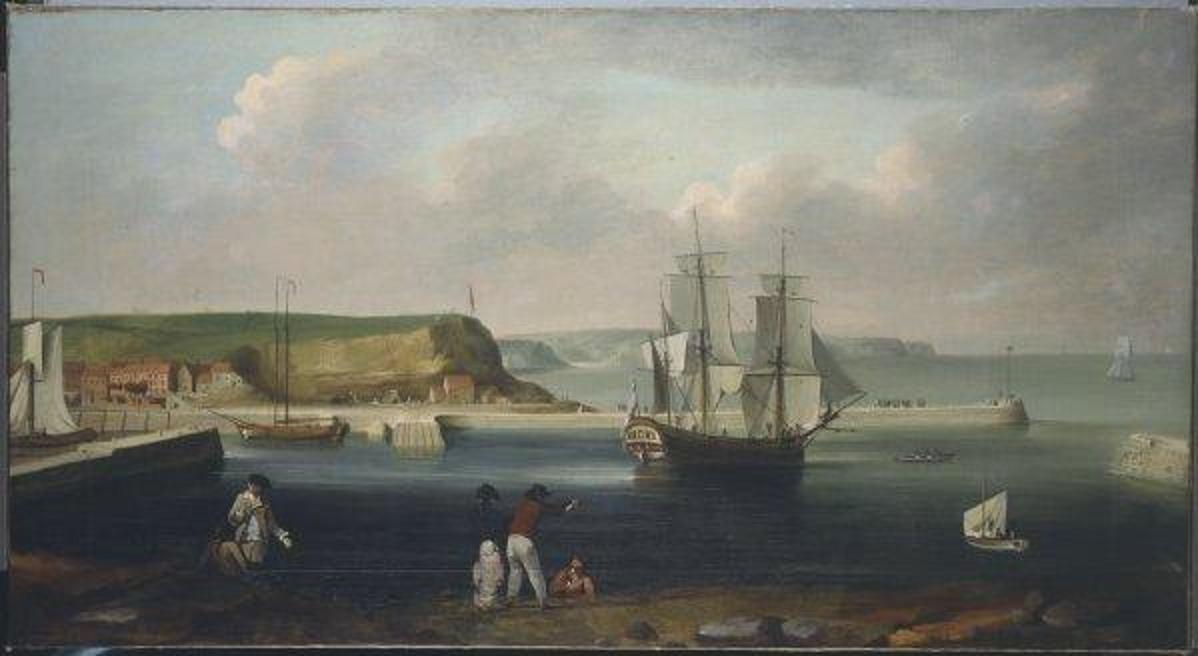
There are two kinds of ISA contracts: exploration and exploitation.Exploration contracts assess minerals present in the area and may include sampling, as well as testing mining technologies and ways to process mined minerals. Advancing to exploitation contracts would commence deep seabed mining. Contracts are sponsored by member states, and may include private enterprise partners. States currently sponsoring contracts include Belgium, Bulgaria, China, Cook Islands, Cuba, Czech Republic, France, Germany, Jamaica, Japan, Kiribati, Nauru, Republic of Korea, Russian Federation, Singapore, Slovak Republic, and Tonga (ISA Figure 12). While exploration may be carried out by presence and probing, as done by Alexander Dalrymple and James Cook using lead lines and sextants on voyages of the “Endeavor;” since the time of COMSAT, the deep seabed may also be mapped by remote sensors and satellites.
“First voyage of James Cook – HMS Endeavor leaving Whitby Harbour” by Thomas Luny, 1768. It should be noted that Cook’s final voyage resulted in actions that may have been better avoided. Creative commons public domain. Included with appreciation.
Don’t rest on your votive laurels. The deep sea, and its treasures, are shared possessions of all the world and its many inhabitants including fauna and flora of the deep. You help the world decide what will determine the “Just and Equitable Management of the Common Heritage of Humankind.” (ISA 2023) What are your views? What actions can you take this year, and next?
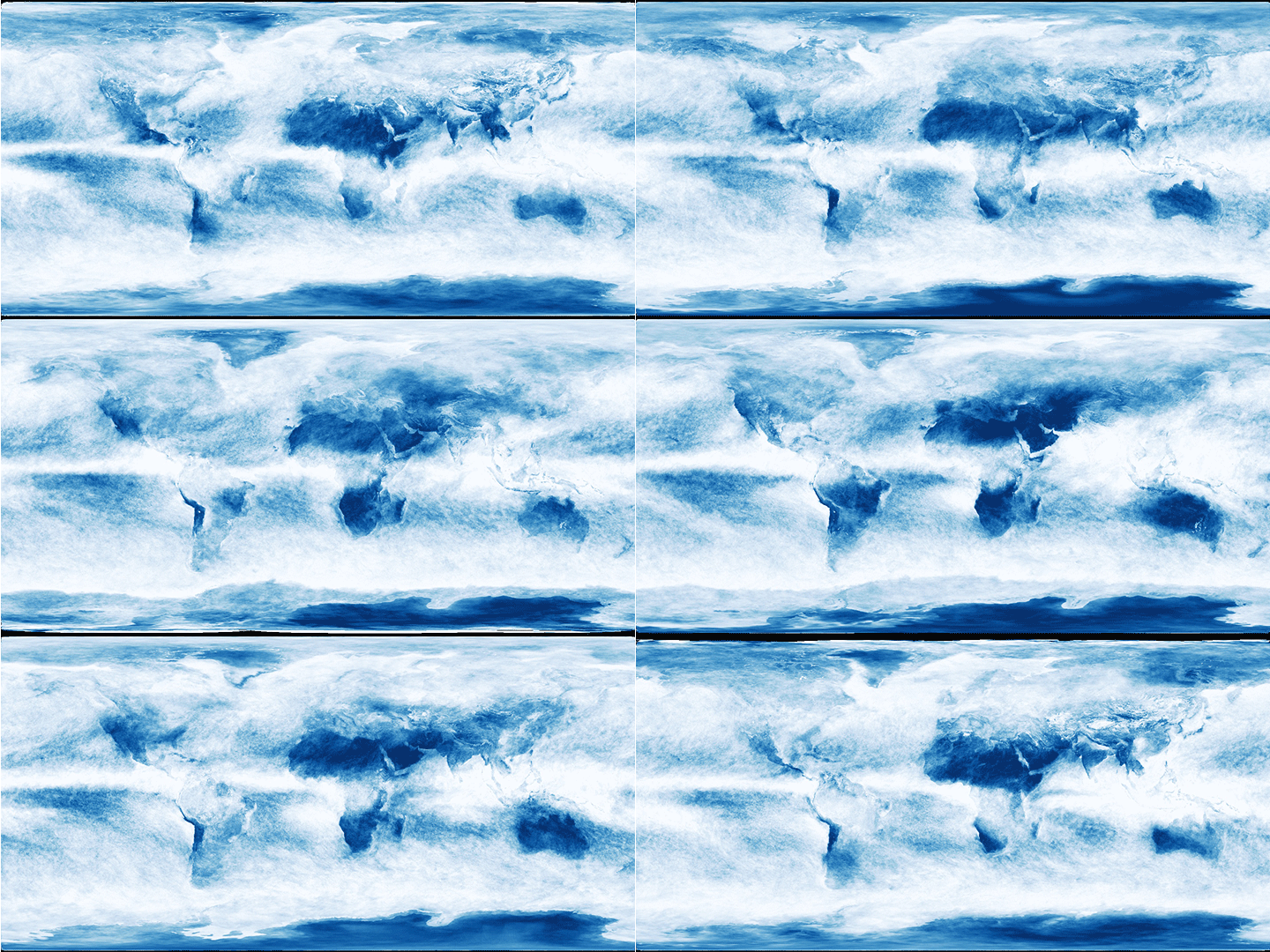
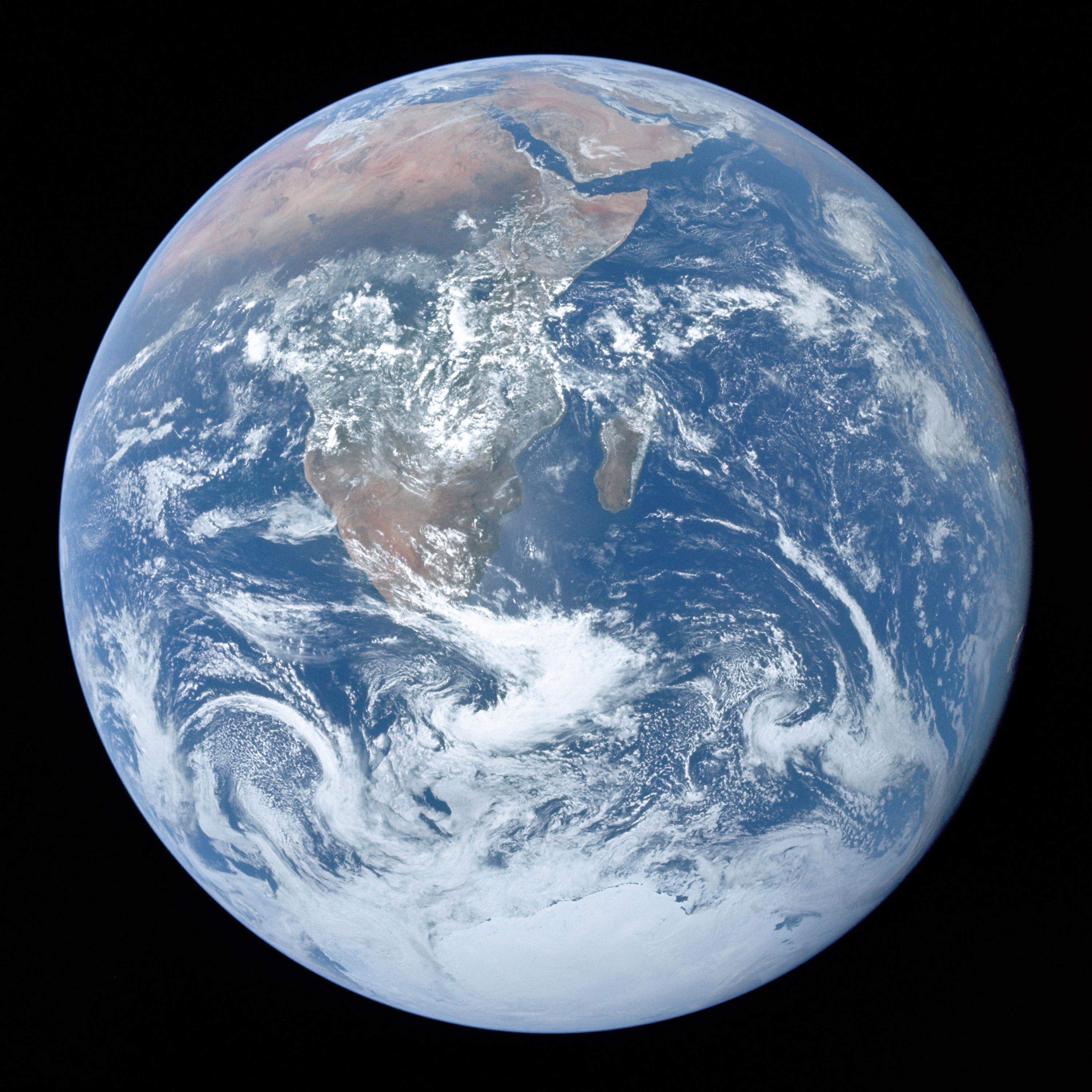
What kind of treasure is buried in the deep sea, and to whom does it belong? Image: “Brian Aqua by Month,” 2014, from data and images by NASA, public domain. Included with appreciation.
As the quest for clean energy continues, so does the search for battery components like cobalt, and other minerals. On land, mining has been an active industry, but resources are getting harder to access. Because land’s properties, and hidden treasures, are also present in the ocean, mining may be expanding to the seabed. The same thing happened in the energy sector earlier: oil wells were first drilled on land, then offshore.
“UNCLOS Maritime Zones – Exclusive Economic Zone and High Seas” by JK Donehue, 2020. Creative Commons 4.0. Included with appreciation.
The deep sea—and the seabed—are not the property of any single nation. Coastal countries do maintain proprietary rights to their waters to a distance of 200 nautical miles/230 land miles (370 km), known as an exclusive economic zone (EEZ). Within its EEZ, a country controls the rights to living and so-called “non-living” resources, including minerals. That means if a country is coastal, and it happens to have seabed minerals within the allotted reach, those resources are theirs to exploit without any permissions required.
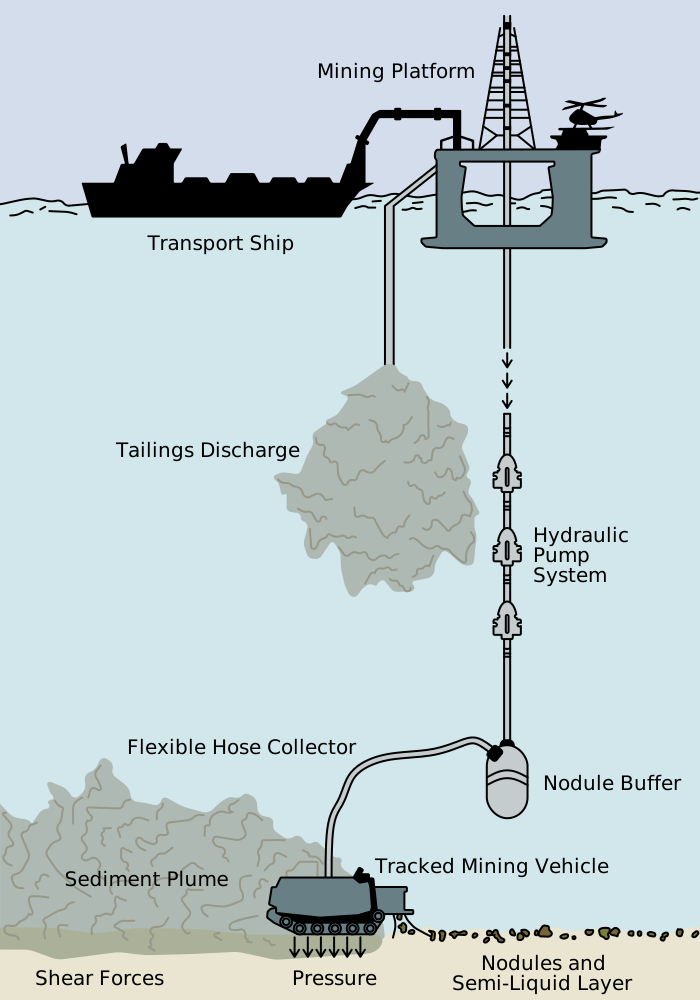
“A schematic of mining of nodules on the deep seabed floor,” by MimiDeep, 2022. Creative Commons 1.0: dedicated to the pubic domain by the designer. Included with appreciation.
Minerals needed to supply the ever- growing demand for electric batteries include cobalt. There are three main types of cobalt deposits found in the seabed:
polymetallic nodules found in the seabed;
sulfide deposits found around hydrothermal vents; and
ferromanganese crusts that line the sides of seamount crests and crusts.These areas contain cobalt, manganese, titanium, nickel, even gold. The relatively good news is that ferromanganese crusts can be found at more shallow depths of 0.25 to 3.0 miles (400 to 5,000 meters) where there is considerable volcanic action. A significant amount of cobalt deposits may lie within the EEZs of specific countries, so they would have access and rights there.
International Seabed Authority logo. Image by Anna Elaise, ISA, 2009. Creative Commons public domain. Included with appreciation.
Resources outside of national boundaries belong to the whole world (even land-locked, non-coastal countries). These rights are regulated by the International Seabed Authority (ISA), established in 1994 as a follow-on to the UN Convention on the Law of Sea. Any country that is a signatory to UNCLOS (the U.S. is not, yet) may apply for an international seabed contract. ISA can grant two kinds of contracts: exploration and exploitation. The first gives permission to map where the desired minerals are and what might be necessary to reach and extract them. The second, exploitation, is mining. So far, all the contracts granted have been for exploration only. But that may soon change.
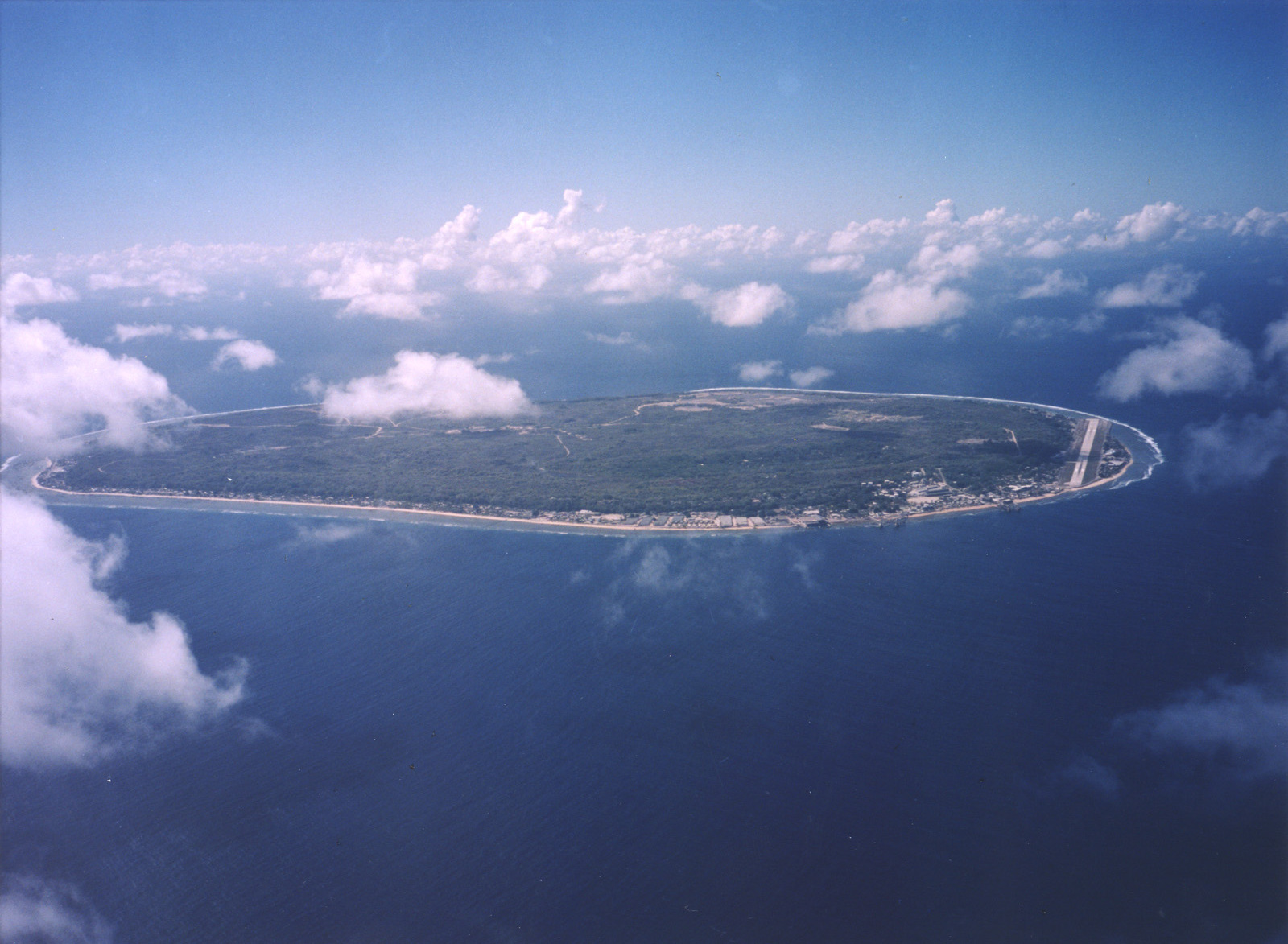
Nauru, third-smallest country in the world, may change history. “Aerial view of Nauru” by U.S. Department of Energy, 1999. Creative commons public domain. Included with appreciation.
Nauru, third-smallest nation in the world, applied to ISA and was granted an exploration contract for Nauru Ocean Resources Inc. (NORI), a subsidiary company of DeepGreen, a Canadian company. DeepGreen merged with Sustainable Opportunities Acquisition Corporation, and the new firm was named The Metals Company (TMC), which quickly began working in an area of the Clarion-Clipperton Zone (CCZ) designated as NORI-D. The contract was to develop nickel, and perhaps later other minerals.
Clarion-Clipperton Zone (CCZ), located in international waters between Hawaii and Mexico, may contain large deposits of valuable minerals. Image by NOAA, 2011. Public Domain. Included with appreciation.
Many valuable minerals are contained in the Clarion-Clipperton Zone (CCZ) in international waters between Hawaii and Mexico. TMC estimates the CCZ area might contain the largest nickel deposit in the world. The polymetallic nodules there also contain manganese, copper, and cobalt. NORI embarked on 18 expeditions to evaluate resources as well as biodiversity, geochemistry, and the cyclic systems of nutrients. But mining the sea poses problems not yet encountered on land.
Exploration, and exploitation (mining) of the deep sea may pose problems not yet encountered on land. Image: “Deep Sea Exploration” by Dr. Steve Ross, NOAA, 2005. Creative commons, public domain. Included with appreciation.
The Republic of Nauru recently gave notice to the ISA of NORI’s intention to mine the CCZ. Nauru’ s official letter, dated 25 June 2021, invoked the “Two Year Rule,” requiring ISA to complete its decision. There is a provision in the UN Convention of the Law of the Sea (UNCLOS), found in Section 1(15), that requires ISA to make a decision on a proposed contract within two years. Hence the informal name, “Two-Year Rule.” The rule is on the books as a safeguard to those who are ready to mine, but blocked when the approval process stalls.
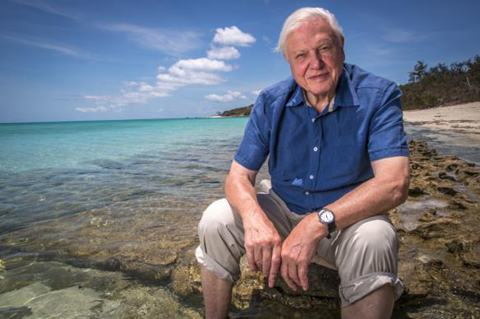
Sir David Attenborough at the Great Barrier Reef. Image courtesy of the Department of Foreign Affairs and Trade, Australia. Creative Commons 4.0. Included with appreciation.
Many have called for a moratorium, among them Sir David Attenborough as well as a number of marine science experts. But it would seem that mining may commence, soon. In March 2023, at the ISA general meeting, the Legal and Technical Committee began developing terms for exploitation contracts. In April 2023, ISA announced it would invite exploitation applications in July 2023.
What are the Rights of the Commons? Image: Wiki Human RIghts graphic by Jasmina El Bouamraoui and Karabo Poppy Moletsane and Wikipedia, 2021. Creative Commons Public Domain CC0. Included with appreciation.
If the international seabed belongs to everyone, how will the value of any minerals mined be shared? Certainly, private companies will need to be in partnership with sponsoring nations, like Nauru. And the costs of operations may be significant. But is there a plan for sharing some portion of the profits with the owners of the deep seabed – the world? Similarly, what is the plan for addressing potential loss and damage, if and when mining accidents or environmental degradation may occur? Will the work of Senator Sherry Rehman of Pakistan apply? If the international ocean and seabed belong to the world, a kind of blue commons, should rights be similar to those defined by the Outer Space Treaty? In our era of deep sea and deep space exploration (and exploitation), should we update our laws and rights concerning that which is shared by all humanity and nature? Might the insights of Nobel Laureate Elinor Ostrum help us to determine how to govern the commons of international waters?
“International waters in dark blue; exclusive economic zones in light blue” by graphic artist B1mbo, 2011. Creative commons 3.0. Included with appreciation.
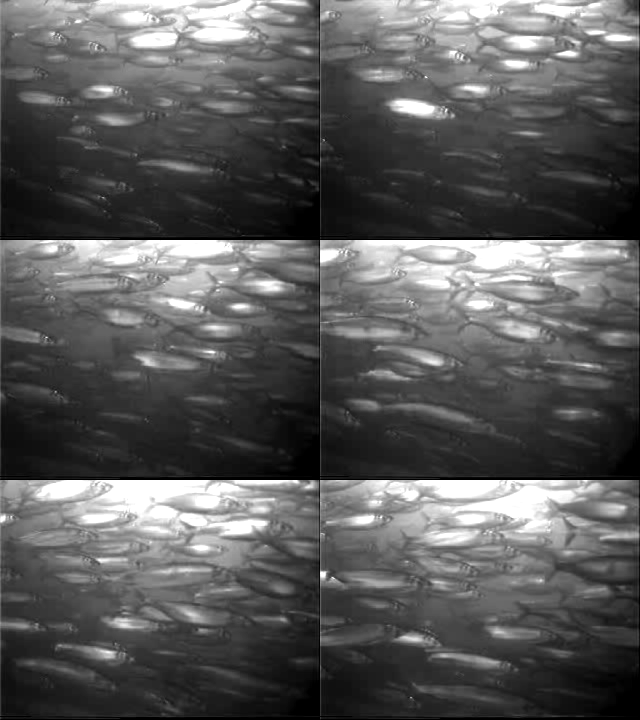
How can we balance future seabed mining with the sustainable future of marine biodiversity? Image: “Clupea harengus migrating” video by Uwe Kils, Creative Commons 3.0. Included with appreciation.
Singh, Pradeep A. “The Invocation of the ‘Two-Year’ Rule’ at the International Seabed Authority: Legal Consequences and Implications” 18 July 222, The International Journal of Marine and Coastal Law 27 (2022), p. 375-412. https://brill.com/view/journals/estu/article-p375_1.xml?languagej=en
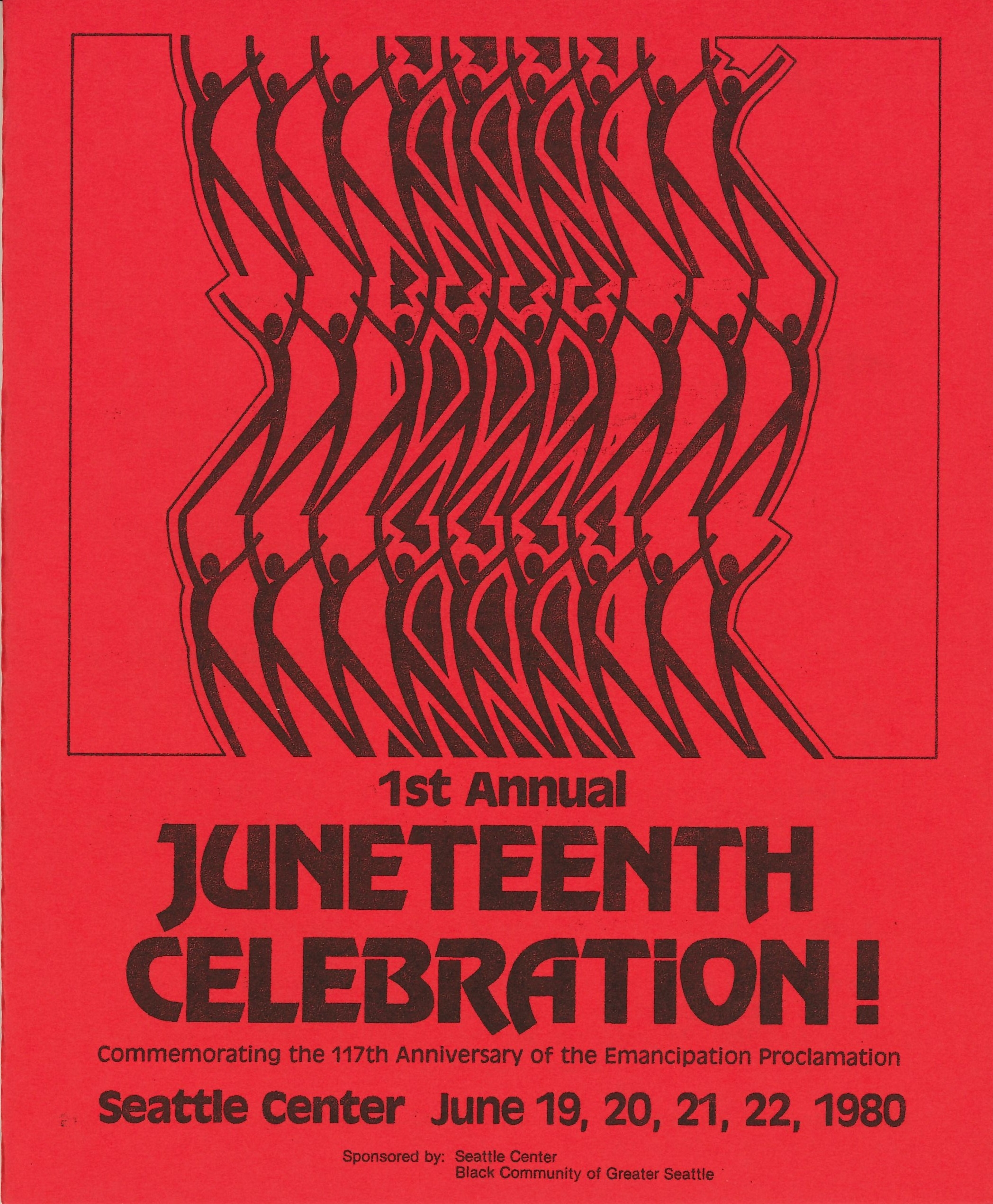
“Juneteenth Celebration” flyer for Juneteenth 1980 celebration at the Seattle Center. Image: Creative Commons 2.0, courtesy of Seattle Municipal Archives. Included with appreciation.
As we celebrate and honor Juneteenth, here, written and spoken by poet Maya Angelou, is “Still I Rise.”
Angelou, Maya. “Still I Rise.”
Building the World Blog by Kathleen Lusk Brooke and Zoe G. Quinn is licensed under a Creative Commons Attribution-NonCommercial-NoDerivs 3.0 U
Wildfires are increasing due to climate change. Image: “Burning Mangum Fire” in Arizona. Public Domain.Included with appreciation.
June 2023: Canada is on fire (below are links to help). Canadian wildfires have consumed 9.4 million acres (3.9 million hectares) – 15 times the average over the past decade. Quebec fires forced 11,000 residents from their homes; Nova Scotia suffered the largest blaze in its history. The East coast is not alone: Western British Columbia battled the second-biggest wildfire on record for the area. In Central Canada, Alberta issued evacuation orders and heat directives. Canadian railway CN is adjusting trains in several provinces. Why? Drought dries forests and heat sparks blazes. While wildfires are normal in nature, hence the term “wildfire season,” climate change is intensifying the threat to land, cities, and public health.
New York City’s Empire State Building as seen through smoke-haze from Canadian wildfires. Image “Empire State Building June 7 2023” by Aethemplaer on Twitter. Creative Commons 4.0. Included with appreciation.
No longer are fires, and related smoke, a local danger. Just south of Canada, winds blew smoke into the air of Vermont to New York to South Carolina, and then westward to Ohio and Kansas. New York City’s iconic skyline was cloaked in soot. Satellite images show the movement of smoke over Manhattan.
Smoke from Canadian wildfire blowing over New York City on June 7, 2023. Image: by NOAA. Public Domain. Included with appreciation.
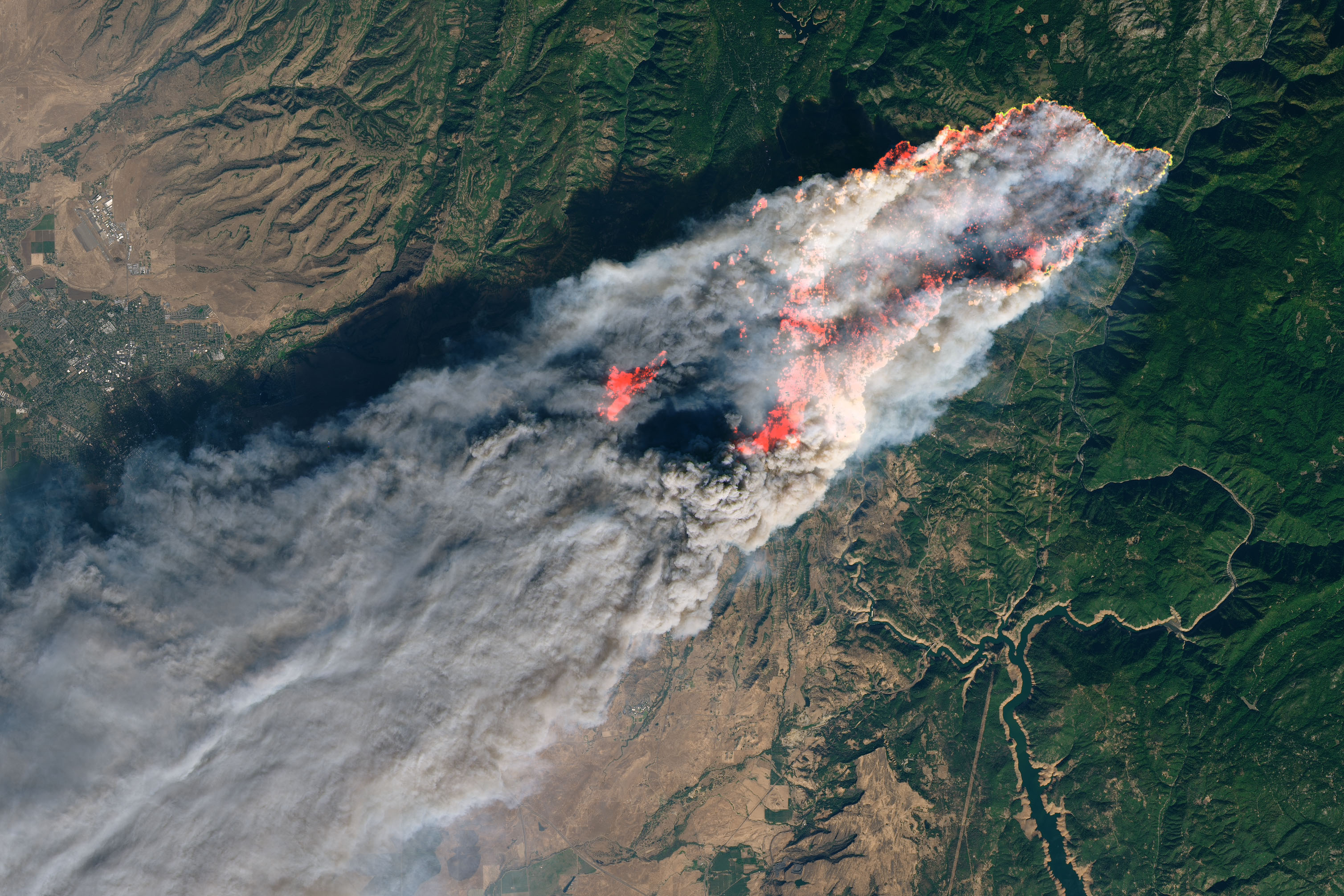
The year 2023’s fire season is just beginning in North America. If recent years are a warning, it is time to take precautions. In 2022, wildfires in California, Oregon, and Washington state consumed thousands of acres, destroyed homes and agricultural land. Canadian British Columbia battled 193 wildfires in 2022, sending smoke to Vancouver and also to Seattle, Washington. Wildfires have become so frequent that they often have names: Sandia, Red, Tower, Mountain, Dixie, Camp. The latter, in 2018, burned 153,000 acres (62,000 hectares), killed 85 people, and destroyed the entire town of Paradise, California.
Camp Fire of 2018 engulfed Paradise. Image: photograph by Landsat and Joshua Stevens, NASA. Public Domain. Included with appreciation.
Copernicus satellite system: “Europe’s eyes on Earth.” Image: Copernicus logo courtesy of European Union. Creative commons fair use. Included with appreciation.
As global space-based observation progresses, we may be able to predict wildfires. The European Forest Fire Information System (EFFIS) reports on European Union countries. EFFIS uses satellites in concert with the Copernicus Atmosphere Monitoring Service (CAMS) to observe active wildfires and estimate air quality pollution. Then, CAMS coordinates with the Global Fire Assimilation System (GFAS) to predict where the wind will blow fire pollution, sending warning to cities. Another space-based monitoring system is CAMS Biomass Burning Aerosol Optical Depth measuring how much sunlight can pass through the air (or not), indicating concentrations of particulate matter.
Image: “Grain size dependence of penetration of airborne particulate matter.” Graphic by Dr. Claire Horwell, Durham University, UK and Ken Donaldson, USGS. Creative commons public domain. Included with appreciation.
Particulate matter (PM) is the term for mixture of solid and liquid drops of pollutants suspended and carried in the air. Particles can be made of inorganic and organic compounds including soot, metal, dust, soil, pollen, mold, and little flakes of burnt matter. Small particles can be inhaled, enter the lungs and pass into the bloodstream. The tiniest particles, those less than 2.5 micrometers in diameter and known as PM2.5, are the most dangerous.
How can you tell if your local air’s PM2.5 might be at high levels? Look out any window. If air is hazy, and wind is relatively still, there is danger. Here are actions to take:
Preventing Wild Fires and Related Damage – manage forests, limit residential plantings needing extensive water, build new construction with fire-proof or fire-resistant materials, use satellite data to anticipate fire-prone areas and take preventive action.
Preventing Health Risks due to Fire and Smoke – remain indoors, do not open windows, use an air-filter device if available, cancel unnecessary outdoor exposure. If you do need to venture outdoors, wear an N95 mask (or two), and when returning, remove and launder outerwear garments that may harbor toxic residue.
Providing Help to Those Impacted by Canadian Wildfires – fires have displaced 20,000 people, destroyed property, and sent many to the hospital for smoke inhalation. Here’s some ways to help:
Donate a Mask – help a charity that distributes free N95 masks.
In the future, climate response will mean addressing, especially, the shared resources of the global commons. These include areas that lie beyond national jurisdiction: the high seas, outer space, and the atmosphere – the very air we breathe. Wildfires may erupt in a specific place, but winds that circle the globe bring “there” to “here.” As we respond to problems we face today, let us keep an eye on a better, cleaner, more equitable future.
But still, like air, I’ll rise. -Maya Angelou
Brooke, K. Lusk. “Designing residential and commercial communities in the age of drought and wildfires.” Renewing the World: WATER. Success Casebook. 2023. ISBN: 9798985035933.
Droughts and floods will continue. Now we can predict them with GRACE. Image: “GRACE globe animation” by NASA. Public Domain, included with appreciation.
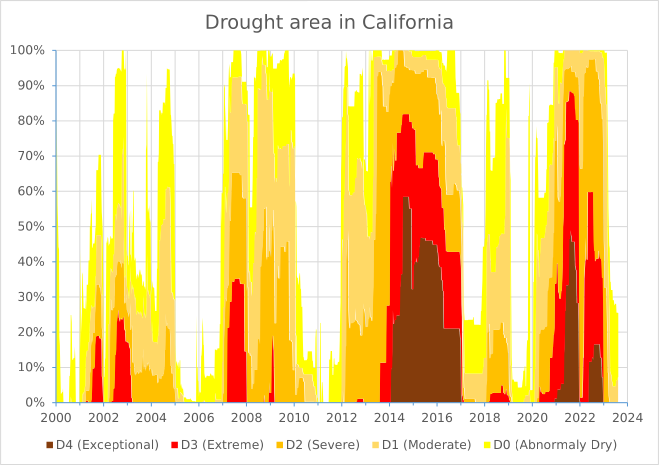
Atmospheric rivers: 11. Snow: 55 feet (16.76 meters). Rainfall: thus far in 2023, more than all of 2022. Conservation mandates and restrictions: eased. Outdoor watering: again permitted. Reservoirs: many refilled. Is California’s drought officially over? Conditions are better, but concerns remain. The issues are not restricted to California, but the state serves as a case example.
While 2023 brought relief and refilled many California reservoirs, drought is cyclical. Image: “Drought area in California” graphic by Phoenix7777, based on U.S. Drought Monitor Data. Creative Commons 4.0. Include with appreciation.
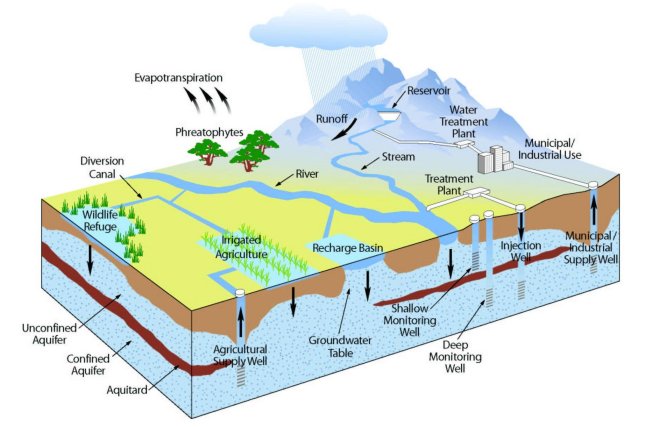
GROUNDWATER – On the surface, things certainly look better. But California’s underground aquifers are still in trouble, some at lowest levels ever recorded. After previous droughts (2007-2009, 2012-2016), California’s groundwater in the agriculturally important Central Valley recovered only 34% (2007-2009 drought) to as little as 19% (2012-2016). During drought periods, groundwater supplied 60% of California’s water, so maintaining underground aquifers is critical.
How is groundwater formed, replenished, and sustained? Image: “Groundwater.” Graphic by Dr. Andrew Fisher, California Agricultural Water Stewardship Institute, 2018. Creative Commons 4.0. Included with appreciation.
In irrigated agricultural regions with limited surface water supply, drought can have severe effects on groundwater. Recent innovations for storing floodwater underground in “water-capturing basins” hold promise. What kinds of future innovations will collect rain and flood water for future use? The Sustainable Groundwater Management Act (SGMA), passed in 2014, requires local agencies to form and fund groundwater sustainability agencies for high priority areas to control overuse of water by 2034. The United Nations raised awareness of the importance of groundwater by dedicating World Water Day 2022 to that resource with the motto: “Making the Invisible Visible.”
California obtains a portion of its water from the Colorado River. Image: “Colorado River at Horseshoe Bend” by Charles Wang, 2023. Creative Commons 4.0. Included with appreciation.
COLORADO RIVER – Surface water and underground aquifers are not the only sources. Water supplies from the Colorado River flow, at some distance, to cities and towns in Southern California. That river is still suffering through a two decade long drought that depleted reservoirs like Lake Powell and Lake Mead. Seven states, as well as many indigenous sovereign nations and also Mexico, share in the water according to rules set in the Colorado River Compact 0f 1922. If the seven states cannot come to agreement on water usage cutbacks, the federal government will step in. In April 2023, the U.S. Department of Interior’s Bureau of Reclamation introduced options.
Floods devastated Sindh Provice, Pakistan in 2022. Image: “Pakistan floods August 27 2021 versus August 27 2022.” By NASA. https://worldview.earthdata.nasa.gov/. Image in public domain. Included with appreciation.
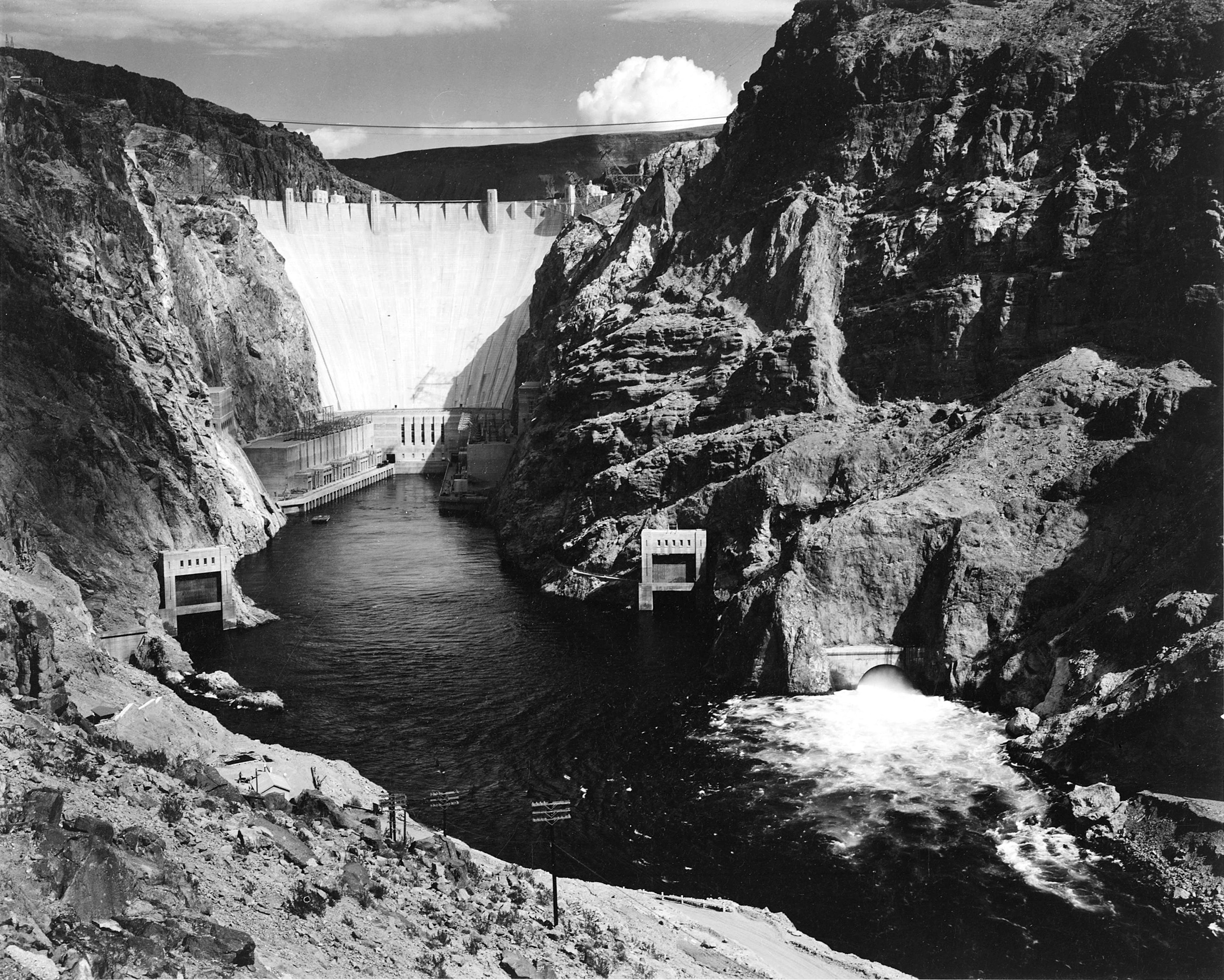
Hydroelectricity depends upon abundant water. Drought has threatened energy production on the Colorado River’s Hoover Dam. Image: “Hoover Dam” by photographer Ansel Adams, 1941. Public Domain, National Archives and Records Administration image #519837. Included with appreciation.
Hydroelectric power plants on rivers throughout the world are subject to changing water levels. If a river suffers drought, some hydroelectric facilities must be switched off. A recent study sounded the alarm. By 2050, 61% of all hydropower dams will be at high risk.
It takes two – GRACE and GRACE-FO. Image: “Gravity anomalies on Earth” by NASA, 2012. Public Domain. Included with appreciation.
Climate change will make rains more intense and droughts more frequent. The Gravity Recovery and Climate Experiment satellite duo, known as GRACE and GRACE-FO will reveal a big picture in a long view. Dr. Matthew Rodell, Deputy Director for Hydrosphere, Biosphere, and Geophysics, Earth Sciences Division, NASA, and Dr. Bailing Li, of Goddard’s Hydrological Sciences Laboratory, led a team that studied over 1,000 weather events during the period 2002-2021. Rainfall extremes were noted in sub-Saharan Africa, North America, and Australia. Intense droughts were seen in South America, the United States, and elsewhere. Droughts outnumbered rain events by 10%. It’s costly: 20% of the USA’s annual economic loses were due to floods and droughts. Is there a solution? Using floodwater to recharge aquifers and irrigate agricultural land will be an area of innovation.
Water Futures Index – is water a trading commodity or a human right? Image: “Nasdaq” by xurde, 2007. Creative commons 2.0. Included with appreciation.
WATER FUTURES – Another development? Water Futures trading contracts such as the Veles California Water Index (NQH20) that launched on NASDAQ in 2018. Prices have fluctuated from below $300 per AF (acre-foot which equals 325,851 gallons or 1,233,480 liters) to 18 August 2022’s price of $1,134. At today’s post date, the price is $855. Is water a commodity or a right? Some say that commodity trading makes it possible for those who use quantities of water to plan, and plant, with more certainty.
Water: human right and right of nature. Image: “Whanganui River between Pipiriki and Jerusalem” by photographer Prankster, 2012. Dedicated by the photographer to the public domain. CC 1.0. Included with appreciation.
WATER RIGHTS – But others might question water trading. On 28 July 2010, the United Nations General Assembly passed Resolution 64/292 that recognizes water and sanitation as a human right. In 2022, the Committee on Economic, Social and Cultural Rights adopted General Comment No. 15, with Article 1.1 stating “The human right to water is indispensable for leading a life in human dignity. It is a prerequisite for the realization of other human rights.” Some would say that the right to sustainable, healthy water goes beyond human rights. New Zealand’s Whanganui River recently received personhood legal status, granting the river its own rights.
We are the water planet. How do we protect and sustain water rights? Image: “Frozen water droplet” by photographer Aaron Burden, 2017. Dedicated by the photographer to the public domain. Included with appreciation.
Rodell, Matthew. and Bailing. Li. “Changing intensity of hydroclimatic extreme events revealed by GRACE and GRACE-FO.” Nature Water. 1 (3): 10.1038/s44221-023-00040-5 and https://www.nature.com/articles/s44221-023-00040-5
Wada, Yoshihide., et al., “Global depletion of groundwater resources.” Geophysical Research Letters 37,1. https://agupubx.onlinelibrary.wiley.com/doi/10.1029/2010GL044571 and https://doi.org/10.1029/2010GL044571
Can global connectivity bring our world together? Image: “GPS constellation of 24 satellites on six orbital planes” by Paulsava, 2016. Creative Commons 4.0. Included with appreciation.
Can the orbital commons bring the world together? That was the vision of COMSAT. It all started with a 1955 article “Orbital Radio Relays” by John R. Pierce of Bell Labs, AT&T’s incubator for new ideas. Perhaps Pierce had read Arthur C. Clarke’s article “Extra-Terrestrial Relays,” published a decade before. When the first Trans-Atlantic Telephone Cable TAT-1 was laid in 1956 and Russia launched Sputnik in 1957, necessary pieces were in place. By 1960, AT&T applied to the Federal Communications Commission (FCC) for an experimental communications license. Two years later, the Communications Satellite Act presented a framework still relevant today. INTELSAT took the early leadership, achieving the first satellite-based global coverage on July 1, 1969. Just 19 days later, 500 million people around the world turned on televisions (the internet would come later) to witness, live, the first human setting foot on the moon.
Connectivity for All. But not everyone had a television, then; and not everyone has internet access now. Opening the World Wide Web to universal access, and enterprises like OneWeb, Starlink, and Project Kuiper, may finally achieve the goal of a global village.
“The OneWeb Logo” by Moving Brands and OneWeb, 2019. This image is in the public domain, wikimedia, Creative commons 1.0. Included with appreciation.
OneWeb has reached a definitive milestone. OneWeb has now launched the final set of satellites needed to complete its array providing global connectivity for those who need it most. Founded in 2012 by Greg Wyler, OneWeb was acquired by the United Kingdom (UK) in March 2020 in a deal with UK government and Bharti Enterprises Ltd. On 26 March 2023, OneWeb’s launch by NewSpace India Limited (NSIL) positioned 36 new satellites, achieving desirable redundancy over the 588 needed for global coverage. Theme of the launch? “Hello world!”
“Starlink Mission” by SpaceX, 2019. This image was dedicated by Starlink/SpaceX into the public domain, creative commons 1.0. Included with appreciation.
Starlink, a division of SpaceX, also aims to offer connectivity “to anywhere, from anywhere.” Starlink began launching satellites in 2019, focusing on individual customers, especially those in rural locations. In contrast, OneWeb concentrates on businesses and commercial providers.
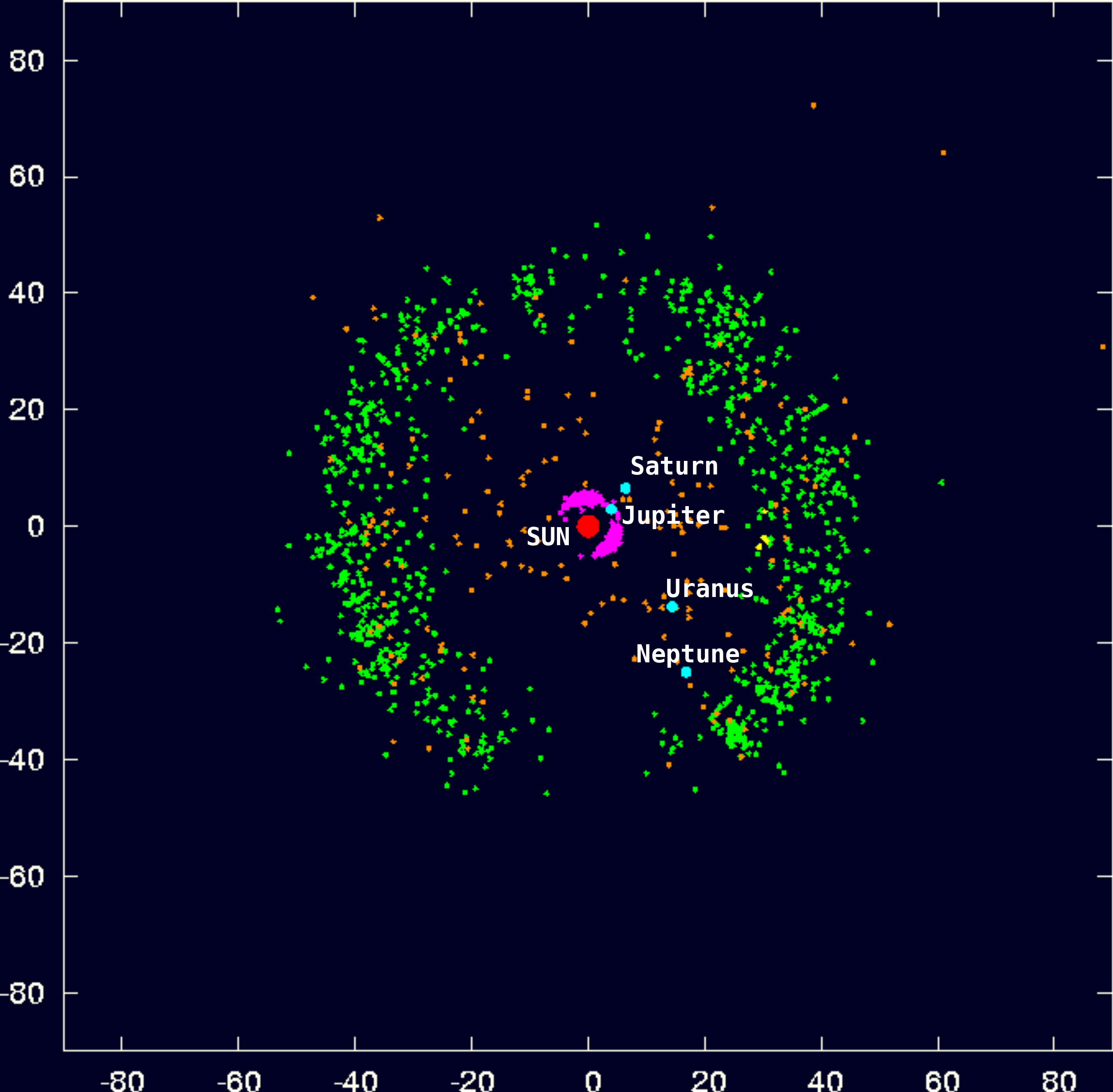
“The Kuiper Belt (green) in the Solar System.” Move your mouse over the image to access annotations. Image: from Minor Planet Center (MPC), Smithsonian Astrophysical Observatory. This image is in the public domain, Wikimedia commons. Included with appreciation.
Project Kuiper, Amazon’s endeavor to place communications satellites in Low Earth Orbit (LEO), shares the goal of global connectivity. Many places in the world do not have internet access needed for school, science, and communication. Janet Phan of Project Kuiper and founder of Thriving Elements, expands communications equality and opportunity with a commitment to bring more girls and women into STEM careers through mentoring. Project Kuiper’s satellite constellation will work with Amazon’s network of ground stations (Amazon Web Services, Inc. (AWS). Kuiper customers will install a home outdoor terminal intended to be affordable ($400) and lightweight (less than five pounds (2.27 kilograms); for more modest price-point customers, a smaller and less expensive terminal will provide basic connectivity. The chip driving it all – “Prometheus.”
“A Loon balloon at the Christchurch launch event in June 2013.” Photographed by iLighter, 2013. Creative Commons 2.0. Included with appreciation.
Project Loon was a promising vision that ran out of air. An Alphabet Inc. subsidiary, Loon LLC aimed to provide internet access to remote areas using high-altitude balloons to form an aerial wireless network. Hence the name: “Loon” as in “Balloon.” Started as an R&D project in 2011, Loon became a separate entity in 2018. Using National Oceanic and Atmospheric Administration (NOAA) data to identify wind layers with the right speed, Loon would place balloons in a chain to allow signals to pass from orb to orb, connecting to an internet antenna attached to the side of a residential or commercial building. First experiments were in California and New Zealand. The next year, Loon tested in Brazil, and later in Sri Lanka. Loon’s unique advantage was demonstrated after Hurricane Maria hit Puerto Rico; Loon brought 100,000 people back online in the storm’s destructive aftermath. But commercial viability proved elusive and Project Loon closed on 21 January 2021. Loon’s legacy continues. Project Taara, a pan-African vision, harnesses some of Loon’s technology to extend connectivity with the use of light beam internet technology as a way to plug critical connectivity gaps in rural areas.
“World Wide Web” logo designed by Robert Cailliau in 2007, who dedicated the image into the pubic domain. Creative commons 1.0. Included with appreciation.
World Wide Web Foundation upholds the goal of “Establishing the open Web as a basic right and a public good.” With 160 partner organizations in 70 countries, the World Wide Web Foundation was launched in 2009 by Sir Tim Berners-Lee and Rosemary Leith. It has helped 600 million people access the web. Sir Tim Berners-Lee established the world wide web (that’s the “www” in an internet address) and gave it to the world for free. Global connectivity remains a challenge: almost half of the world still lacks internet access. You can help.
“Syncom-1” image by NASA, 2007. Image is dedicated to the public domain, and included with appreciation.
The global satellite market is expected to grow by 9% from 2023-2029, accelerated by advances in the internet of things (IoT) and increased capacity in wireless interconnection between terrestrial and space-based technology. It’s an attractive market because global internet traffic will grow over 20% – annually. But there are vast differences in connectivity, with 7x difference between fastest and slowest internet speeds. In addition to the above companies, contenders include SES, Viasat, Intelsat, Telesat, General Dynamics, Cobham Limited, Gilat Satellite Networks, EchoStar, Inmarsat, Eutelsat, Hughs Network Systems, Arqiva, Russian Satellite Communications Company, Thaicom, Globecast, Telespazio, and Telstra, according to the World Teleport Association.
A computer-generated image of objects that are currently being tracked including orbital debris like non-functional satellites. Image: “Debris-GEO1290” by NASA, 2005. Image is in the public domain and included with appreciation.
It’s getting crowded up there, with so many satellites vying for optimal position. One concern is how to retrieve non-functional satellites before they become orbital debris. As of November 2022, the U.S. Space Surveillance Network found 5, 465 operating satellites in orbit. But these are among 25,857 objects circling the Earth. That tally only accounts for objects large enough to track. There are more than 128 million pieces of space debris smaller than 0.4 inches (1 centimeter). Even a tiny fleck can damage a satellite. There’s a tech term for such flecks: Micrometeoroid and Orbital Debris (MMOD).
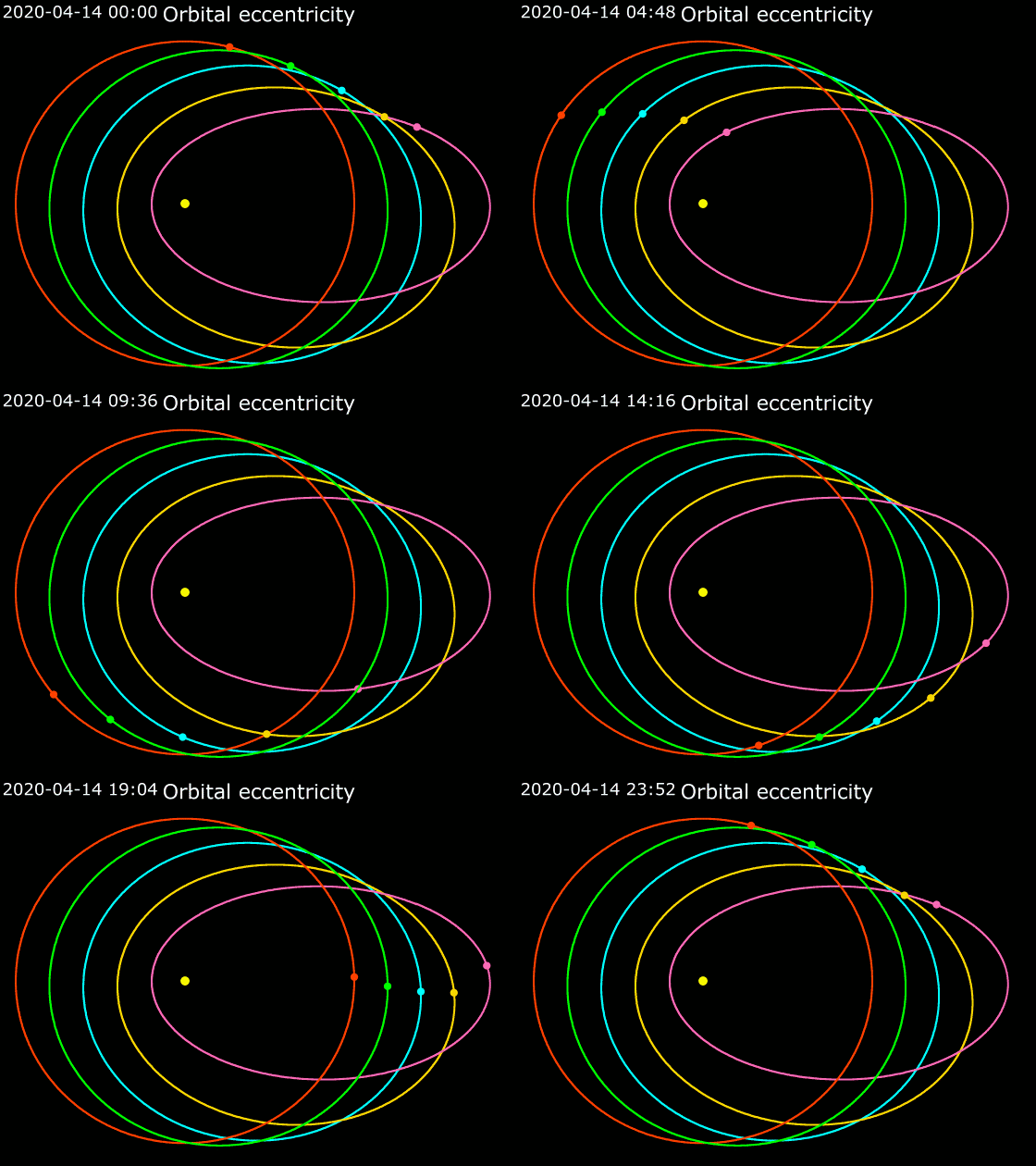
Can we cooperate to achieve global connectivity and orbital justice? Image: “Animation of Orbital Eccentricity” by Phoenix7777, 2020. Creative Commons 4.0. Included with appreciation.
Orbital justice: law and governance of space. A McKinsey report summarizes the challenges and opportunities for global governance of this shared frontier. The European Space Agency (ESA) introduced in 2022 the “Statement for a Responsible Space Sector” espousing principles of governance, inclusive social benefit, fair access to space, preservation of Earth through space-based monitoring, and promotion of human rights. Space, and the communications spectrum, belong equally to everyone on the Earth. How can you choose your internet provider with these principles in mind?
Clarke, Arthur C. “Extra-Terrestrial Relays.” October 1945. Wireless World, pages 305-8. Facsimile at http:www.lsi.usp.br/~rbianchi/clarke/ACC.ETR2.gif
Davidson, Frank P. and Kathleen Lusk Brooke. “COMSAT: The Communications Satellite” in Building the World, Volume II, pages 623-639. Greenwood: 2006. ISBN: 0313333742 and 9780313333743.
Pierce, John Robinson. The Beginnings of Satellite Communications. History of Technology Monograph. Berkeley, California: San Francisco Press, 1968. ISBN: 0911302050, and 9780911302059.
Rare earth elements are needed to power smartphones, and many other technologies. Image: “Foldable smartphones” by Ka Kit Pang. Wikimedia creative commons 3.0. Included with appreciation.
Smart phones are common but so-called “earths” that power these devices are rare. In fact, 17 elements termed rare earth elements or REEs supply everything from phones to electric vehicles, wind turbines, and military systems. That glowing light on your car dashboard? Rare earth chemistry in action.
“Rare earth oxides” by photographer, Peggy Greb. United States Department of Agriculture. Public Domain. Wikimedia. Included with appreciation.
Rare earths are obtained by mining, combined with extraction processing, because these oxides are not found in neat deposits but rather mixed in with other elements. REE mining is a specialty sector. China, land of the Grand Canal, is currently the world leader: both in mining and extracting, controlling 60% of the market. Recently innovations in rare earth element recycling could promote reuse and reduce mining.
“Rare earth oxides production graph” by D.J. Cordier, Haxel, et al., United States Geological Survey, 2013. Wikimedia. Public Domain. Included with appreciation.
Most rare earth elements used in Europe are imported. But, recently, mining company LKAB found more than one million tons of rare earth oxides in the far northern area of Kiruna. Sweden will have a ready market. However, it will be at least a decade before permitting, mining, and processing will reach European smart devices.
Sámi land and water resources are involved in rare earth mining. Image: “Three Sámi women” circa 1890. Wikimedia, public domain. Included with appreciation.
Sweden will have a nearby partner: the Northvolt battery factory is in development. Also in Sweden’s north: projects for green steel. Meanwhile, LKAB has been busy: in order to reach the deposit, the entire town of Kiruna had to be moved. There is also consideration of the Sámi people of northern Scandinavia who herd reindeer over the lands of Finland, Norway, Sweden, and the Kola Peninsula of what is now Russia, these are lands to which the Sámi have indigenous rights. Sámi once transported mined ore via reindeer to deliver material to the coast for shipping. A “cultivation line” was established by law to project Sámi herding lands, but conflicts and differences remain.
“Perite” by photographer David Hospital, wikimedia creative commons 3.0. The mineral is named after Per Adolf Geijer. Image included with appreciation.
Sweden’s newly discovered deposit now has a name: Per Geijer. It’s an homage to Per Adolf Geijer (1886-1976), Swedish geologist who also has a mineral, discovered in Sweden, named after him: perite.
The rare earth element market is expected to grow, estimated to be worth $9.6 billion by 2026. In the midst of this acceleration, mining rare earth elements can affect soil and groundwater, creating acidic conditions. How can rights to rare earth elements be protected, explored, and – when mined – shared? How should land and groundwater affected by rare earth mining be restored and renewed?
Bai, Jingling, et al., “Evaluation of resource and environmental carrying capacity in rare earth mining areas in China.” Scientific Reports, Nature. 12, Article number: 6105 (2022). https://www.nature.com/articles/s41598-022-10105-2
“COP 27” logo. United Nations. Fair Use public domain. wikimedia. Included with appreciation.
This month, COP27 agreed upon a goal that has been proposed and discussed for decades: loss and damage. Because we are the water planet, we will first experience climate change through water. Pakistan suffered floods causing death, destruction, evacuations resulting in loss and damage estimated at $30 billion – in 2022’s seasonal monsoon rains made more intense through climate change. Floods drenched one-third of the country, affecting 33 million people. Bangladesh has suffered storms, higher than normal tides, intense rainfall, flooding, and coastal erosion. Micronesia has lost part of its landmass due to sea level rise. Vanuatu led the Alliance of Small Island States to propose loss and damage insurance as early as 1991. At COP 26 in Glasgow, nations began to address loss and damage through funding the Santiago Network on Loss and Damage (SNLD). When COP27 reached the agreement, there was sensitivity to phrasing: developed countries who cause most emissions did not want to state liability, and that term’s potential link to litigation.
Senator Sherry Rehman. Image: Atlantic Council, 2013. wikimedia. Included with appreciation.
Pakistan’s Federal Minister for Climate Change, Senator Sherry Rehman represented G-77 (plus China) at November’s COP27 in Sharm El-Sheikh, Egypt, leading the establishment of a Loss and Damage Fund. The fund will support technical assistance to those needing to prepare for the effects of climate change; those most affected are often those who are the lowest emitters of carbon that is driving global climate.
“Codice di Hammurabi” by photographer Sailko, from Louvre Museum, Paris, France. Creative Commons 3.0. Included with appreciation.
Loss and Damage is one of the oldest forms of insurance and reparation. The Code of Hammurabi (circa 1792-1750 bce) presented Law 100 that required repayment of debt; Laws 101 and 102 addressed loss and damage during shipping of cargo. The United Nations’ use of the term “loss and damage” refers to climate-caused destruction that exceeds a community’s ability to adapt or protect itself. For the past thirty years, nations vulnerable to climate-change damage have sought financial and technological assistance. The UN Loss and Damage Fund will begin to support rebuilding, perhaps with a new view.
But we must do more than just rebuild. We must renew. We cannot merely replace businesses, homes, hospitals, and schools in areas continuously assaulted by floods and storms. With the UN’s Loss and Damage Fund, and its emphasis on technological assistance as well as repair and rebuilding, the world’s most vulnerable areas may now have a unique opportunity not just to rebuild but to renew the world through climate-protective innovation.
United Nations. “Funding arrangements for responding to loss and damage associated with the adverse effects of climate change, including a focus on addressing loss and damage.” FCC/CP/2022/L.18-FCCC/PA/CMA/2022/L.20. 19 November 2022. https://unfccc.int/documents/624434
“Indigenous Peoples Day,” image courtesy of National Indian Council on Aging – NICOA.org. Included with honor and appreciation.
Indigenous Peoples’ Day, recognized in 2021 by U.S. President Biden, and honored as a holiday this weekend in the United States, reminds us that new worlds are not discovered, just met. Leif Erikson associated by some with Greenland, is thought to have sailed off course en route to that location, instead reaching what he called Vinland and what we now call North America. Erickson spent the winter, and in spring returned to Greenland. This was four hundred years before Columbus. But even before Columbus, and before Erikson, the first humans arrived 26,000 years ago, before the Last Glacial Maximum in the Pleistocene epoch. From those earliest humans are descended those whom we call our original people, those who were here first. One group is the Cherokee Nation.
“Trail of Tears” by Ocmulgee National Mounds Park, nps.gov, by photographer TradingCardsNPS, 2012. Creative Commons 2.0, wikimedia. Included with honor and appreciation.
By 1830, the Cherokee Nation had established significant land in what became known as Georgia (state established in 1788): until the Treaty of New Echota. On 29 December 1835, 500 representatives of the Cherokee Nation, at that time numbering 16,000, met with representatives of the United States government at New Echota, Georgia, to accept terms of $5 million and land in Oklahoma in exchange for their 7 million acres of homeland. Sadly, the forced move 1,200 miles west proved so tragic as to give name to the Trail of Tears. But the Treaty remains unfulfilled: Article 7 of the Treaty of New Echota states: “Cherokee Nation shall be entitled to a delegate in the House of Representatives of the United States whenever Congress shall make provision for the same.”
“Map of George showing Cherokee Nation, 1830.” Original by Anthony Finley Co. of Philadelphia, 1830. Creative Commons Public Domain. Included with honor and appreciation.
Two centuries later, it is time to fulfill the treaty, make that provision, and recognize rights of those who were here first. Cherokee Nation’s Principal Chief Chuck Hoskin, Jr. has nominated Kimberly Teehee to serve as inaugural Cherokee Delegate to Congress. If you support this nomination, Indigenous Peoples’ Day is a good time to take action here.
Davidson, Frank P. and K. Lusk Brooke, “The National Trails System.” Building the World. Volume Two, pages 641-668. Greenwood: 2006. ISBN: 9780313333743.
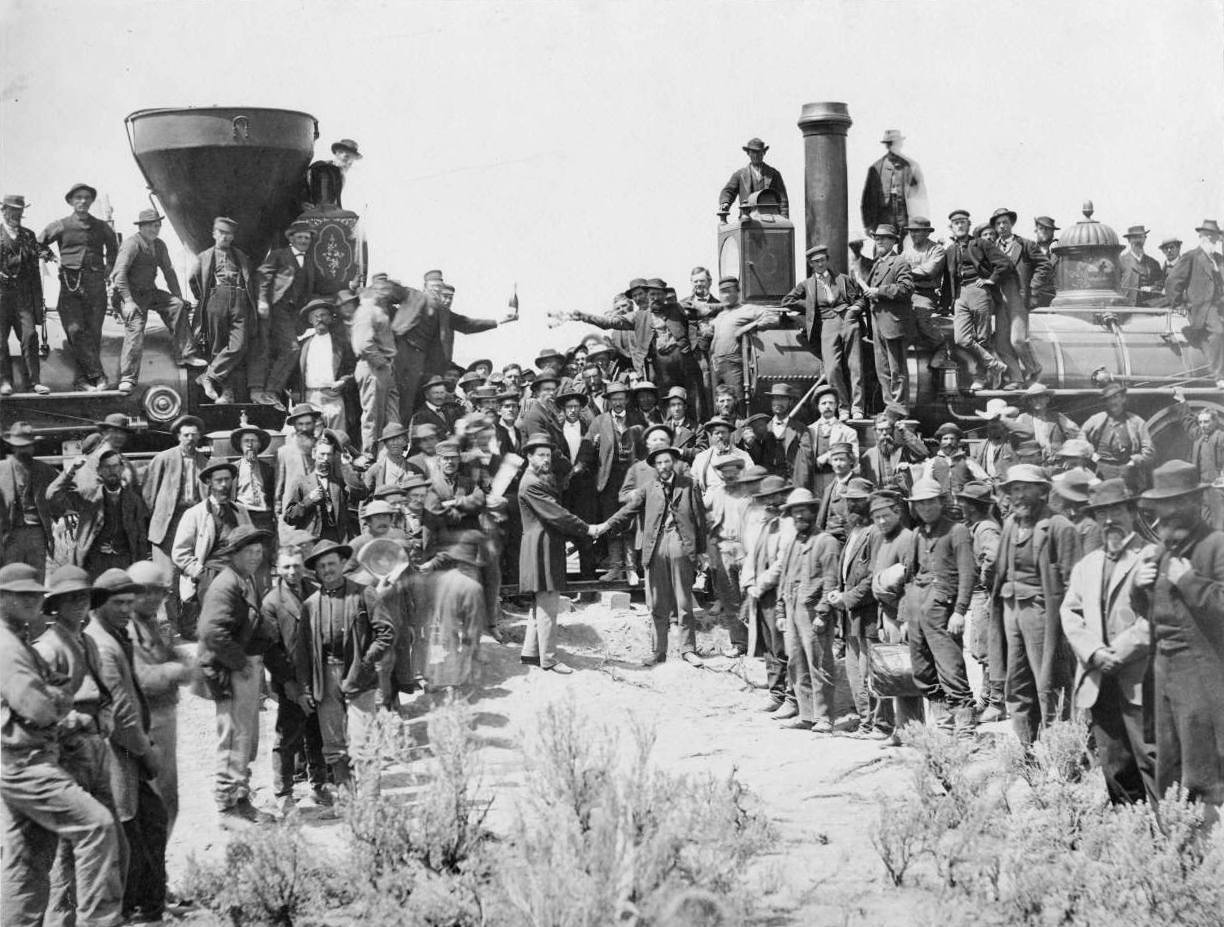
“Golden Spike Ceremony: Promontory Summit, Utah, 1869” marked the completion of the Transcontinental Railroad. Soon, the new railroad industry would be linked to Labor Day. Image: National Archives and Records Administration (NAI #594940. Public Domain. Included with appreciation.
When the Transcontinental Railroad, with more than 1,800 (2,900 kilometers) miles of track, opened in 1869 with the driving of the Golden Spike in Utah, thousands of workers had toiled to complete what had been the largest government project in history, to date. A cross-country trip that had previously taken months of overland perilous journey across deserts and mountains, or a sea-voyage around South America, was now possible. But working conditions were arduous and dangerous. Rail travel proved more comfortable: George M. Pullman began converting passenger cars into sleepers, employing “Pullman porters” to work aboard. Hiring practice discriminated racially, and enforced extremely long working hours – 400 per month.
“Pullman strikers and Illinois National Guard at Arcade Building,” 1894. Abraham Lincoln Historical Digitization Project. Image: wikimedia, public domain, Included with appreciation to all workers on Labor Day.
When Pullman laid off 30% of the workers in the recession of 1893, Pullman porters and employees walked out on strike. Train travel stalled in 27 states from Illinois, home to the Pullman company, and the West Coast. In the Chicago suburb of Blue Island, a crowd derailed a locomotive pulling a postal train, and the U. S. Attorney General enacted an injunction against the striking workers. President Grover Cleveland sent troops. Riots broke out, hundreds of rail cars were ravaged and burned by protestors; the National Guard fired into the mob, killing 30 people and wounding many others. This was in July 1894. Ironically, Cleveland had just signed, in June, a bill declaring a new holiday to honor workers and promote good conditions. The first Labor Day was celebrated on the first Monday in September of that year.
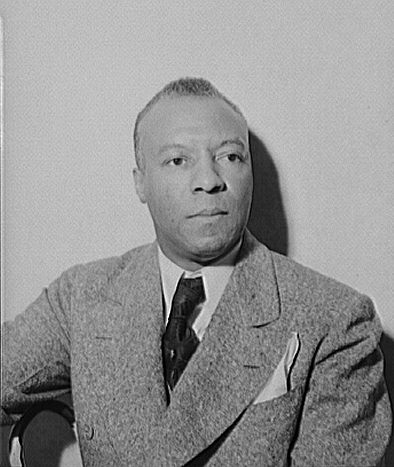
“A. Phillip Randolph – political and social leader.” Founder of the Brotherhood of Sleeping Car Porters. Image: wikimedia, public domain. Included with appreciation to A. Phillip Randolph and those in the BSCP union.
The Labor Day announcement raised national attention regarding Pullman workers. The Guard was recalled and the strike was over by August. While Labor Day began a new era of awareness of worker health and safety. Pullman porters now worked in better conditions: some earned more money, others advanced to management positions. But hours remained long. In 1925, Pullman porters, organized by A. Phillip Randolph, formed a union: Brotherhood of Sleeping Car Porters (BSCP). It took more than ten years to negotiate better working hours – 240 per month.
Transport has always initiated economic and social change. Ships, rails, wheels, and wings caused major shifts in commerce, communication, and culture. Labor Day honors all workers. Around the world, there are Labor day celebrations, some in May. But in the United States, the holiday is always observed in September, and we have transport to thank for its origin and celebration.
“Labor Day” by S.D. Ehrhart, 1909. Image: Library of Congress #2011647501. Public Domain. Included with great appreciation to all who labor.
Building the World Blog by Kathleen Lusk Brooke and Zoe G. Quinn is licensed under a Creative Commons Attribution-NonCommercial-NoDerivs 3.0 Un
Davidson, Frank P. and K. Lusk Brooke. “The Transcontinental Railroad,” Chapter 17, Building the World. Pages 205 – 238. Westport: Greenwood Press, 2006. ISBN: 0313333734.
Loomis, Erik, A History of America in Ten Strikes. The New Press, 2018. ISBN-10: 1620971615.