ENERGY: Peridotite – Philosopher’s Stone for Carbon Removal

Peridotite, found abundantly in Oman, may be the philosopher’s stone of climate change. Image: “Muscat, capital of Oman” by photographer Safa Daneshuar, 2022. Creative commons 4.0. Included with appreciation.

Humans have long dreamed of magical transformations. Jabir ibn Hayyan, 8th century alchemist, and Albertus Magnus, colleague of fellow Dominican Thomas Aquinas, who wrote of the lapis philosophorum or “philosopher’s stone” that turned base metals into gold, are among those who foresaw what may be natural magic that could help to transform climate change, altering carbon dioxide before it can harm the atmosphere. Can we turn CO2 into a new form of gold?

Alembic: Drawing and Description by Jabir ibn Hayyan, 8th century. An alembic is an alchemical still. Image: creative commons, public domain. Included with appreciation.

At Iceland’s Hellisheidi power station, a company called Carbfix captures CO2, pumps it with water, channels it underground into basalt where it soon becomes rock. Basalt contains calcium, magnesium, and iron – elements that bind easily with C02. Basalt is the most common rock type on the planet. In fact, the ancient Romans used a type of volcanic basalt in constructing their legendary roads. More than 90% of all volcanic rock is basalt. It is estimated that the amount of global basalt could store all the CO2 emissions now driving climate change. Carbfix’s motto: “We turn CO2 into Stone.” Sounds promising, but there’s a catch. It takes 25 tons of water to transform one ton of CO2 via basalt. When you realize that human activity emits 35 gigatons (a gigaton is one billion tons) of CO2 per year, that’s a lot of water to drain from an already-thirsty world. Carbfix will have a role to play in carbon removal, and water use may improve through advanced technologies, but basalt is not the only magical stone.

Carbfix uses basalt to turn carbon dioxide into permanent stone. The process requires use of water in significant amounts. Image: “Hellisheidi Geothermal Power Plant, site of Carbfix.” Photograph by Sigrg, 2008. Creative Commons 4.0. Included with appreciation.

Basalt is just one option. Another is peridotite. A new company named 44.01, referencing the molecular mass of carbon dioxide, has discovered a way to use peridotite to fuse carbonated fluid into seams of the rock. Co-founded by Talal Hasan and Karan Khimji, 44.01 is located in Oman where one of the world’s largest deposits of peridotite can be found. Oman’s deposit is close to the surface, offering advantageous access.

One of Carbfix’s founders, Juerg M. Matter, professor at the University of Southampton, and also Columbia University’s Climate School and Lamont-Doherty Earth Observatory, is now a team member of 44.01. Another team member is Peter B. Kelemen of the Department of Earth and Environmental Sciences (DEES) at Columbia University, and of Columbia Climate School, Lamont-Doherty Earth Observatory, guiding 44.01 on chemical and physical processes of reaction between rocks and fluids.

Peridotite can, when combined with water, absorb and permanently remove carbon dioxide. Image: “Classification diagram for peridotite and pyroxenite” adapted from Bodinier and Godard (2004) by Tobias1984, 2013. Creative Commons 3.0. Included with appreciation.

The magic alchemical formula is peridotite (containing olivine and pyroxene) combined with CO2 and water. Peridotite mineralization already occurs in nature: for example, when rainwater lands on peridotite, CO2 is dissolved. But it’s a slow process, taking decades. The team of 44.01 has found a method to accelerate mineralization of CO2, gathered via direct air capture (DAC), in less than one year. In 2022, 44.01 received the Earthshot Prize.

The Earthshot Prize was awarded to 44.01 in the category of “Fix Our Climate.” Image: courtesy of The Royal Foundation, 2021. Public Domain Creative Commons. Included with appreciation.

Carbon dioxide emissions are a difficult problem that the world must solve before climate change, caused by CO2 and other greenhouse gases, becomes irreversible. In 2015, the Paris Agreement of COP21 brought pledges to reduce and halt use of fossil fuels. But even when and if those goals are met, we’ll still have carbon dioxide in the atmosphere, and some sectors of the economy might still use fossil fuels. That’s why carbon sequestration and carbon storage technologies have begun to increase in importance. Storage is, by nature, either temporary or troubled: the CO2 is stored as CO2, not gone, just hidden. A leak would release it back into the atmosphere. Carbon removal through mineralization is better because it is permanent. No insurance, no monitoring, no escape. The CO2 molecule is gone. Alchemy!
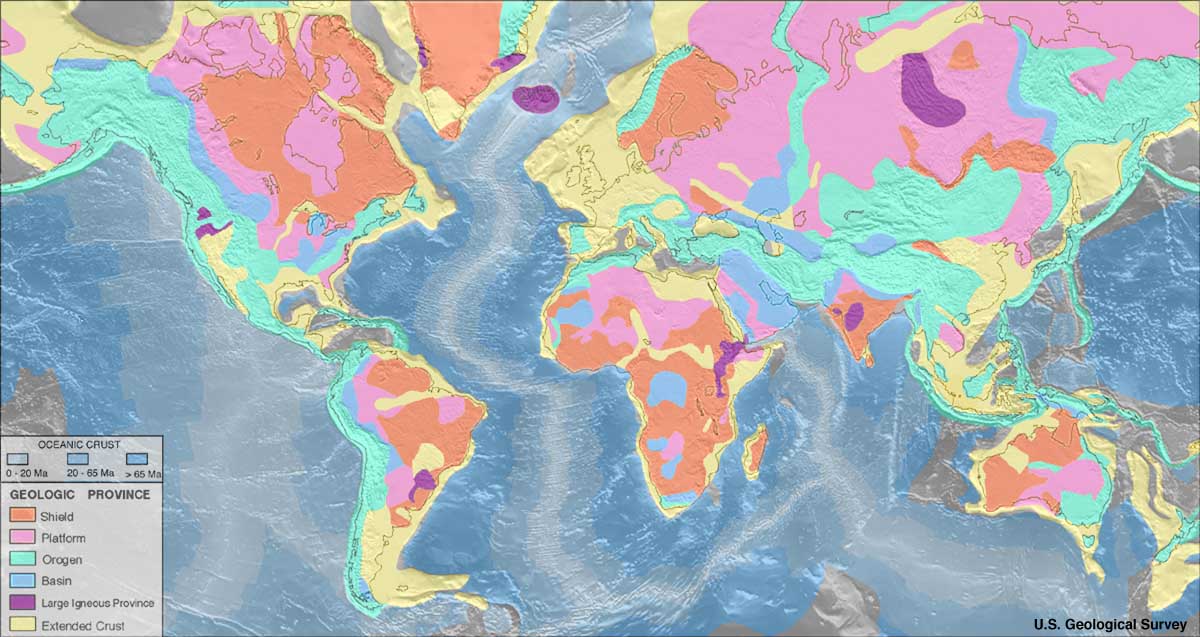
Where else can we find rock that can absorb and transform CO2? “Map of World Geologic Provinces,” by USGS. Public Domain. Included with appreciation.

Peridotite is also found in Asia, Australia, Europe, and North and South America. Oman-based research will continue, in part because the peridotite is easily reached due to its surface proximity. Next steps for testing may be in California but peridotite deposits there would still require drilling. Meanwhile, peridot, green gemstone made from peridotite’s olivine component, associated with the month of August, said to reveal magic, could become a jewel that signifies a better climate.

The gemstone Peridot, said to reveal magic, is made from peridotite. Image: “Gem Peridot,” by photographer Michelle Jo, and dedicated to the public domain. Included with appreciation.

Rather than drilling (with its environmental disturbance and potential destruction), carbon removal via mineralization may be explored by using rocks already drilled, in the form of waste tailings from certain kinds of mines. Diamond, nickel, and platinum are mined from rock that has carbon mineralization promise. De Beers, company that coined the phrase “A diamond is forever,” is beginning trials.

Carbon mineralization could be explored with used rocks left over from diamond mining. Image: “Computer reconstruction of the Hope Diamond, earlier form in the French Blue or Diamantbleu” by Francoisfarges. Creative commons 3.0. Included with appreciation.

A diamond is forever, but diamond mine tailings could help carbon dioxide disappear forever. Other options include basalt, and now peridotite. In myths of ancient times, rock turned into gold was the dream. Now, in the time of climate change, turning carbon dioxide into rock may be the alchemical dream we seek and shall find.

44.01. https://4401.earth/how-it-works/

Albertus Magnus. “De mineralibus” in On the Causes of the Properties of the Elements translated by Irven M. Resnick. Milwaukee: Marquette University Press, 2010.

CarbFix. https://www.or.is/carbfix

Earthshot Prize. “Fix Our Climate Winner: 44.01” 2022. https://earthshotprize.org/winners-finalists/44-01/

Fountain, Henry. “How Oman’s Rocks Could Help Save the Planet.” 26 April 2018. The New York Times. https://www.nytimes.com/interactive/2018/04/26/climate/oman-rocks.html

Harvard Business School. “Karan Khimji, Co-Founder of 44.01” https://www.hbs.edu/environment/blogpost/44.01

Hasan, Talal. “Interview with Earthshot Prize Winner.” VIDEO https://www.youtube.com/watch?v-n30_dKvCcLg

International Monetary Fund (IMF), prepared by Jorge Iván Canales Kriljenko. “On the road to carbon neutrality, fishing for energy exchange and carbon absorption” 2022. https://www.elibrary.imf.org/downloadpdf/journals/002/2022/194/article-A002-en.pdf

Kraus, Paul. Essai sur l’histoire des idées scientifiques dans l’Islam/ Mukhtār Rasā’il Jābir b. Hayyān. Paris/Cairo: G.P. Maisonneuve/Maktabat al-Khānjī.

PDIE Group. “Nominating 44.01 for the Earthshot Prize.” https://pdiegroup.com/

Perasso, Valeria. “Turning carbon dioxide into rock – forever.” 18 May 2018. BBC News. www.bbc.com/news/world-43789527/

Planet A Ventures, GmbH. “Permanent Carbon Sequestration: 44.01 – Life Cycle Assessment & Sustainability Potential.” 2022. https://planet-a.com/wp-content/uploads/2022/12/4401-lca-summary-1.pdf

Building the World Blog by Kathleen Lusk Brooke and Zoe G. Quinn is licensed under a Creative Commons Attribution-NonCommercial-NoDerivs 3.0 U

Earth Day 2023: #Invest in Our Planet

Earth Day 2023: #INVEST in OUR PLANET. Image: “Investing” by 401(K), 2012. Creative Commons 2.0. Included with appreciation.

Earth Day‘s theme for 2023: INVEST in OUR PLANET. Linking business, finance, and investment to ESG (Environmental, Social, Governance) goals and values will be critical to achieving the goals of the Paris Agreement. IBM’s Institute for Business Value (IBV) surveyed 20,000 consumers, 2,500 executives in 22 industries and 34 countries about the relationship of climate-protection and financial success. Over 70% stated that a company’s ESG values influenced their choice of employment or investment. Morningstar, Russell Investments, S&P, and MSCI recently released ESG rating systems for 8,000 companies. Universities are evaluating endowments for sustainability; student and alumni organizations are mobilizing for climate action include Harvard’s HACE with a topic area of finance. MIT’s Sloan Impact Investing Initiative (Mi3) presented its first ESG and Impact Finance conference in 2023.

Can today’s ESG goals find precedent in earlier agreements like Bretton Woods? Image: “Gold Room where the Bretton Woods Agreements were reached.” by photograph Barry Livingstone, 2014. Creative Commons 3.0. Included with appreciation.

Tying social goals to investment may find precedence in Bretton Woods, the 1944 agreement that set up accords for an international monetary system and establishment of the International Bank for Reconstruction and Development (IBRD) including the World Bank. During the World Bank presidency of Robert S. McNamara (1968-1981), increased emphasis on funding improvements in infrastructure, healthcare, and essentials including safe water, food security may, in some ways, have prepared the path to our present Sustainable Development Goals (SGD)  There are many who might advise the World Bank to refocus on McNamara’s vision. To that end, should the SDGs be more strongly bonded to finance and investment initiatives? Looking to the ancients, could one find early models linking educational and social development to some of the advances initiated by Charlemagne? Another example might be the medieval guilds. What is the human timeline weaving social and economic progress to finance and investment?

Medieval craft guilds linked business to community and social goals. Image: “Stemmi celle Arti fiorentine” from the guilds of Florence, Italy. Public domain, creative commons 1.0. Included with appreciation.

But you don’t have to be a banker or finance professional to invest in our planet. Here are Earth Day’s recommendations for each of us to invest in our shared planet:

Plant Trees – Can you afford $1? That contribution will buy a tree, as part of The Canopy Project.

INVEST in OUR PLANT – plant trees. Image: “Earth Day” by Alice Popkorn, GAIA – Germany. Creative Commons 2.0. Included with appreciation.

Reduce Plastic Consumption – Think twice before tossing plastic into trash: only 9% is recycled. Look for a recycling container. Even better – avoid plastic when possible. The United Nations Environmental Programme (UNEP) has drafted INC-1, an international legally binding instrument, leading to the Global Plastics Treaty to be completed by 2024. Want to add your support?

INVEST in OUR PLANET – recycle plastic. Image: “Plastic for Recycling” by Si Griffiths, 2005. Creative Commons 3.0. Included with appreciation.

Vote Earth – Vote for those who support environmental values. Register on the Vote Earth Hub to get reminders on voting options.

INVEST in OUR PLANET – vote for leaders who support sustainability. Image: “Vote” by Tom Arthur, 2008. Creative Commons 2.0. Included with appreciation.

Choose Sustainable Fashion – Every day, you wear garments. It’s a global industry worth $2.4 trillion, but less than 1% of clothing is recycled, and textile processing accounts for 20% of global wastewater that can enter streams and aquifers. When you launder them, use a Cora Ball to catch fibers before they enter the water supply. Can clothing fabric be made from natural fibers beyond cotton and wool: for example, algae or seaweed? Look for and buy sustainable clothing. Sign the Fashion Petition here.

INVEST in OUR PLANET with sustainable fashion. Image: “The Golden Book Gown – made of recycled pages from children’s golden books” by Ryan Jude Noveilline. Creative Commons 2.0. Included with appreciation.

As you honor Earth Day today, did you ever wonder why is Earth Day celebrated on April 22? Founders Gaylord Nelson, Pete McCloskey, and Denis Hayes chose the date to engage students: it was after spring break and before final exams. Another factor: in some regions of the world, spring comes in April, reminding us of Earth’s systemic renewal. If we support Earth’s natural systems, we can sustain Earth’s natural power of renewal. The first Earth Day in 1970 drew 20 million people; by 1990, Earth Day went global and 200 million people participated.  This year, how will you invest in our planet? Pledge your participation, here.

Bretton Woods Agreements Act. 31 July 1944. https://www.govinfo.gov/content/pkg/COMPS=10334/pdf/COMPS-10334.pdf

Earth Day. https://www.earthday.org

Finpublica. https://www.finpublica.org

Harvard Alumni for Climate and the Environment (HACE). https://www.harvardclimate.com

Hayes, Adam. “MSCI ESG Ratings Definition, Methodology, Example.” 15 October 2022. Investopedia. https://www.investopedia.com/msci-esg-ratings-5111990

IBM Institute for Business Value.  Authors Arun Biswas, Elisabeth Goos, and Jacob Dencik. “The ESG Conundrum.” 11 April 2023. https://www.ibm.com/thought-leadership/institute-business-value/report/esg-ultimatum

Massachusetts Institute of Technology (MIT) “Mi3.” https://sloangroups.mit.edu/sloanmi3/mit-sloan-esg-impact-finance-conference/

MSCI. “Capital for Climate Action Conference” 16 May 2023. https://www.msci.com/www/events/capital-for-climate-action/03723646558

Nelson Institute for Environmental Studies. “Gaylord Nelson, Founder of Earth Day.” University of Wisconsin – Madison, Wisconsin Historical Society. https://nelsonearthday.net/index.html

Segal, Mark. “Over 80% of Businesses Plan to Increase Spending on Environmental Sustainability Goals Over Next Year – Honeywell.” 19 April 2023. ESG Today. https://www.esgtoday.com/over-80-of-businesses-plan-to-increase-spending-on-environmental-sustainabiity-goals-over-next-year-honeywell/

Simbiótica Finance. https://simbiotica.finance/tokens/SOT

Building the World Blog by Kathleen Lusk Brooke and Zoe G. Quinn is licensed under a Creative Commons Attribution-NonCommercial-NoDerivs 3.0 U

WATER: Is the Drought OVER?

Droughts and floods will continue. Now we can predict them with GRACE. Image: “GRACE globe animation” by NASA. Public Domain, included with appreciation.

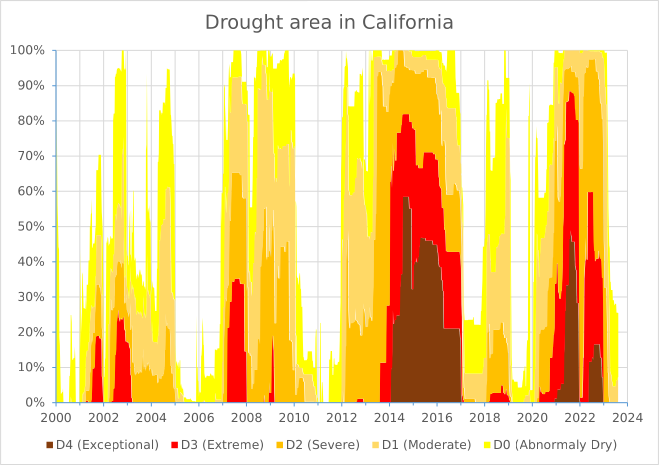
Atmospheric rivers: 11. Snow: 55 feet (16.76 meters). Rainfall: thus far in 2023, more than all of 2022. Conservation mandates and restrictions: eased. Outdoor watering: again permitted. Reservoirs: many refilled. Is California’s drought officially over? Conditions are better, but concerns remain. The issues are not restricted to California, but the state serves as a case example.

While 2023 brought relief and refilled many California reservoirs, drought is cyclical. Image: “Drought area in California” graphic by Phoenix7777, based on U.S. Drought Monitor Data. Creative Commons 4.0. Include with appreciation.

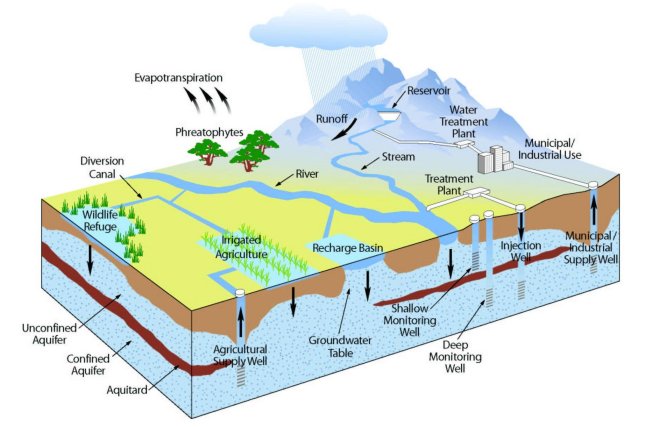
GROUNDWATER – On the surface, things certainly look better. But California’s underground aquifers are still in trouble, some at lowest levels ever recorded. After previous droughts (2007-2009, 2012-2016), California’s groundwater in the agriculturally important Central Valley recovered only 34% (2007-2009 drought) to as little as 19% (2012-2016). During drought periods, groundwater supplied 60% of California’s water, so maintaining underground aquifers is critical.

How is groundwater formed, replenished, and sustained? Image: “Groundwater.” Graphic by Dr. Andrew Fisher, California Agricultural Water Stewardship Institute, 2018. Creative Commons 4.0. Included with appreciation.

In irrigated agricultural regions with limited surface water supply, drought can have severe effects on groundwater. Recent innovations for storing floodwater underground in “water-capturing basins” hold promise. What kinds of future innovations will collect rain and flood water for future use? The Sustainable Groundwater Management Act (SGMA), passed in 2014, requires local agencies to form and fund groundwater sustainability agencies for high priority areas to control overuse of water by 2034. The United Nations raised awareness of the importance of groundwater by dedicating World Water Day 2022 to that resource with the motto: “Making the Invisible Visible.”

California obtains a portion of its water from the Colorado River. Image: “Colorado River at Horseshoe Bend” by Charles Wang, 2023. Creative Commons 4.0. Included with appreciation.

COLORADO RIVER – Surface water and underground aquifers are not the only sources. Water supplies from the Colorado River flow, at some distance, to cities and towns in Southern California. That river is still suffering through a two decade long drought that depleted reservoirs like Lake Powell and Lake Mead. Seven states, as well as many indigenous sovereign nations and also Mexico, share in the water according to rules set in the Colorado River Compact 0f 1922. If the seven states cannot come to agreement on water usage cutbacks, the federal government will step in. In April 2023, the U.S. Department of Interior’s Bureau of Reclamation introduced options. 

Floods devastated Sindh Provice, Pakistan in 2022. Image: “Pakistan floods August 27 2021 versus August 27 2022.” By NASA. https://worldview.earthdata.nasa.gov/. Image in public domain. Included with appreciation.

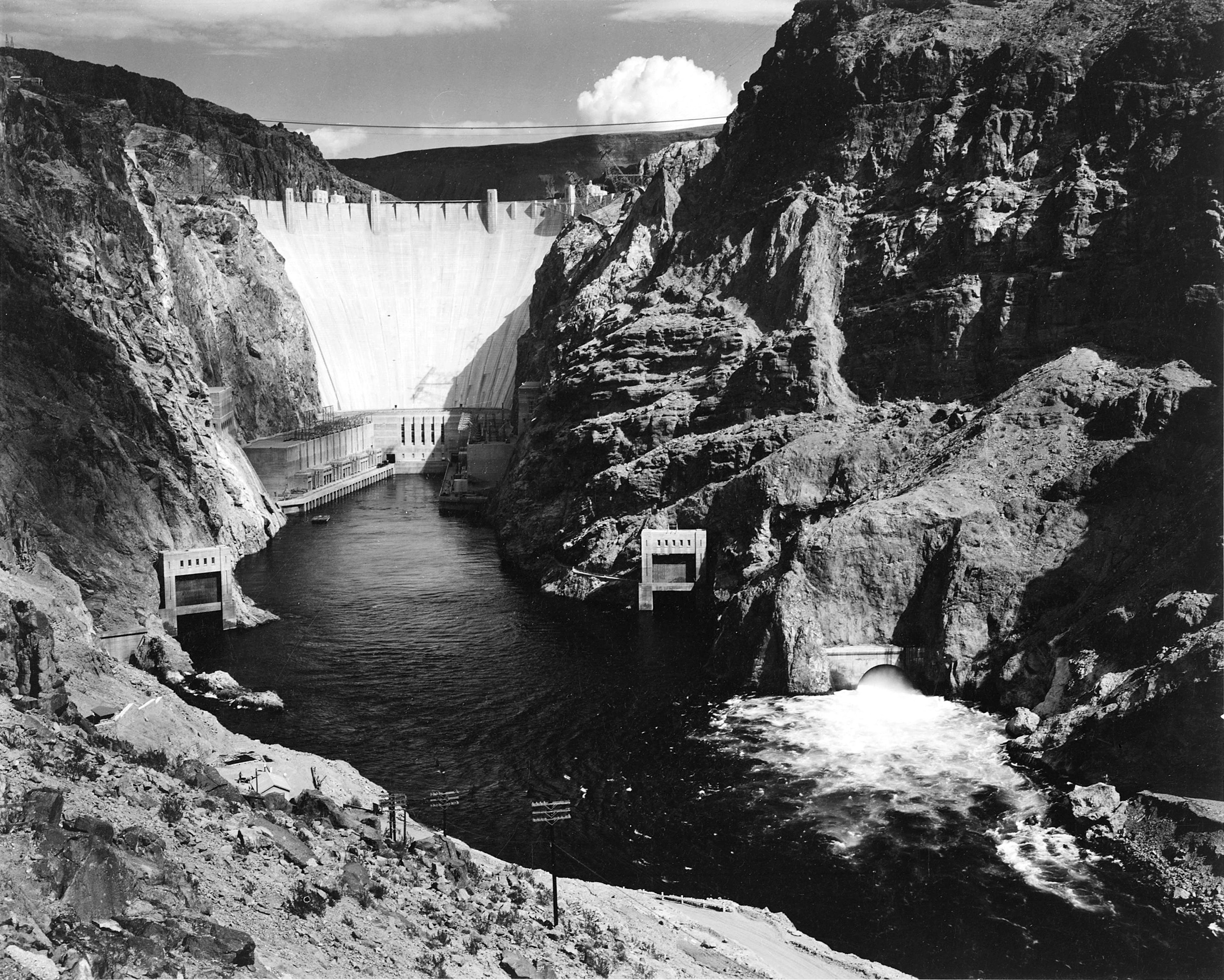
FUTURE  OF WATER– Satellite data confirm what we know all too well when 12 inches of rain in one day sweep through Ft. Lauderdale, Florida closing schools and highways, or floods drench Sindh Province, Pakistan,dislocating millions of people. We know and feel it when drought plagues land, dries up agricultural fields, drains reservoirs, and threatens hydroelectric facilities like those on the Po River of Italy, or  Snowy Mountains Hydroelectric of Australia or Hoover Dam of the Colorado River in the United States.

Hydroelectricity depends upon abundant water. Drought has threatened energy production on the Colorado River’s Hoover Dam. Image: “Hoover Dam” by photographer Ansel Adams, 1941. Public Domain, National Archives and Records Administration image #519837. Included with appreciation.

Hydroelectric power plants on rivers throughout the world are subject to changing water levels. If a river suffers drought, some hydroelectric facilities must be switched off. A recent study sounded the alarm. By 2050, 61% of all hydropower dams will be at high risk.

It takes two – GRACE and GRACE-FO. Image: “Gravity anomalies on Earth” by NASA, 2012. Public Domain. Included with appreciation.

Climate change will make rains more intense and droughts more frequent. The Gravity Recovery and Climate Experiment satellite duo, known as GRACE and GRACE-FO will reveal a big picture in a long view. Dr. Matthew Rodell, Deputy Director for Hydrosphere, Biosphere, and Geophysics, Earth Sciences Division, NASA, and Dr. Bailing Li, of Goddard’s Hydrological Sciences Laboratory, led a team that studied over 1,000 weather events during the period 2002-2021. Rainfall extremes were noted in sub-Saharan Africa, North America, and Australia. Intense droughts were seen in South America, the United States, and elsewhere. Droughts outnumbered rain events by 10%.  It’s costly: 20% of the USA’s annual economic loses were due to floods and droughts. Is there a solution? Using floodwater to recharge aquifers and irrigate agricultural land will be an area of innovation.

Water Futures Index – is water a trading commodity or a human right? Image: “Nasdaq” by xurde, 2007. Creative commons 2.0. Included with appreciation.

WATER FUTURES –  Another development? Water Futures trading contracts such as the Veles California Water Index (NQH20) that launched on NASDAQ in 2018. Prices have fluctuated from below $300 per AF (acre-foot which equals 325,851 gallons or 1,233,480 liters) to 18 August 2022’s price of $1,134. At today’s post date, the price is $855. Is water a commodity or a right? Some say that commodity trading makes it possible for those who use quantities of water to plan, and plant, with more certainty.

Water: human right and right of nature. Image: “Whanganui River between Pipiriki and Jerusalem” by photographer Prankster, 2012. Dedicated by the photographer to the public domain. CC 1.0. Included with appreciation.

WATER RIGHTS – But others might question water trading. On 28 July 2010, the United Nations General Assembly passed Resolution 64/292 that recognizes water and sanitation as a human right. In 2022, the Committee on Economic, Social and Cultural Rights adopted General Comment No. 15, with Article 1.1 stating “The human right to water is indispensable for leading a life in human dignity. It is a prerequisite for the realization of other human rights.” Some would say that the right to sustainable, healthy water goes beyond human rights. New Zealand’s Whanganui River recently received personhood legal status, granting the river its own rights.

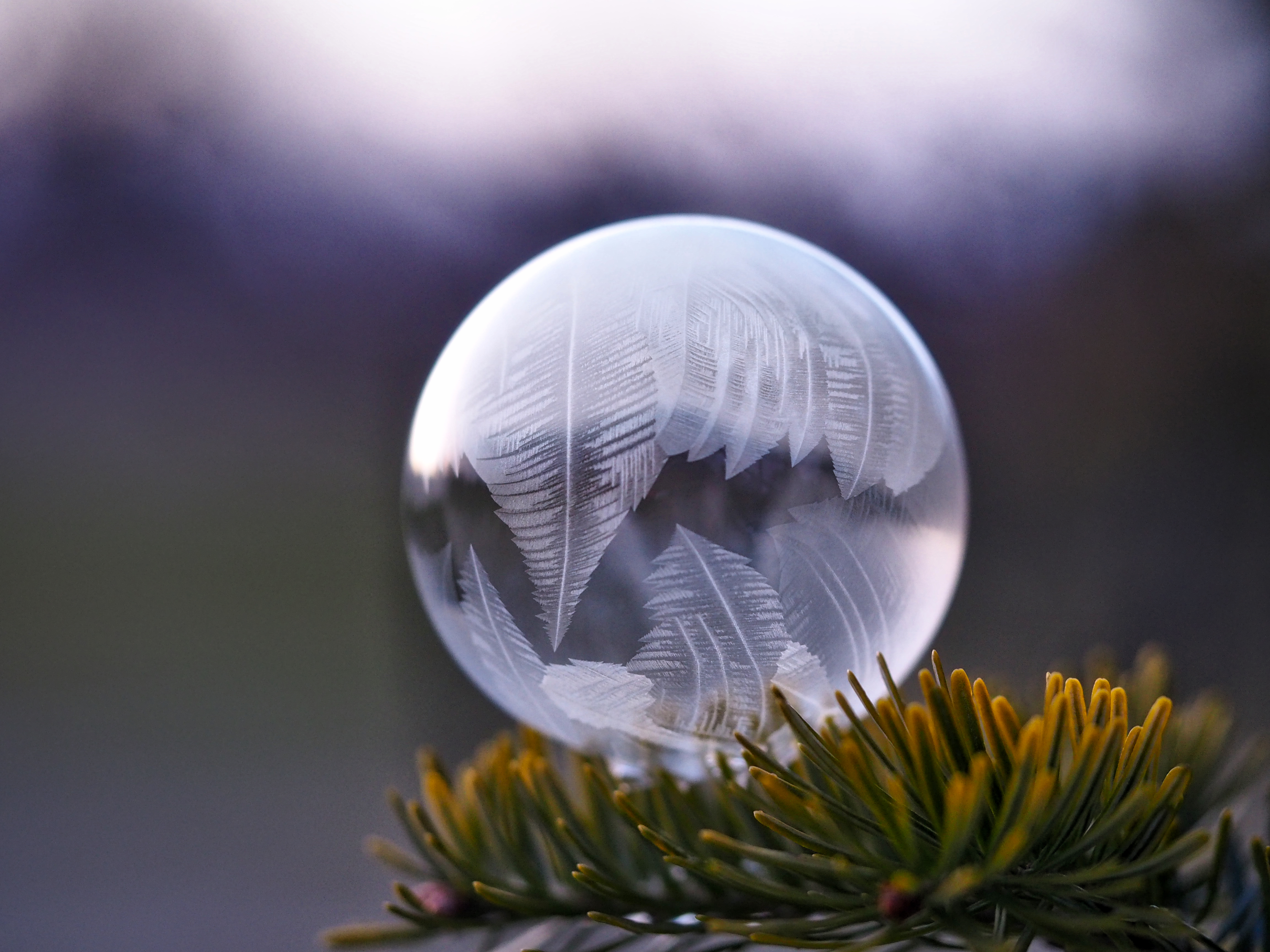
We are the water planet. How do we protect and sustain water rights? Image: “Frozen water droplet” by photographer Aaron Burden, 2017. Dedicated by the photographer to the public domain. Included with appreciation.

California Department of Water Resources. “Sustainable Groundwater Management Act (SGMA). Includes VIDEO.https://water.ca.gov/programs/groundwater-management/sgma-groundwater-management

Charles, Dan. “Water is scarce in California. But farmers have found ways to store it underground.” 5 October 2021. All Things Considered, NPR. Includes AUDIO. https://www.npr.org/2021/10/05/1037370430/water-is-scarce-in-california-but-farmers-have-found-ways-to-store-it-undergroun

Insights Editorial Team. “What Investors Should Know About Trading Water in the Futures Market.” 12 January 2021. Boston University. https://insights.bu.edu/what-investors-should-know-about-trading-water-in-the-futures-market

NASDAQ. “Nasdaq Veles California Water Index Fture (H20). https://www.nasdaq.com/market-activity/futures/h20

New Zealand. “Te Awa Tupua – Whanganui River Claims Settlement Act of 2017.” https://www.legislation.govt.nz/act/public/2017/0007/latest/whole.html

O’Malley, Isabella. “Scientists confirm global floods and droughts worsened by climate change.” 13 March 2023. PBS. https://www.pbs.org/newshour/science/scientists-confirm-global-floods-and-droughts-worsened-by-climate-change

Rodell, Matthew. and Bailing. Li. “Changing intensity of hydroclimatic extreme events revealed by GRACE and GRACE-FO.” Nature Water. 1 (3): 10.1038/s44221-023-00040-5 and https://www.nature.com/articles/s44221-023-00040-5

Rohde, Melissa M. “Floods and droughts are intensifying globally.” 13 March 2023. Nature Water 1, 226-227 (2023). https://www.nature.com/articles/s44221-023-00047-y

Sommer, Lauren. “3 reasons why California’s drought isn’t really over, despite all the rain.” 23 March 2023. Morning Edition, NPR. Includes AUDIO. https://www.npr.org/2023/03/23/1165378214/3-readons-why-californias-drought-isnt-really-over-despite-all-the-rain

United Nations. “Human Right to Water and Sanitation.” https://www.un.org/waterforlifedecade/human_right_to_water.shtml

Wada, Yoshihide., et al., “Global depletion of groundwater resources.” Geophysical Research Letters 37,1.  https://agupubx.onlinelibrary.wiley.com/doi/10.1029/2010GL044571 and https://doi.org/10.1029/2010GL044571

Weir, Bill. “Thousands of acres are underwater in California, and the flood could triple in size this summer.” 15 April 2023. CNN. https://www.cnn.com/2023/04/15/us/tulare-lake-california-flood-climate/index.html

Building the World Blog by Kathleen Lusk Brooke and Zoe G. Quinn is licensed under a Creative Commons Attribution-NonCommercial-NoDerivs 3.0 U

CITIES: Cheesy fries – fuel of the future?

One of the joys of city living is availability and variety of take-out food. From cheesy fries to pizza by the slice, urban snacks are legendary. But most of these treats come in plastic containers that eventually end up in landfills.

“Chili cheese fries served in a foam containers with a plastic fork.” Photograph by Charles Severance. Creative Commons 2.0. Included with appreciation.
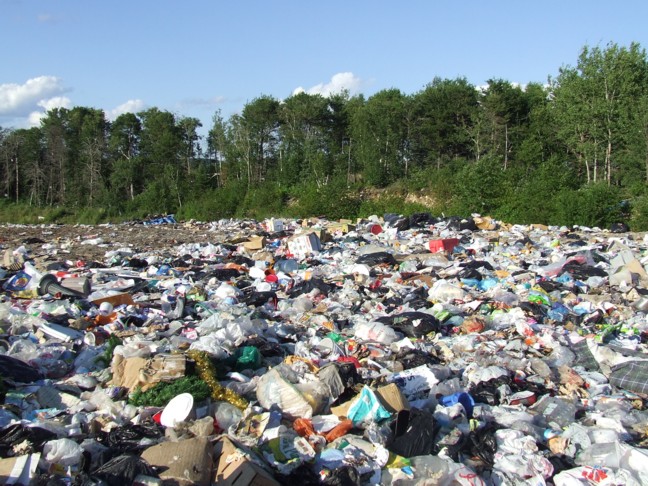
“Landfill” by Michelle Arseneault. Creative commons 3.0. Included with appreciation.

Cities are filled with discarded plastic, from single-use containers to bottled water. Every year, 400,000,000 tons of plastic are produced; that’s equivalent the weight of all the people on the planet.

Every year, the amount of new plastic produced is equivalent to the weight of all the people on the planet. Photo: “London’s Liverpool Street Station” by photographer Roger Carvell, 2012. Creative Commons 3.0 Included with appreciation.

Only 15% of plastic is recycled; most sits in urban landfills. One of the world’s largest landfills is the Apex Regional in Las Vegas, Nevada, not far from the Colorado River and Hoover Dam, stretching over 2,000 acres. Apex is filled with take-out food containers and many other kinds of plastic.

Apex Landfill near Las Vegas, Nevada, is one of the world’s largest. Image: “Las Vegas Skyline at night North,” by Curimedia. Creative Commons 2.0 Included with appreciation.

Time (and money) at slot machines may go fast, but landfill plastics have a long life. Plastic is designed to be durable. It degrades very slowly; it can take over 1,000 years. Even if we pull plastics out of landfills, not all are recyclable. Plastics containing even a bit of food (take-out fries, plastic forks) are not recyclable. And most people who toss food containers into trash, or even into recycling bins, do not, or cannot, wash them first.

What if landfill plastic, especially food containers, were actually buried treasure?ReisnerLab at Cambridge University may have found a way to turn discarded plastic into fuel; the process is powered by sunlight, and produces syngas. Much syngas currently produced requires non-renewable energy, but the ReisnerLab process uses solar. Another benefit? Cambridge University’s nascent system can handle recycled plastic with food waste stuck to the containers. It’s a problem for most recycling, but the Cambridge system uses the leftover food as a substrate, making the process work even better. ReisnerLab’s innovation is at an early stage, and shows promise. Some investors tracking developing innovation may take note.

Syngas can use the same infrastructure but is cleaner than traditional fossil fuels. Image: “Pumping Gas” by photographer Airman 1st Class Lee. Photographed at Vandenberg Airforce Military Base, 2009. Public Domain. Included with appreciation.

Benefit of syngas – it can be pumped. Professor Erwin Reisner observes that “effectively plastic is another form of fossil fuel, rich in energy.” Unlocking that energy to use as fuel could replace traditional fossil fuels and yet not pose the extent of pollution and emission problems caused by coal, oil, and gas. Being able to use the same distribution and delivery infrastructure, plastic-produced syngas could be helpful in fueling the future. One of the difficulties that slows down energy transition is switching to new delivery and distribution systems from existing infrastructure. Re-using gas pipelines, delivery trucks, pumps, and hoses for syngas is a great advantage. And getting rid of food-coated un-recyclable plastic clogging city landfills? A bet as good as Las Vegas.

Biofuel. “What is Syngas?” https://biofuel.org,uk/index.php?p=what-is-syngas

Bhattacharjee, Subhajit, Motiar Rahaman, Erwin Reisner. “Photoelectrochemical CO2-to-fuel-conversion with simultaneous plastic reforming.” 9 January 2023. Nature Synthesis 2, 182-192, 2023. https://www.nature.com/articles/s44160-022-00196-0

Reisner Lab. http:/www-reisner.ch.cam.ac.uk/research.html

Building the World Blog by Kathleen Lusk Brooke and Zoe G. Quinn is licensed under a Creative Commons Attribution-NonCommercial-NoDerivs 3.0 Un

SPACE: Dust


“Dust plumes off Western Africa and Cape Verde Islands” by Jeff Schmaltz, NASA, 2009. Wikimedia commons, public domain. Included with appreciation.

Dust – it’s something we may not think about until we swipe a finger across a windowsill or squint an eye on a windy hike. But did you know that dust comes in different colors? Minerals in the land, when they become dust, have various reflective properties according to their composition. Those colors have an effect on climate. White dust helps to reflect solar radiation away from the earth; red or darker dust absorbs radiation, warming the planet.

Sand dust from the Sahara blows to the Amazon where it helps to nourish the rainforest. Image: “Merzouga Dunes,” by photographer Bjorn Christian Tørrissen, 2011. Wikimedia creative commons 3.0. Included with appreciation.

Not all dust is a problem. In fact, dust helps to cross-nurture the Earth. Sand from the Sahara Desert actually nourishes the Amazon forest, blowing across the globe in ever-circulating winds that carry dust and its various mineral nutrients to feed far-away soils. But, like many foods, too much is a problem. As the Earth warms, the United Nations warns that we’ll be seeing more dust storms – and more respiratory conditions such as asthma. So, both for climate change and for public health, we need to know more about dust.

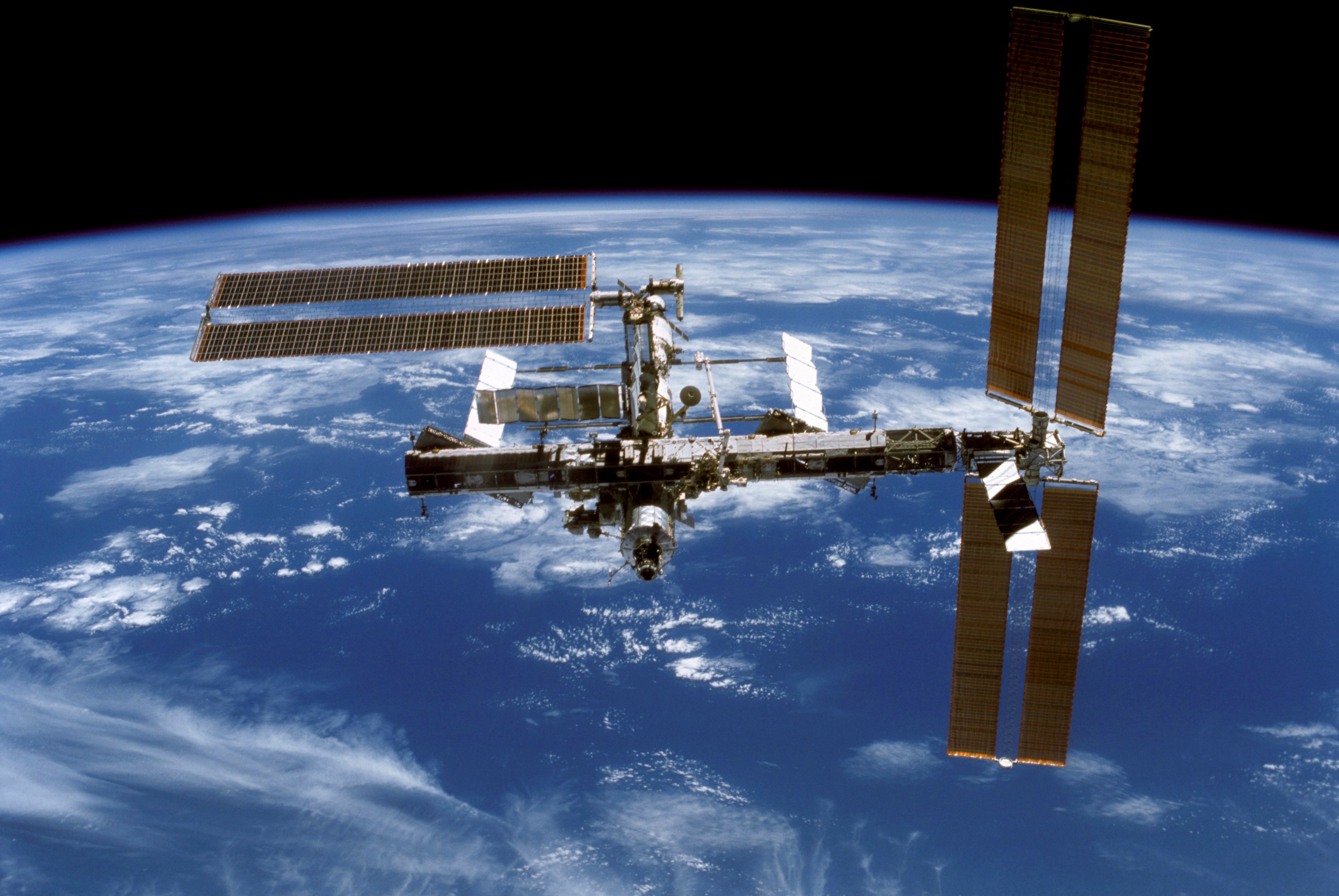
EMIT operates from the International Space Station, measuring Earth’s dust (and methane). Image: “International Space Station orbiting Earth,” NASA 2006. Image ID: STS116-301-028. Wikimedia, public domain. Included with appreciation.

Up until now, dust was studied on a local level. Farmers knew their soil, observed when it became dry, saw effects of drought or burned plants after wildfires. But now, with the guidance of Cornell professor Natalie M. Mahowald, NASA has developed an instrument to measure global dust. The imaging spectrometer is called the Earth Surface Mineral Dust Source Investigation or EMIT. It’s on the International Space Station, observing the Earth as a whole system, taking data snapshots of the globe 16 times every day. The result will be a mineral map of the Earth, with every dust variety shown in a color related to its light wavelengths. In addition to measuring dust, EMIT also monitors emissions of methane.

Cairns, Rebecca with VIDEO by Jazel Pfeifer. “NASA is mapping duststorms from space with this new high-tech device.” 20 February 2022. CNN. https://www.cnn.com/2023/02/20/world/nasa-sandstorms-space-emit-hnk-spc-intl

Mahowald, N., D. Ward, S. Doney, P. Hess, J. Randerson. “Are the impacts of land use on warming underestimated in climate policy?” Environmental Research Letters, V12, No. 9, 2017. https://doi.org/10.1088/1748-9326/aa836d.

United Nations. “Global Assessment of Sand and Dust Storms” UNEP. ISBN: 978-92-807-3551-2. https://wesr.unep.org/redesign/media/docs/assessments/global_assessment_of_sand_and_dust_storms.pdf

Building the World Blog by Kathleen Lusk Brooke and Zoe G. Quinn is licensed under a Creative Commons Attribution-NonCommercial-NoDerivs 3.0 Un

ENERGY: Rare Earths

Rare earth elements are needed to power smartphones, and many other technologies. Image: “Foldable smartphones” by Ka Kit Pang. Wikimedia creative commons 3.0. Included with appreciation.

Smart phones are common but so-called “earths” that power these devices are rare. In fact, 17 elements termed rare earth elements or REEs supply everything from phones to electric vehicles, wind turbines, and military systems. That glowing light on your car dashboard? Rare earth chemistry in action.

“Rare earth oxides” by photographer, Peggy Greb. United States Department of Agriculture. Public Domain. Wikimedia. Included with appreciation.

Rare earths are obtained by mining, combined with extraction processing, because these oxides are not found in neat deposits but rather mixed in with other elements. REE mining is a specialty sector. China, land of the Grand Canal, is currently the world leader: both in mining and extracting, controlling 60% of the market. Recently innovations in rare earth element recycling could promote reuse and reduce mining.

“Rare earth oxides production graph” by D.J. Cordier, Haxel, et al., United States Geological Survey, 2013. Wikimedia. Public Domain. Included with appreciation.

Most rare earth elements used in Europe are imported. But, recently, mining company LKAB found more than one million tons of rare earth oxides in the far northern area of Kiruna. Sweden will have a ready market. However, it will be at least a decade before permitting, mining, and processing will reach European smart devices.

Sámi land and water resources are involved in rare earth mining. Image: “Three Sámi women” circa 1890. Wikimedia, public domain. Included with appreciation.

Sweden will have a nearby partner: the Northvolt battery factory is in development. Also in Sweden’s north: projects for green steel. Meanwhile, LKAB has been busy: in order to reach the deposit, the entire town of Kiruna had to be moved. There is also consideration of the Sámi people of northern Scandinavia who herd reindeer over the lands of Finland, Norway, Sweden, and the Kola Peninsula of what is now Russia, these are lands to which the Sámi have indigenous rights. Sámi once transported mined ore via reindeer to deliver material to the coast for shipping. A “cultivation line” was established by law to project Sámi herding lands, but conflicts and differences remain.

“Perite” by photographer David Hospital, wikimedia creative commons 3.0. The mineral is named after Per Adolf Geijer. Image included with appreciation.

Sweden’s newly discovered deposit now has a name: Per Geijer. It’s an homage to Per Adolf Geijer (1886-1976), Swedish geologist who also has a mineral, discovered in Sweden, named after him: perite.

The rare earth element market is expected to grow, estimated to be worth $9.6 billion by 2026. In the midst of this acceleration, mining rare earth elements can affect soil and groundwater, creating acidic conditions. How can rights to rare earth elements be protected, explored, and – when mined – shared? How should land and groundwater affected by rare earth mining be restored and renewed?

Bai, Jingling, et al., “Evaluation of resource and environmental carrying capacity in rare earth mining areas in China.” Scientific Reports, Nature. 12, Article number: 6105 (2022). https://www.nature.com/articles/s41598-022-10105-2

He, Laura. “Sweden finds the largest rare earth deposit in Europe. It could help cut dependence on China.” 13 January CNN. https://www.cnn.com/2023/01/13/tech/sweden-biggest-rare-earth-mine-china-dependence-intl-hnk

Milne, Richard. “Reasons for scepticism over Swedish rare earths find.” Financial Times. https://www.ft.com/content/b9ec0bee-af4c-44a6=8b07-19786b780594

Sommer, Nikko. “The History of Mining and Inroads to Sámiland and Their Effect on the Sámi.” University of Texas. https://www.laits.utexas.edu/saami/dieda/hist/mining.htm

United States Department of Energy. “Rare Earth Recycling” https://www.energy.gov/science/bes/articles/rare-earth-recycling

Building the World Blog by Kathleen Lusk Brooke and Zoe G. Quinn is licensed under a Creative Commons Attribution-NonCommercial-NoDerivs 3.0 Un

WATER: Glitter Litter – Getting Better

Holidays invite sequins and sparkle. Image by Irson Kudikove, 2010. Public domain wikimedia. Included with appreciation.

Holidays like New Year’s Eve invite festive attire, often sparkling from head to toe. The origin of sequins reaches back to ancient gold coins, worn by the wealthy for special occasions. In fact, the word “sequin” comes from the Italian “zecchino” referring to the gold coins minted in Venice, and before than from the Arabic “sikka” meaning a minted coin. One may still see some coin-bedecked costumes in certain forms of dance. No wonder sequins are now associated with lavish occasions.

“50 Zecchini coins from the reign of Paulo Renier, Doge of Venice, circa 1779.” Wikimedia, public domain. Included with appreciation to numismatic collection, national museum.

But now we manufacture a very different kind of sequin for dress-up attire. Did you know that most sequins and glitter are themselves dressed? They are coated with reflective plastic that produces the desired shine. Such glitter quickly turns to litter. On the dance floor, tiny sequins shake loose. In dramatic hair styling, glitter sprinkles the comb and later washes into the shower – and the water supply. Unlike some plastics that are carefully monitored for dangerous chemicals and strictly regulated for recyclability, fashion sequins and glitter are not subject to such rules: in fact, most contain toxins.

Steppin’ Out in Style? Try algae. Image: “Sequined Shoe” by sunshinecity. Wikimedia. Included with appreciation.

So, is there a sustainable way to sparkle? Yes!

First responsibility is with designers and garment manufacturers:

Elissa Brunato introduced an innovation: Bio Iridescent Sequins made of biodegradable cellulose. Working with RISE Research Institute of Sweden’s material scientists Hjalmar Granberg and Tiffany Abitbol, Brunato found a tree-based cellulose that contains a natural polymer structure reflecting light. The production process involves pouring natural liquid cellulose into a mold to which colors can be added. From the city of London Bridge, designers like Brunato, and Stella McCartney, are among those building a different kind of bridge – through the Future Materials Bank.

Phillip Lim and Charlotte McCurdy produce marine micro algae to form a natural sequin. Introducing a petroleum-free sequin dress made with bio-plastic sequins formed from algae, Lim and McCurdy work with One X One by Slow Factory to create carbon-neutral materials for fashion. Circular fashion is a term often heard: here, algae form the material that later return to the earth, biodegrading to nourish the planet. Lim found inspiration in pearls and crystals, sparkles and shines of nature, and now finds nature the source of fashionable sparkle.

Anuje Farhung, founder of the fashion brand House of Farhung, offers couture in Pakistan and globally with luxury, formal, and bridal fashions. Farhung studied at Savannah College of Art and Design in Georgia, USA, and worked with fashion house Oscar De La Renta before founding her label offering sustainable sparkle. When Anuje collaborated, in 2020, with Sarah Khan from the National Centre of Excellent in Geology at the University of Peshawar, they selected red algae for their source of luminous fashion.

Second responsibility is with the consumer. While 40% of shoppers surveyed by Oxfam said they’d purchase glittering clothing for the holidays, most confessed they would wear it only a few times. As many as 1.7 million items of sparkling clothing end up in landfills each year. Once in the landfill, sequins and glitter tend to dissolve into a toxic ooze called “landfill leachate.”

Avoid landfill leachate – glitter responsibly. Image: “Glitter Slime” by Slime 123 Globex” by Barbara Rayman, 2017. CC4.0 Wikimedia. Included with appreciation.

As you plan for New Year celebrations, or perhaps a coming party, prom, wedding, or special occasion, if garment manufacturers offered sequins and sparkle at a price slightly higher but much more sustainable, would you purchase glitter that doesn’t litter?

Brunato, Elissa. elissabrunato.com

Farhung, Anuje. “Fulbright Women Podcasts: Anuje Farhung.” https://youtu.be/BSupOoKhxZ8

Irfan, Anmol. “Iridescent algae: eco-friendly sequins in Pakistan.” Courier. 23 March 2022. https://mailchimp.com/courier/article/eco-sequins-pakistan-anuje-farhung/

Lim, Phillip. https://www.31philliplim.com

McCurdy, Charlotte. https://www.charlottemccurdy.com

One X One. https://onexone.earth

Pinjing He, Fan Lü. “Municipal solid waste (MSW) landfill: A source of microplastics? – Evidence of microplastics in landfill leachate.” Water Research. Volume 159, 1 August 2019, pages 38-45. https://www.sciencedirect.com/science/article/abs/pii/S004313541930377X

Singh Khadka, Navin. “Five ways sequins add to plastic pollution.” BBC 26 December 2022. https://www.bbc.co.uk/news/science-environment-64056052

Springwise. “Sustainalbe Sequins Made From Cellulose.” 25 September 2019. Springwise.com. https://www.springwise.com/sustainability-innovation/fashion/plastic-free-biodegradable-sequins/

Building the World Blog by Kathleen Lusk Brooke and Zoe G. Quinn is licensed under a Creative Commons Attribution-NonCommercial-NoDerivs 3.0 Un

SPACE: Earthshot – Urgent Optimism

“Earth” Image by NASA, 2020. Public Domain. Included with appreciaiton.

When President John F. Kennedy challenged humanity, in 1961, to send humans to the moon within a decade, we beat the deadline. On 20 July 1969, NASA astronaut Neil Armstrong spoke these words: “That’s one step for a man, one giant leap for mankind,” upon setting foot on the lunar surface. The achievement has come to be known as the “Moonshot.” The phrase indicates both a “longshot” and the power of human innovation to overcome odds to achieve what was formerly thought impossible.

Now, we have a new, and urgent, challenge: Earthshot. Launched in 2020 by The Royal Foundation, Prince William, and Sir David Attenborough, the Earthshot Prize recognizes the world’s best ideas to save the Earth from climate disaster. From 2020 to 2030, prizes will be awarded in five areas:


Image:  earthshotprize.org. Included with appreciation.

Protect and Restore Nature

Clean Our Air

Revive Our Oceans

Build a Waste-Free World

Fix Our Climate

This year’s awards were announced in partnership with the John F. Kennedy Foundation, paying homage to the challenge and achievement of the Moonshot, and giving this decade a new challenge, one powered by imagination, innovation, and urgent optimism. To see this year’s winners, and perhaps get ideas for your own Earthshot project, you can watch the awards ceremony here.

Earthshot Prize. https://earthshotprize.org

Building the World Blog by Kathleen Lusk Brooke and Zoe G. Quinn is licensed under a Creative Commons Attribution-NonCommercial-NoDerivs 3.0 Un


WATER: Armies, Veterans, and Peace

Veterans Day, a Call to Peace. “Veterans Day Poster, 1987.” Wikimedia. Included with appreciation.

Today is Veterans Day, observed in the United States on November 11 since 1919, and founded to commemorate the 11th hour of the 11th day of the 11th month (in 1918) when an Armistice ended World War I. Soon thereafter, the Paris Peace Conference resulted in the Treaty of Versailles. In 1954, Armistice Day was renamed Veterans Day. While today honors those who serve in readiness for war, the origin of the holiday is peace.

Peacetime Roman Army built roads and aqueducts. Image: “Praetorian Guard, circa 50 CE.” Louvre, France. Photograph by Jérémy-Günther-Heinz Jähnick. Gnu license, wikimedia. Included with appreciation.

What is the role of armies in peace? During times of peace, the Roman Army built roads that connected Italy and beyond, and deployed military squadrons to explore and then build the Roman Aqueducts to bring fresh water to the central city. The Netherlands instituted Dike Armies in 1319 to respond to water emergencies.

“Colorado River, Horseshoe Bend,” by photographer Paul Hermans, 2012. CC3.0, wikimedia. Included with appreciation.

Water emergencies are still with us today, perhaps more than ever. The Colorado River, bringing water and electricity to 1 in 10 Americans, as well as agriculture and industry, is 19% smaller than in 2000; reservoirs Lake Mead and Lake Powell are severely depleted. Hydroelectricity, produced by Hoover Dam’s harnessing of the Colorado River, is threatened by drought. The Mississippi River suffers concerning depletion. The same is true for many rivers around the world.  Rights of Rivers deserve protection. Who will defend them?

“Hurricane Ian making landfall, 28 September 2022,” by National Hurricane Center, U.S. National Weather Service. Public Domain, wikimedia. Included with appreciation.

Water problems are causing drought and also inundation. Recent torrents from Hurricane Ian devastated Florida, caused loss of life and property damage totaling in the billions. Areas hit by increasingly powerful floods and storms need rebuilding. Who will do this? How can we best respond to climate damage, or build protection?

History offers an inspiration to uphold military expertise, service, and tradition. We might save our coasts by a modern day equivalent of the Dike Army. We can follow the productive example of the Roman army in sustaining the Colorado River and other threatened water sources.  Armies, and veterans, might serve in what William James called the “Moral Equivalent of War” – defending Nature and Peace.

“Pace” – Italian for Peace. Can we find inspiration in the Roman Army’s works of peace? Image: “Pace” by Fibonacci, CCC3.0. Wikimedia. Included with appreciation.

James, William. “The Moral Equivalent of War.” Lecture 11, pages  267-296, in Memories and Studies. NY: Longman Green and Company, 1911 and presented at Stanford University in 1910 followed by publication in McClure’s Magazine, pages 463-468, August 1910. LINK to text: http://www.public-library.uk/ebooks/65/5.pdf

Nilsen, Ella. “Feds begin ‘expedited’ process to help save drought-stricken Colorado River.” 28 October 2022. CNN. https://www.cnn.com/2022/10/28/us/colorado-river-lake-mead-powell-drought-plan-climate/index.html

Paris Peace Conference. https://www.diplomatie.gouv.fr/en/the-ministry-and-its-network/the-diplomatic-archives/documents-from-the-diplomatic-archives/article/diplomatic-archives-the-peace-conference-paris-18-01-1919

Rights of Rivers. “Universal Declaration of the Rights of Rivers.” www.RightsOfRivers.org

Rojas, Rick. “As Drought Drops Water Level in the Mississippi, Shipwrecks Surface and Worries Rise.” 3 November 2022. The New York Times. https://www.nytimes.com/2022/11/03/us/mississippi-river-drought.html?smid=nytcore-ios-share&referringSource=articleShare

Building the World Blog by Kathleen Lusk Brooke and Zoe G. Quinn is licensed under a Creative Commons Attribution-NonCommercial-NoDerivs 3.0 Un


ENERGY: the buzz on how bees generate electricity

The electrical charge from a bee’s flight can help identify a flower with ample pollen. Image: “Bee-Apis” by Maciej A. Czyzewski, CC 4.0. Included with appreciation.

In an era when we seek to electrify many aspects of modern life, some of the most ancient life forms may teach us a thing or two. Bees, and other aerial insects, create an electrical charge. When a bee flutters its wings, the movement generates a positive electrical charge; you might compare this to the spark that can be raised by rubbing your stockinged feet across a carpet or a balloon on your arm. For bees, that electrical charge stays on their body and helps to pull pollen from a visited flower. An “echo” of the electrical signal is left behind, so the next bee hovering nearby can sense whether the flower has been recently visited and savored, or may offer a fresh serving of pollen.

What is the electrical effect of a swarm? Image: “Optical illusion disc with birds, butterflies, and person jumping.” 1833. Library of Congress: 00651165. Public Domain. Included with appreciation.

If one bee or butterfly can generate electricity, what’s the effect of a swarm or a group migration? Scientists have discovered that Earth’s atmosphere holds several kinds of electrical charges; these energy fields influence things like aerosols and dust. Recent studies have confirmed that insect swarms contribute to atmospheric electricity; the more dense a swarm, the more electricity enters the atmosphere. There’s a measurement protocol ranging from picocoulombs to nanocoulombs (one coulomb equals the quantity of electrical charge that passes a point in an electric circuit in one second by a steady current of one ampere. The term is named after Charles Augustin de Coulomb (1736-1806), physicist credited with discoveries in electricity and magnetism).

“A plague of locusts.” by SCIRO, Science Image 2007. CC3.0. wikimedia. Included with appreciation.

Honeybees, butterflies, and locusts are among aerial insects that produce significant atmospheric electrical charges. If a swarm is large enough (think Biblical descriptions of plagues of locusts), the insects’ electrical charge can equal that from weather events like storms. In current climate models, and observations by weather satellites by NASA and ESA, insect swarms are rarely included when assessing atmospheric dust, or interaction of radiation and particulate matter. Should we count insect swarms along with thunderstorms?

“Lightening Storm” by Jan Bambach, 2015. Wikimedia 3.0. Included with appreciation.

‘Save the honey bee’ campaigns rightly champion preserving pollinators on the ground; now there is evidence of influence a bit higher up. It’s one more way we are realizing that Earth’s climate is an interconnected system.

Hunting, E.R. et al., “Observed electric charge of insect swarms and their contribution to atmospheric electricity.” 24 October 222. Cell. iScience. DOI: https://doi.org/10.1016/j.isci.2022.1052

Savitsky, Zack. “Swarming bees stir up their own electric fields: Insect swarms can generate more volts per meter than thunderstorms.” 25 October 2022. Science. https://www.science.org/content/article/swarming-bees-stir-their-own-electric-fields

Building the World Blog by Kathleen Lusk Brooke and Zoe G. Quinn is licensed under a Creative Commons Attribution-NonCommercial-NoDerivs 3.0 Un