Publications Office photographs now available for research, online and in person

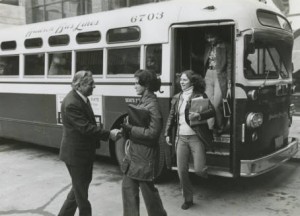
Chancellor Carlo Golino greeting students as they arrive on campus. UASC-UAPHO-0004-0293-0006

Chancellor Carlo Golino greeting students as they arrive on campus, circa 1974-1975. UASC-UAPHO-0004-0293-0006

University Archives & Special Collections in the Joseph P. Healey Library at UMass Boston is excited to announce that the University of Massachusetts Boston Publications Office photographs, ca. 1966-2000, are now open for research. Additionally, a number of photographs from the collection have been digitized and are available online at openarchives.umb.edu.

The UMass Boston publications office produced the majority of the university’s publications for many years. On August 1, 1998, Chancellor Sherry H. Penney reorganized several departments at the administrative level, creating one unit that was responsible for enrollment and communication services.

This collection includes photographs and slides from the publications office at UMass Boston from 1966 to 2000. The images in this collection deal broadly with issues related to the university, such as student and staff life, campus buildings, and events. Most people in the photographs are unidentified, though several individuals have been identified, including James Blackwell, Bernard Kramer, Governor Francis W. Sargent, Roger Prouty, Daisy Tagliacozzo, Herbert Lyken, Barbara Buchanan, and Bettina Harrison. Additional photograph subjects include Edward “Ted” Kennedy, Thomas P. (“Tip”) O’NeillMartin Luther King III, and President Bill Clinton. Photographs of university events include the dedication of Phillis Wheatley Hall and an image from the Founding Day Convocation in 1966.

In the Special Arts Festival (1978) folder is a photograph of Massachusetts Governor Michael Dukakis presenting a document proclaiming the weekend of May 6-7, 1978, to be Arts Festival Weekend. In the photo, Governor Dukakis is pictured with Dean Michael Richards, Joan Hobson, and … a mime?

Promotional photographs of performers at the Harbor Festival in 1980 include the Children’s Ethnic Dance Co. of the Elma Lewis School, Krakowiak Polish Dancers, Boston punk band The Neighborhoods, choreographer Danny Sloan, performer Mr. Slim, and the Old Time Music and Vaudeville Revival.

We invite you to assist us in identifying faculty, staff, students, community members, and events by commenting on digitized photographs from the collection or by emailing library.archvies@umb.edu with information.

View digitized photographs from this collection here and view the finding aid for this collection. To make an appointment to view the collection, email library.archives@umb.edu.


These records were processed as part of University Archives & Special Collections’ Save Our History! campaign. As part of UMass Boston’s 50th anniversary, University Archives & Special Collections is calling for the transfer of founding documents and organizational records from all units on campus. These units include (but are not limited to) academic departments, administrative units, institutes, centers, and student groups. Read more about transferring University records to UASC.
Tangible Things in University Archives & Special Collections at UMass Boston

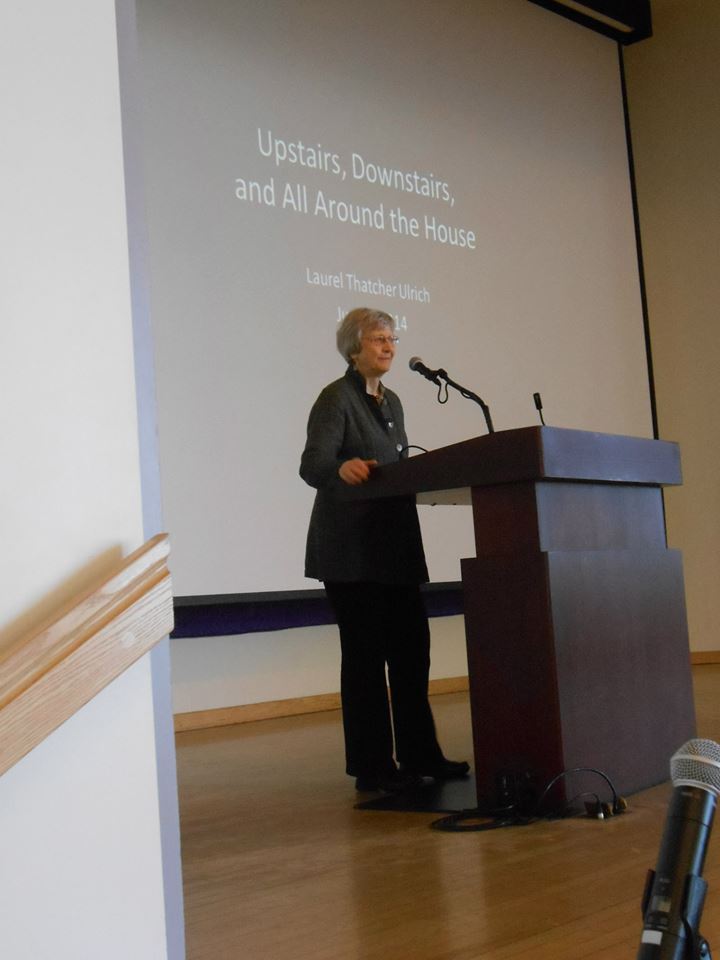
Laurel Thatcher Ulrich at the Mass. History Conference. Her keynote talk was titled "Upstairs, Downstairs, and All Around the House: Making Work Visible."

Laurel Thatcher Ulrich at the Mass. History Conference. Her keynote talk was titled “Upstairs, Downstairs, and All Around the House: Making Work Visible.” Photograph courtesy Mass Humanities.

At the recent Massachusetts History Conference keynote speaker Laurel Thatcher Ulrich encouraged attendees to consider the “tangible things” in history.

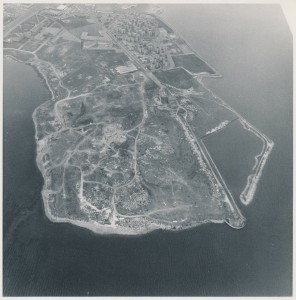
As I look around our collections, several items catch my eye – a 1940 Fun with Dick and Jane reader, an aerial photograph of Columbia Point, c. 1960, and membership lists of the Saturday Evening Girls. Here reside our tangible things that serve as our window into the past.

Fun with Dick and Jane. Library Call #: PE1117.K2 G731 (Special Collections).

Fun with Dick and Jane. Library Call #: PE1117.K2 G731 (Special Collections).

The Dick and Jane reader becomes more than a book on a shelf, it is memories of struggling to unlock the words that will eventually broaden our world; memories of cuddling with a parent or beloved sibling while reading; memories of a world that may have looked very different than our own.

Views of Columbia Point in the 1960s offer insight into Boston’s rural past, urban planning, and the future of higher education.

The Saturday Evening Girls, created in 1899 as a reading group at the North Bennet Street Industrial School and later an educational club of the Boston Public Library, became a progressive movement to educate and socialize young women. Best known for establishing the Paul Revere Pottery, the organization also published a newsletter, sponsored events, and trained women for leadership responsibilities. The Saturday Evening Girls membership lists are more than a series of names on a page; they open for us a world of arts and craft pottery, immigrant life, and reform movements in early 20th century Boston.

Aerial view of Columbia Point, circa 1960s. UASC-UAPHO-0001-0172

Aerial view of Columbia Point, circa 1960s. UASC-UAPHO-0001-0172

We encourage you to explore the tangible things in your own world. You can start with Laurel Ulrich’s free EdX course at Harvard University, called Tangible Things: Discovering History Through Artworks, Artifacts, Scientific Specimens, and the Stuff Around You. In this online and openly available course, Ulrich encourages participants to “discover new ways of looking at, organizing, and interpreting tangible things in your own environment.”


University Archives & Special Collections in the Joseph P. Healey Library at UMass Boston collects materials related to the university’s history, as well as materials that reflect the institution’s urban mission and strong support of community service, notably in collections of records of urban planning, social welfare, social action, alternative movements, community organizations, and local history related to neighboring communities.

University Archives & Special Collections welcomes inquiries from individuals, organizations, and businesses interested in donating materials of an archival nature that that fit within our collecting policy. These include manuscripts, documents, organizational archives, collections of photographs, unique publications, and audio and video media. For more information about donating to University Archives & Special Collections, click here or email library.archives@umb.edu.