University of Massachusetts Boston
School for the Environment
LivingLabs: Nantucket
Focus Group
You have been invited to participate in a Focus Group for a student research initiative regarding Nantucketers, Environmental Issues and how different forms of media affect attitudes and opinions.
The Focus Groups will be short (30-40min)
There will be an initial survey asking for basic demographic information (i.e. Age, Education Level, etc.)
You will then be shown 10-12 media (images, infographics, digital clips) regarding Environmental Issues
After each form of media you will be asked to answer 5 Yes / No questions
(Ex: Do you think the media you’ve seen informed your understanding of Environmental Issues with a new perspective? Yes / No)
The Focus Groups will take place at the NRTA’s Greenhound Building
(6 Washington St, Nantucket, MA)
Please choose between the date below to participate in a Focus Group:
Tuesday, 2 April, 5:30 – 6:15 PM
Wednesday, 3 April, 5:30 – 6:15 PM
Thursday 4 April, 5:30 – 6:15 PM
Your presence is greatly and graciously requested to help invigorate the spirit of environmental inquiry on Nantucket!
***
If you are interested in attending a Focus Group:
Please contact Connor McKay; Student, LivingLabs
(603) 714-5244 or Connor.McKay001@umb.edu
Please RSVP at your earliest convenience/ Before the date you will attend
Start Your Engines!!!
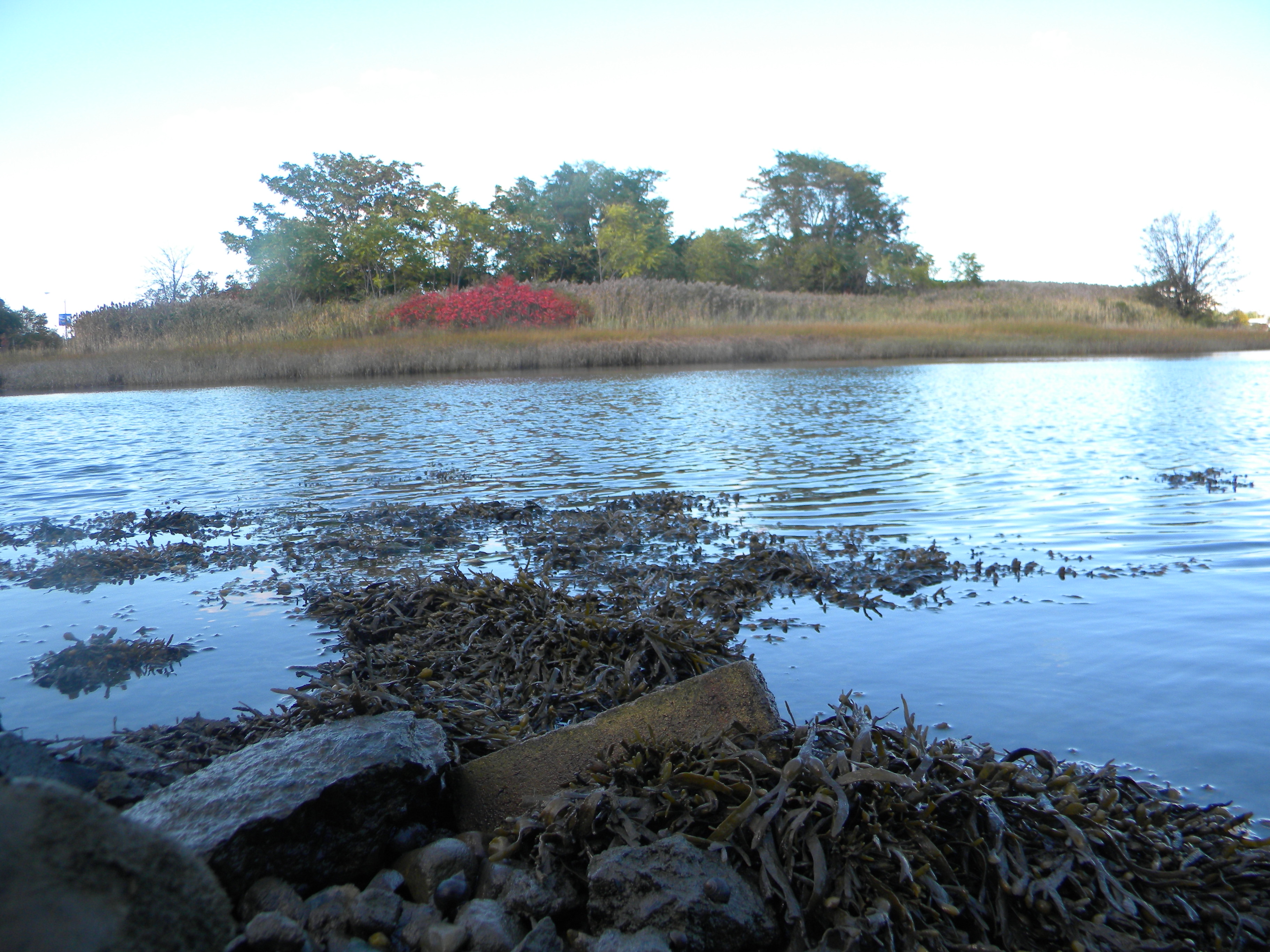
As we pass the halfway point in this adventure, it is time to crack the whip and make some real headway on my independent study, Primary Productivity by Phytoplankton in Salt Marshes. The goal of this study will be to assess the levels of primary production, which is the process of converting inorganic molecules, like CO2 and H2O,into vital organic compounds through cellular respiration, and is the base of the estuarine ecosystems food web. An evaluation of any changes in abundance, species diversity and dominant species will allow for comparison to other variables to see any correlations and possibly point towards a cause for these changes. Variables for this study will water salinity, temperature, pH, dissolved oxygen (DO) and biological oxygen demand (BOD). In order to calculate productivity levels I will be extracting chlorophyll a, from the phytoplankton filtered out of the water. Chlorophyll a is a pigment used in the process of photosynthesis. Chlorophyll absorbs light of a certain wavelength, and can be measured using a machine called a flourometer. I will be taking weekly water samples from various site within three different salt marshes around the island. Samples will be taken back to the lab at the Field Station to be processed for readings with the flourometer. I had my first interaction with the flourometer this weekend. Ashley gave me great introduction to how it works and them we took a couple of practice samples from Folger’s Marsh at the Field Station. On saturday we went through the whole process of filtering the phytoplankton from the water and stored them in the fridge covered in tin foil, to slow photosynthesis and preserving the chlorophyll. The filters, containing the phytoplankton, were soaked on acetone to separate the chlorophyll. We also ran a chlorophyll standard curve, a process that involves doing a series of dilutions to a know concentration of chlorophyll, to get a formula that is then used to convert flourometer readings into chlorophyll concentrations. This afternoon we returned to the Field Station to run our samples through the flourometer. We were both very excited to see results, because it was not certain that we have enough chlorophyll to read. Also, it was a sign that we didn’t screw anything up. Some question did arise during this weekends experiences and I look forward to finding the answers and applying them to my research. The best part was that I finally realized that I would be able to report some good data by the end my experiments. I am hopeful that I will also see some changes in levels as the spring rolls in and conditions change. Soooo, that was a handful, I know but I had to get it there.
Posted in: Nantucket LivingLab, Primary Productivity & Eutrophication, Random Thoughts.